ACTIVITIES

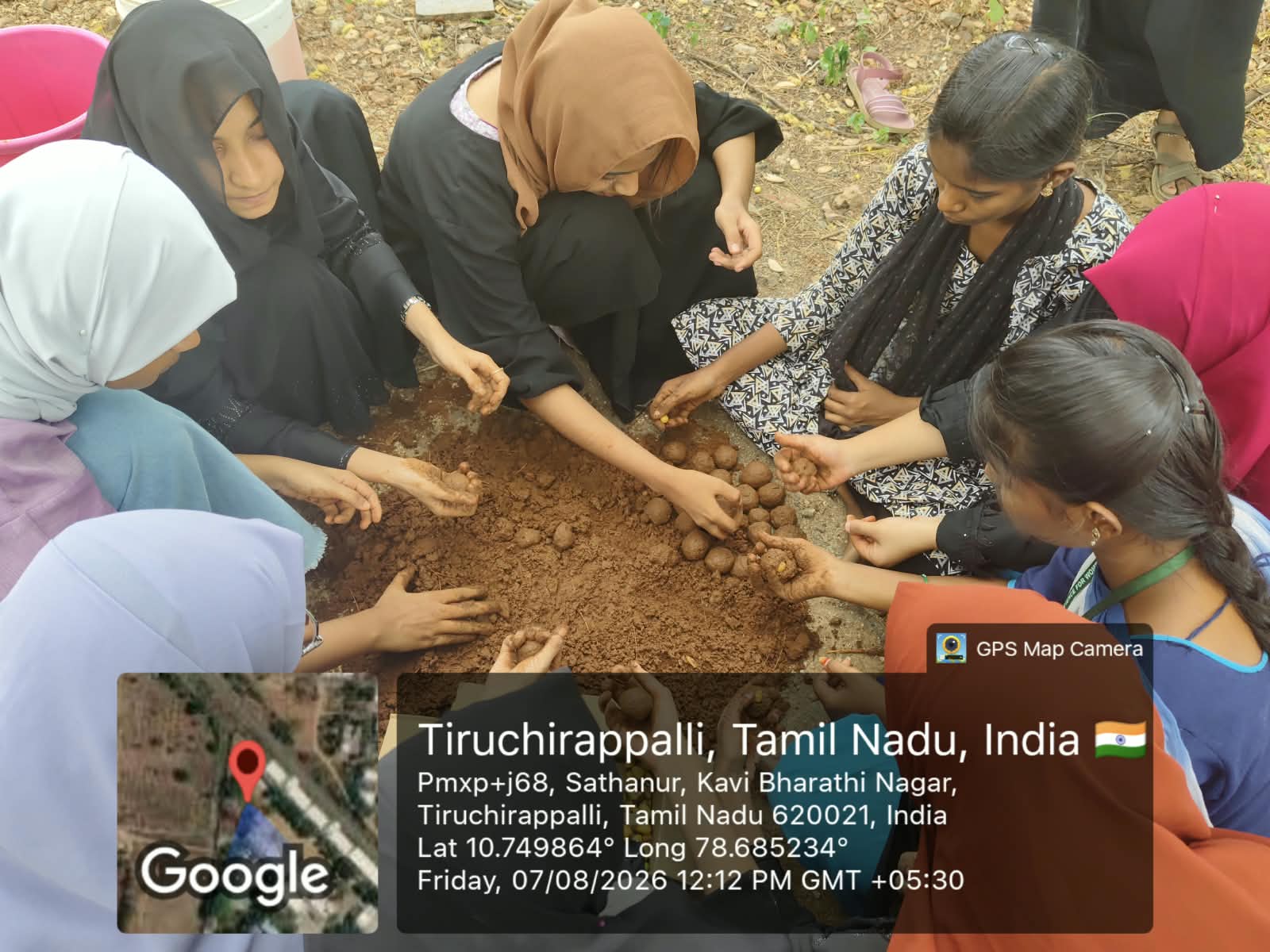
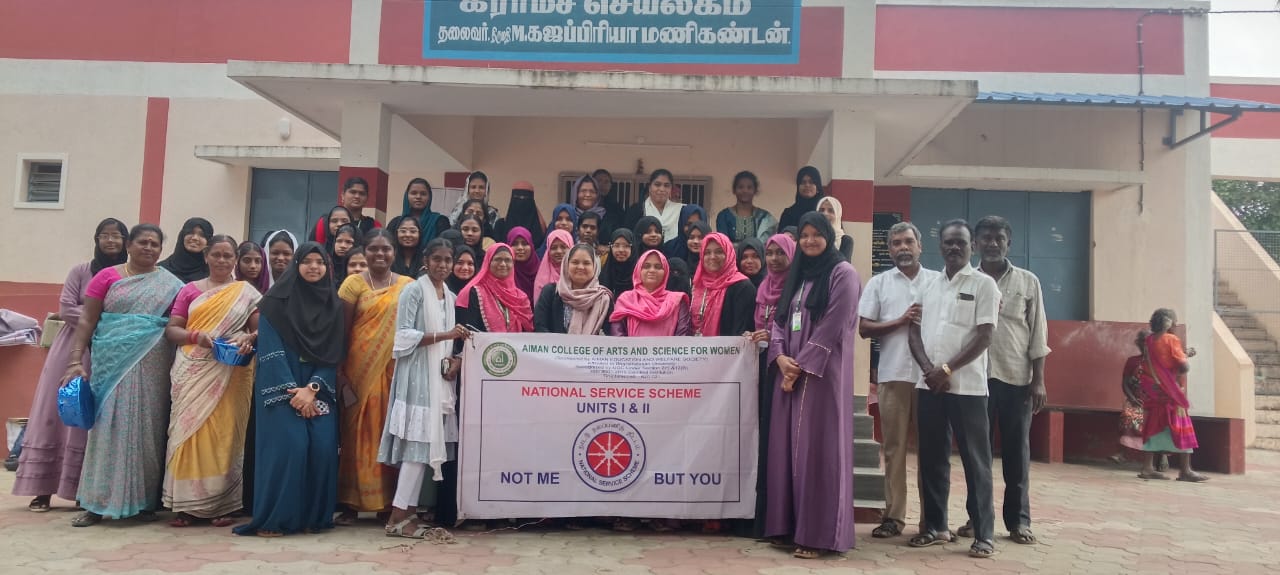
National Service Scheme
NSS History
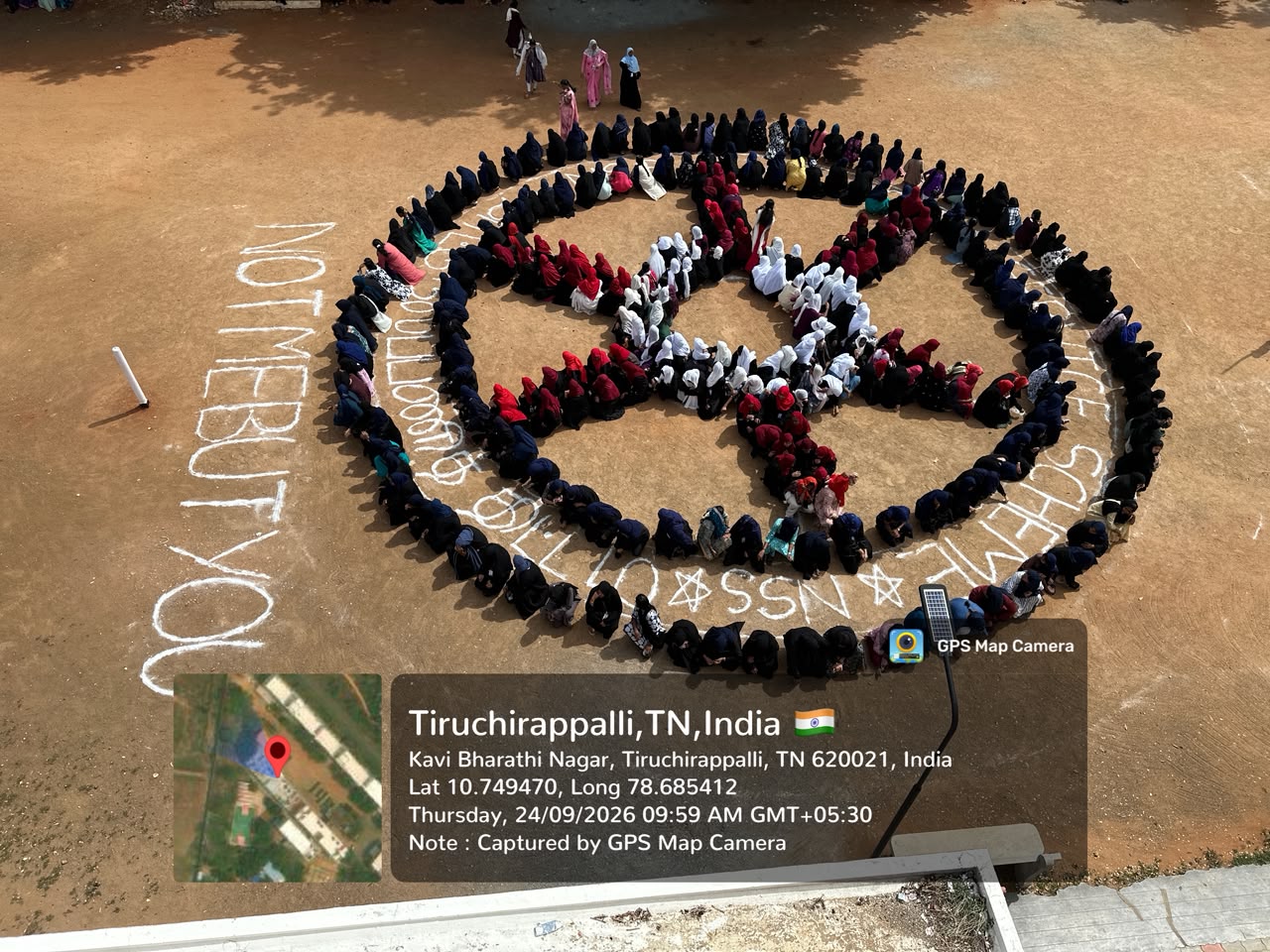
The National Service Scheme (NSS) was formally launched on September 24, 1969, by the then Union Education Minister Dr. V.K.R.V. Rao. It was purposely established during the birth centenary year of Mahatma Gandhi, who heavily inspired the scheme's core philosophy of youth-led community upliftment.
Managed today by the Ministry of Youth Affairs and Sports of the Government of India, the NSS has grown from a pilot project involving 40,000 students across 37 universities into a massive nationwide movement.
HE MOTTO
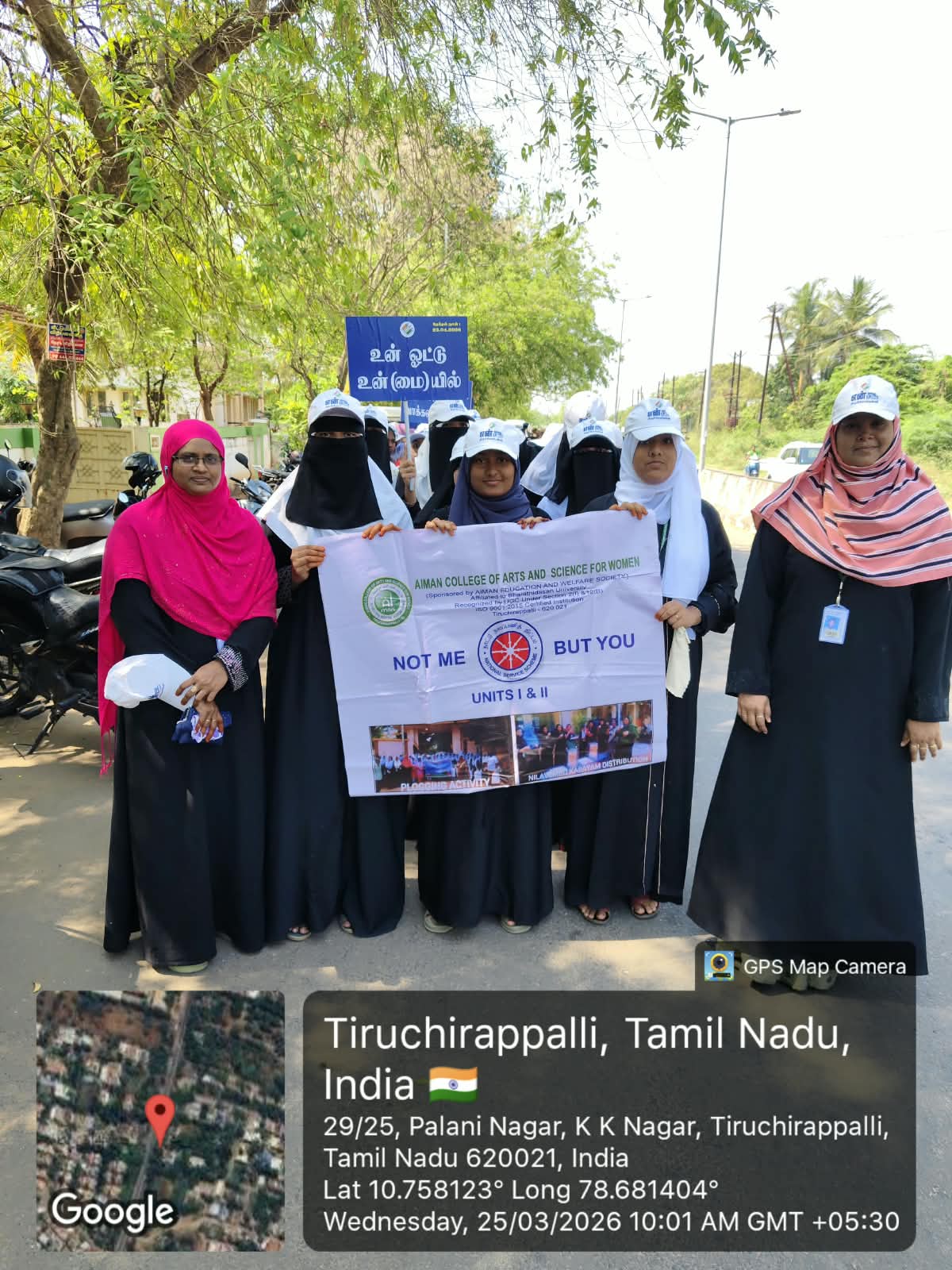
The motto of the NSS is "NOT ME BUT YOU ". This expresses the essence of democratic living and upholds the need for selfless service and appreciation of the other man's point of view and also to show consideration for fellow human beings.
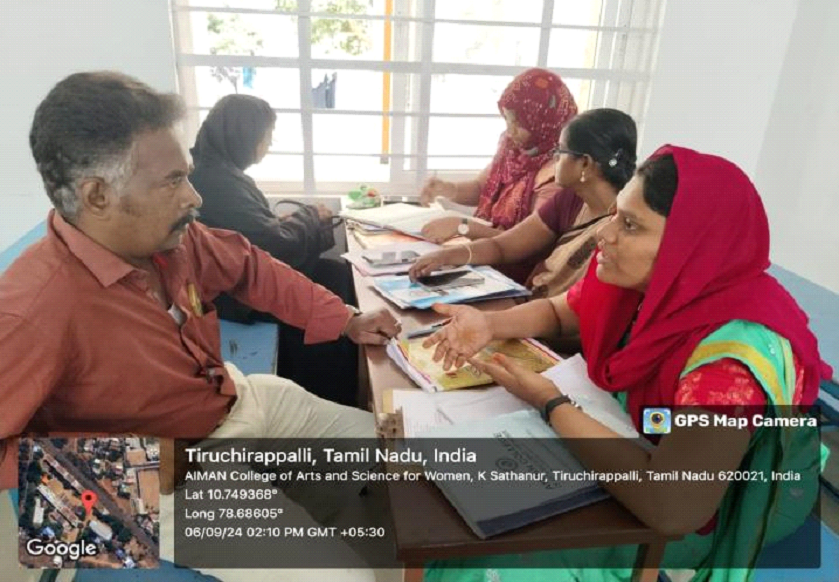
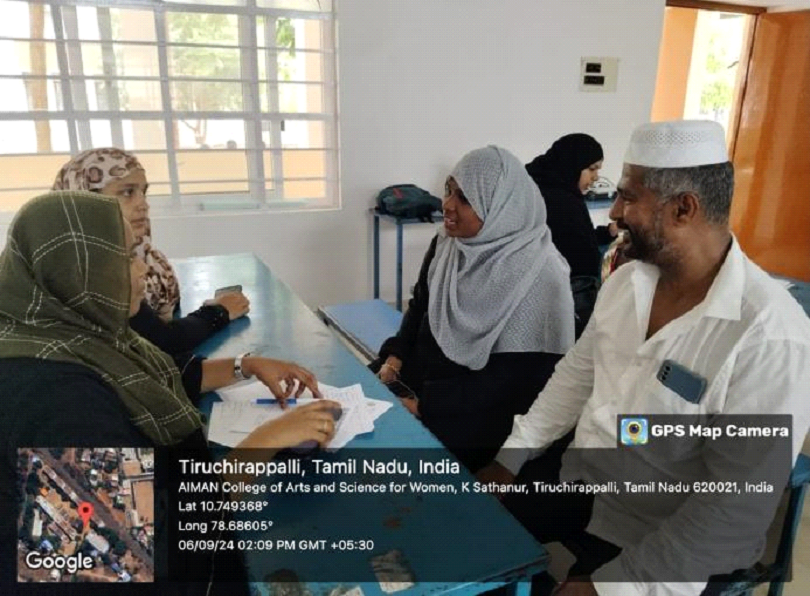
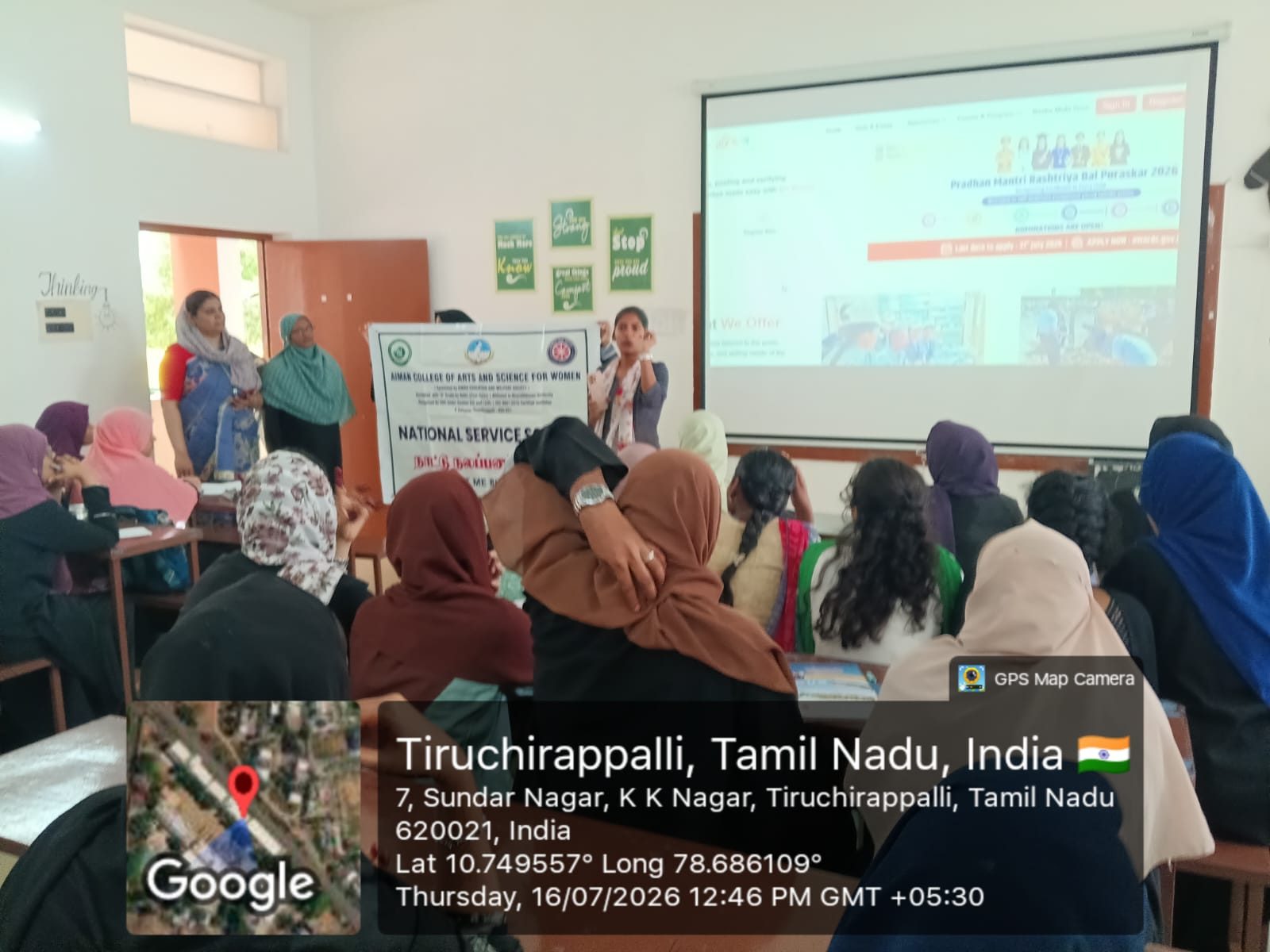
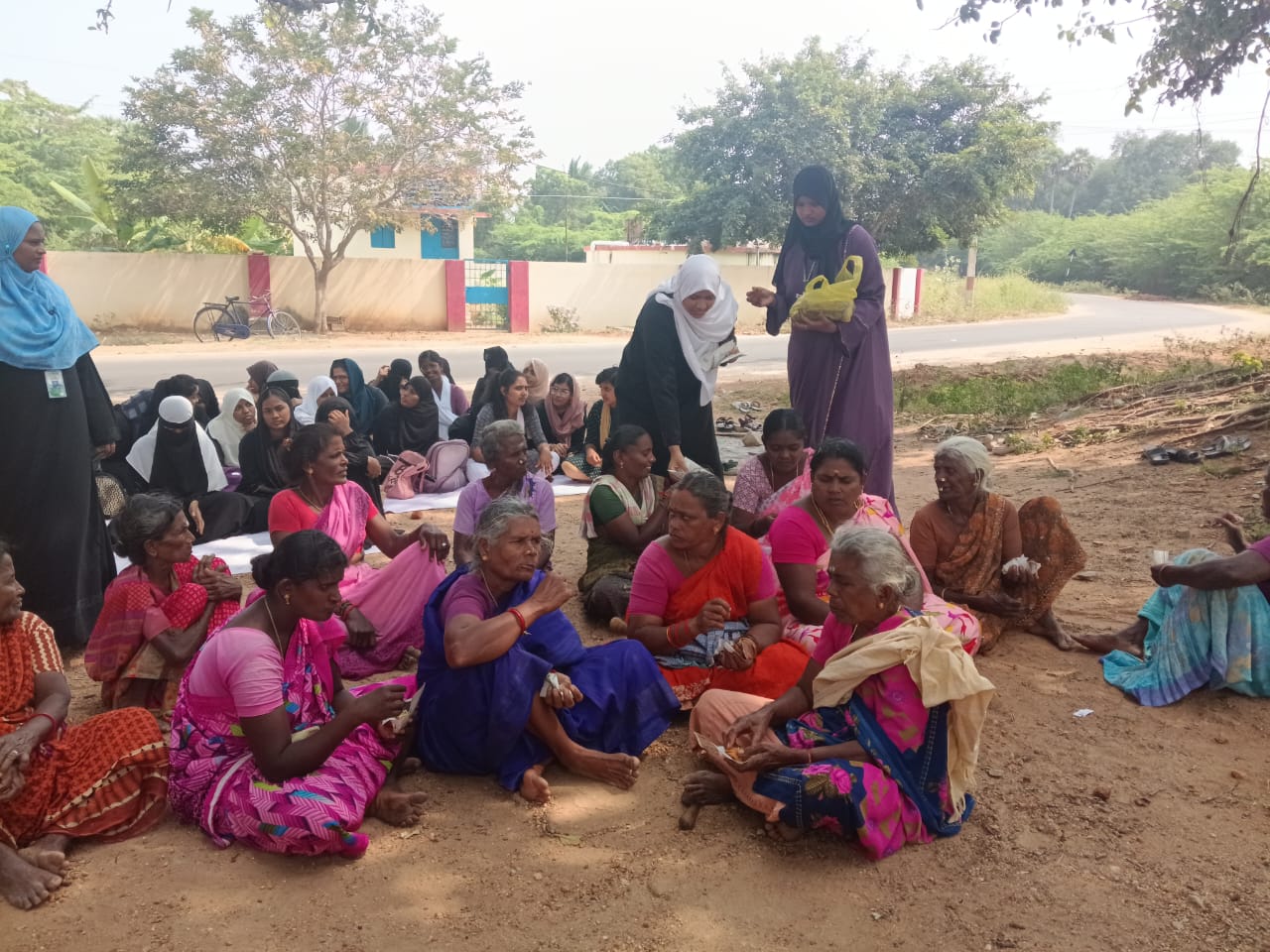
The College has 2 units with a strength of 200 volunteers. Every student member of NSS should serve for at least two years with 120 hours of engagement in community service, per year, excluding annual camps. At the end of two years of satisfactory service, every student member will receive the NSS Certificate, which is considered as equivalent to a diploma in Social Service.
OBJECTIVES
NSS aims at developing the following qualities/ competencies among the volunteers:
- Understand the community in which they work
- Understandthemselves in relation to their community
- Identify the needs and problems of the community and involve them in problem solving
- Develop among themselves a sense of social and civic responsibility
- Utilize their knowledge in finding practical solutions to individual and community problems
- Develop competence required for group-living and sharing of responsibilities
- Gain skills in mobilizingcommunity participation
- Acquire leadershi qualities and democraticattitudes
- Develop capacity to meet emergencies and natural disasters and
- Practice national integration and social harmony
- NSS attempts to establish meaningful linkages between ‘Campus and Community’, ‘College and Village’ and ‘Knowledge and Action’.
REPORTS
Red Ribbon Club
INTRODUCTION
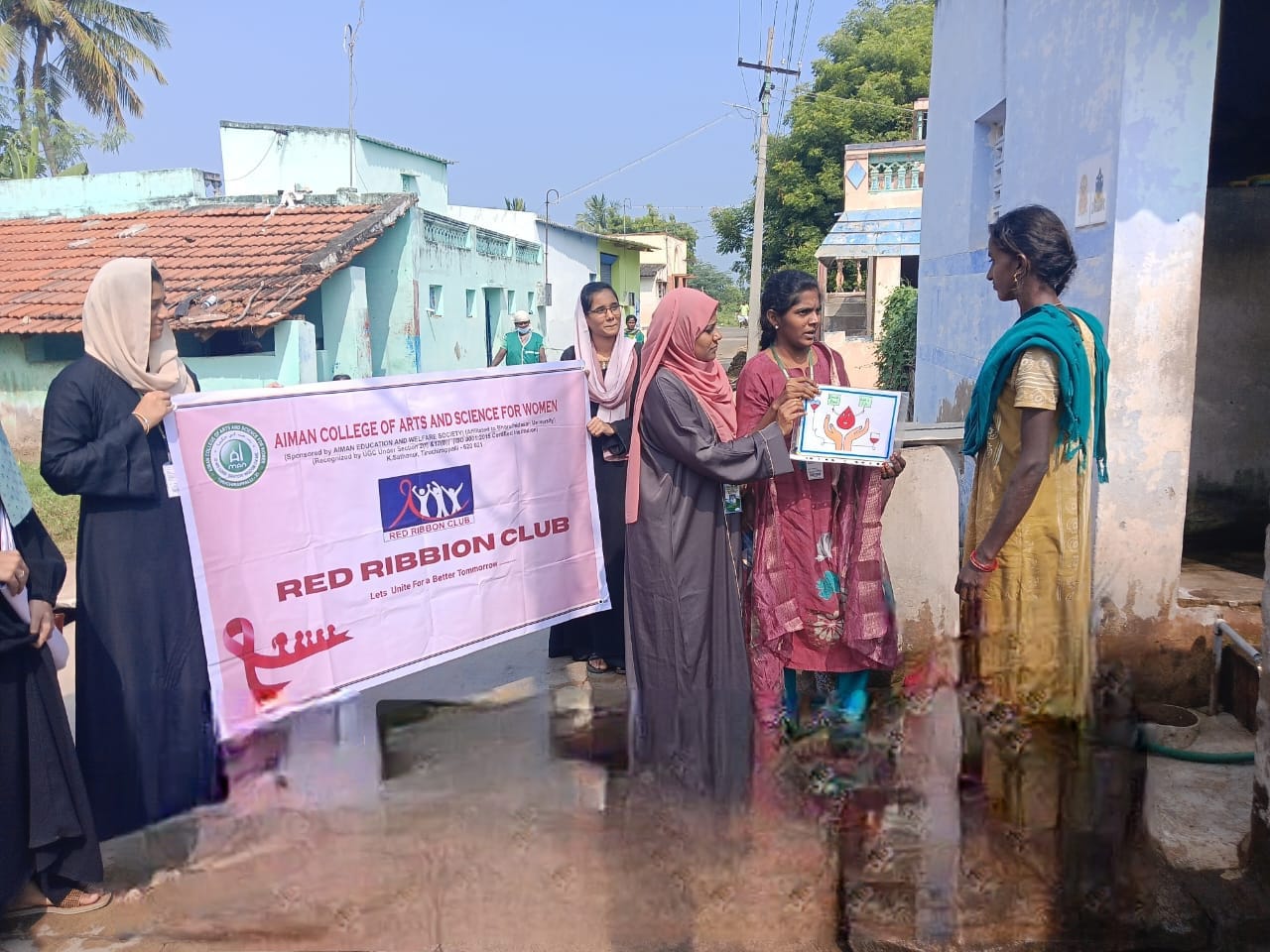
The Red Ribbon Club RRC) is youth-oriented voluntary club started in educational institutions to create awareness about HIV/AIDS and promote healthy and responsible behaviour among young people.
The club encourages students to understand the causes, spread of HIV/AIDS, its prevention and care. It also promotes values like compassion, kindness, and respect towards people affected by HIV/AIDS. RRC plays vital role in building healthy society by involving youth in awareness programmes, voluntary blood donation, health education and community service activities.
The club empowers students to become responsible citizens and change-makers in the society.
HISTORY
The Red Ribbon Club (RRC) is a youth-oriented initiative that originated as a symbol of awareness, support and solidarity towards people living with HIV/AIDS.
The Red Ribbon, the international symbol for HIV/AIDS awareness, was first introduced in 1991 in New York by an artist collective called “Visual AIDS”.
India's National AIDS Control Programme (NACP) was launched in 1992 by the Government of India. To implement and coordinate this programme, the National AIDS Control Organisation (NACO) was established under the Ministry of Health & Family Welfare.
Under the guidance of NACO, the Red Ribbon Club programme was introduced in educational institutions to involve young people in creating awareness about HIV/AIDS, reducing stigma and discrimination, promoting healthy lifestyles and encouraging voluntary blood donation.
Since then, RRC has grown into a strong youth movement across schools and colleges in India, involving lakhs of students in building a healthy and aware society.
OBJECTIVE
· To create awareness about HIV/AIDS.
· To educate students about HIV transmission and prevention.
· To remove myths and misconceptions about HIV/AIDS.
· To reduce stigma and discrimination.
· To promote voluntary blood donation.
· To encourage healthy and responsible lifestyles.
· To develop leadership qualities among students.
· To improve communication and teamwork skills.
· To encourage youth participation in social service.
REPORTS
LEO
ABOUT US
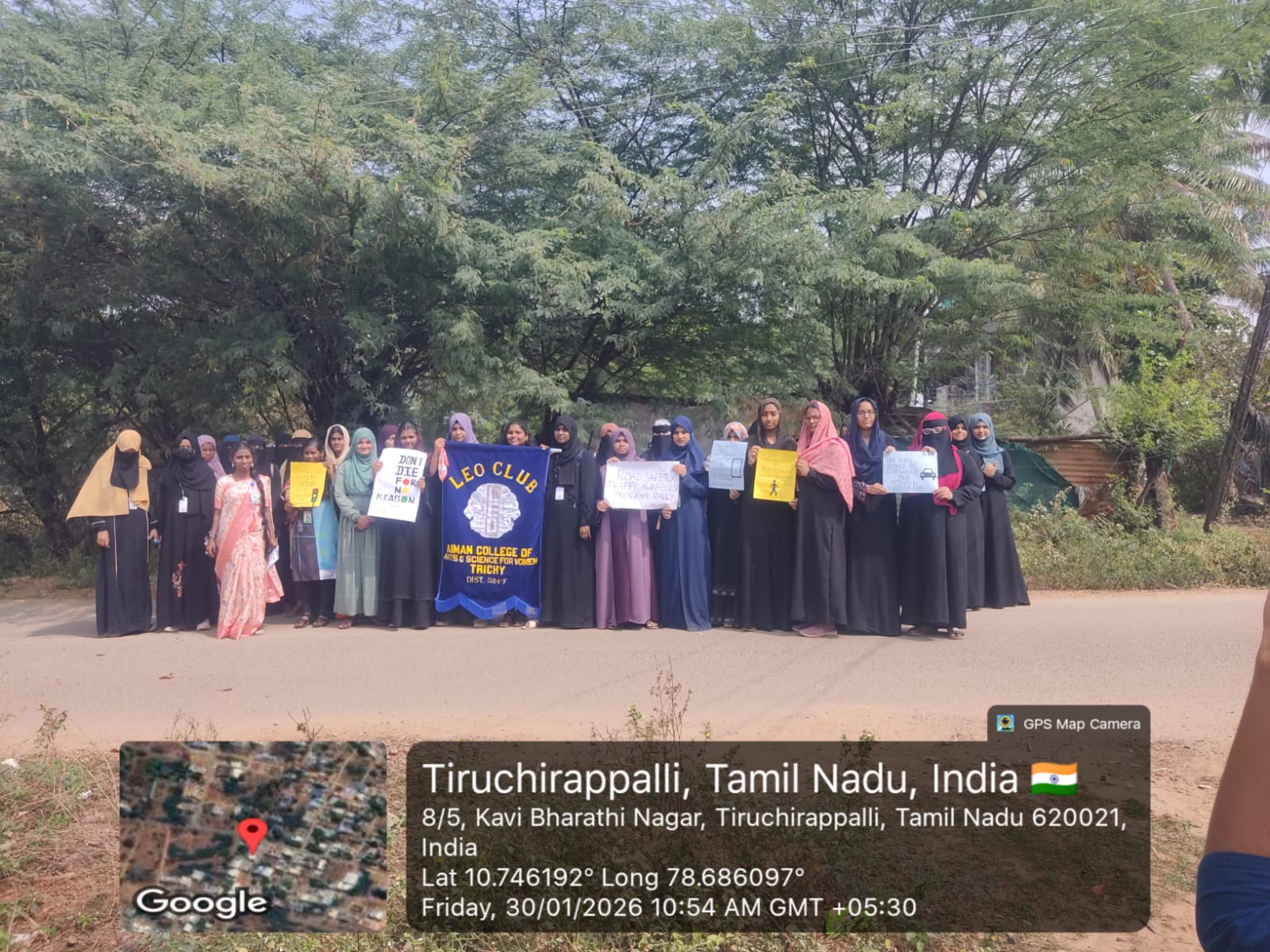
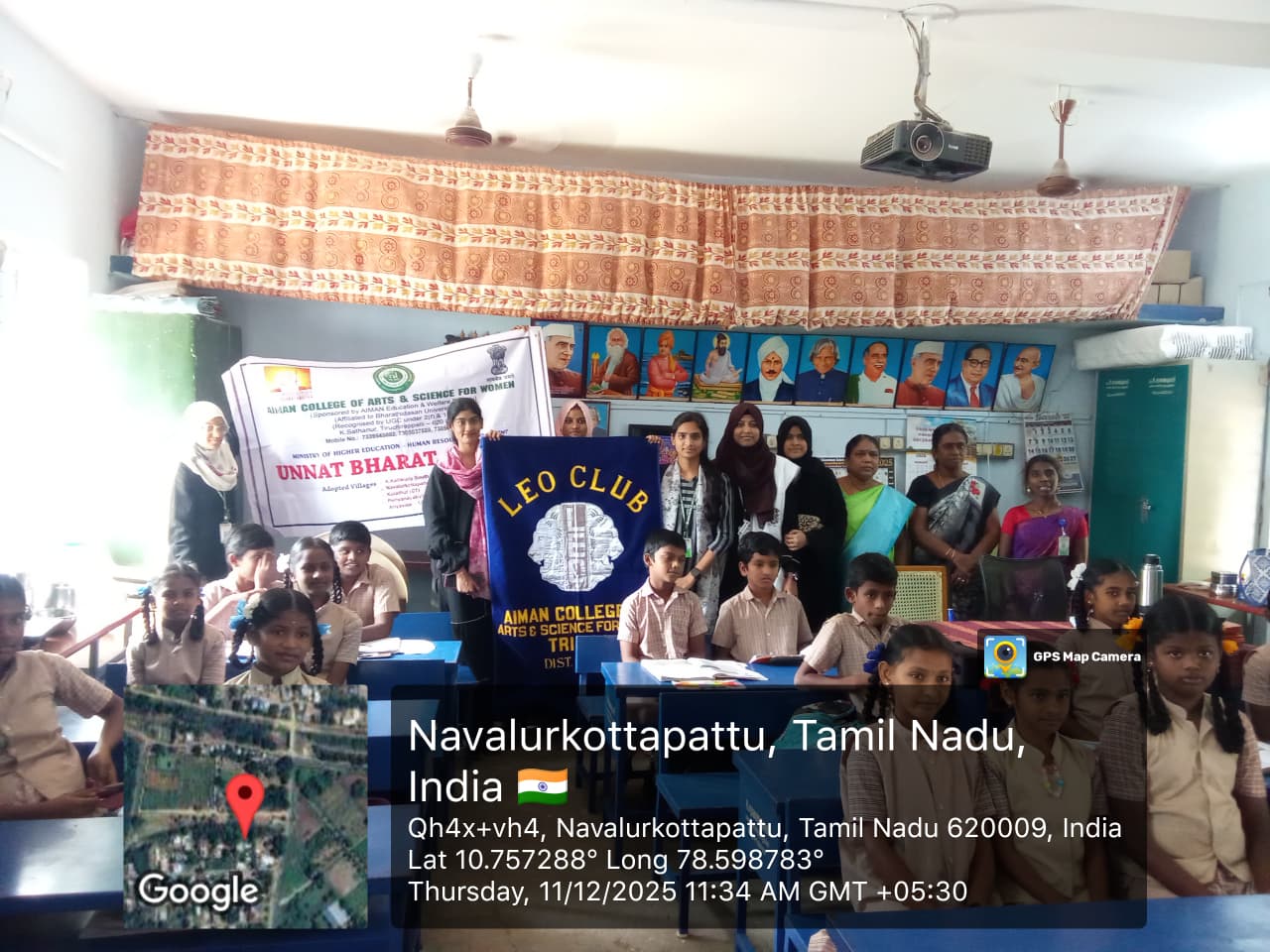
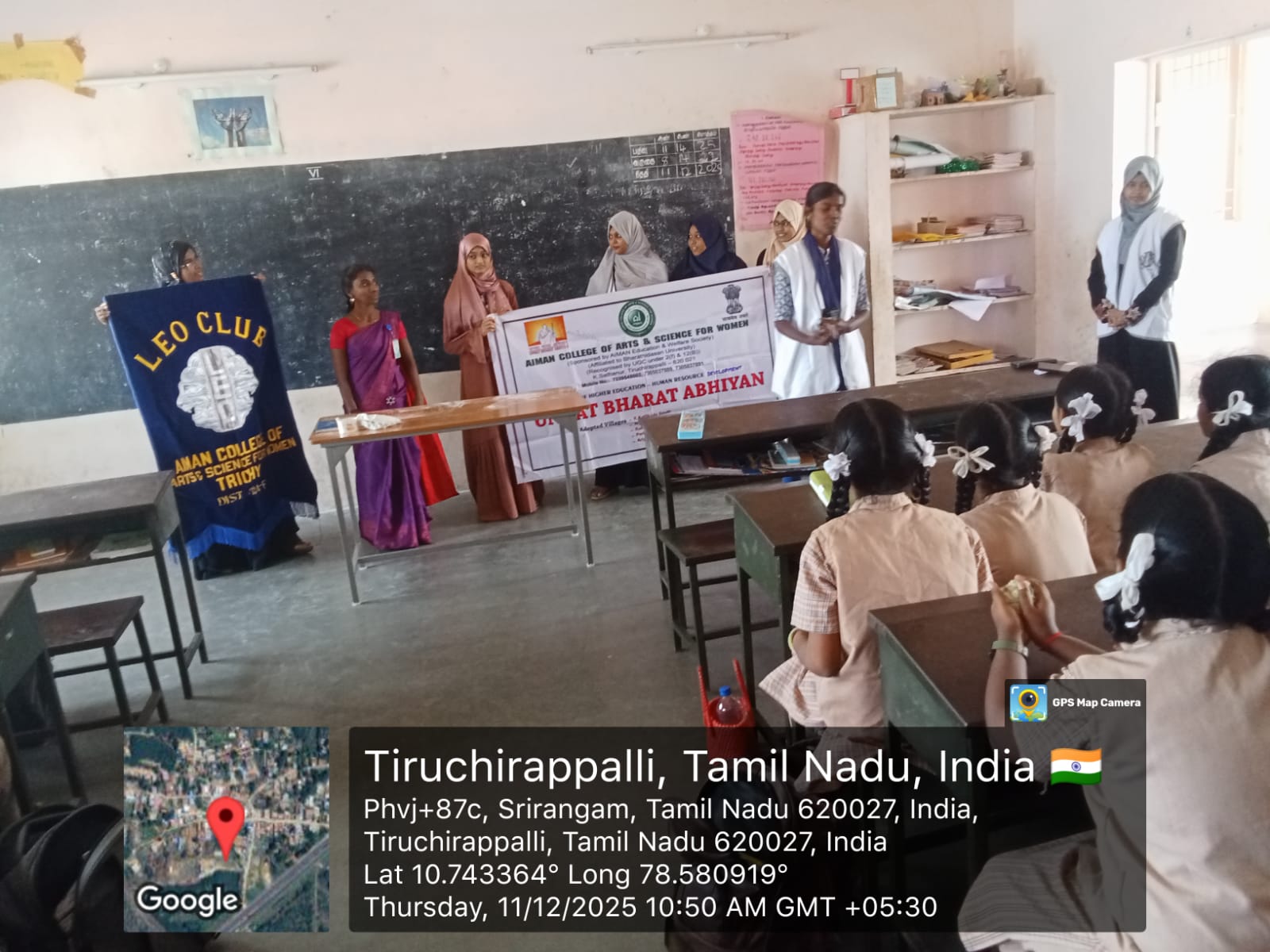
LEO Clubs are a youth organization of Lions Clubs International. As of 2025, LEO Club operates in over 140 countries often collaborating with United Nations over impactful projects. LEO clubs encourage youths to develop leadership qualities by participating in social service activities.
VISION
To empower young people to become responsible leaders and compassionate citizens who contribute to building a better society through service, leadership, and fellowship.
MISSION
To provide opportunities for young people to develop leadership qualities, gain practical experience, and serve their communities through humanitarian activities, social awareness programmes, environmental initiatives, and community development projects.
OBJECTIVES
The main objective of the LEO Club is to empower young people to develop leadership qualities, gain experience, and serve the community through voluntary service activities.
· To create awareness about social issues, health, education, and environmental protection.
· To develop communication skills, self-confidence, and organizational abilities.
· To encourage students to participate in charitable and community development programmes.
· To promote respect, discipline, compassion, and responsible citizenship.
· To provide opportunities for personal growth through service-oriented activities.
· To strengthen the relationship between young people and the community.
PURPOSE:
The purpose of the LEO Club is to provide young people with opportunities to develop leadership skills, gain valuable experience, and contribute to the welfare of society through community service.
The club aims to nurture responsible, confident, and compassionate young leaders by encouraging teamwork, fellowship, social awareness, and humanitarian activities. It motivates students to identify community needs, take initiative, and actively participate in programmes that promote social responsibility, environmental protection, health awareness, and community development.
Overall Purpose: To empower young people to become effective leaders and responsible citizens through service, leadership, and fellowship.
MOTTO: “Where there is a need, there is a LEO.”
REPORTS


YOUTH RED CROSS
YOUTH RED CROSS
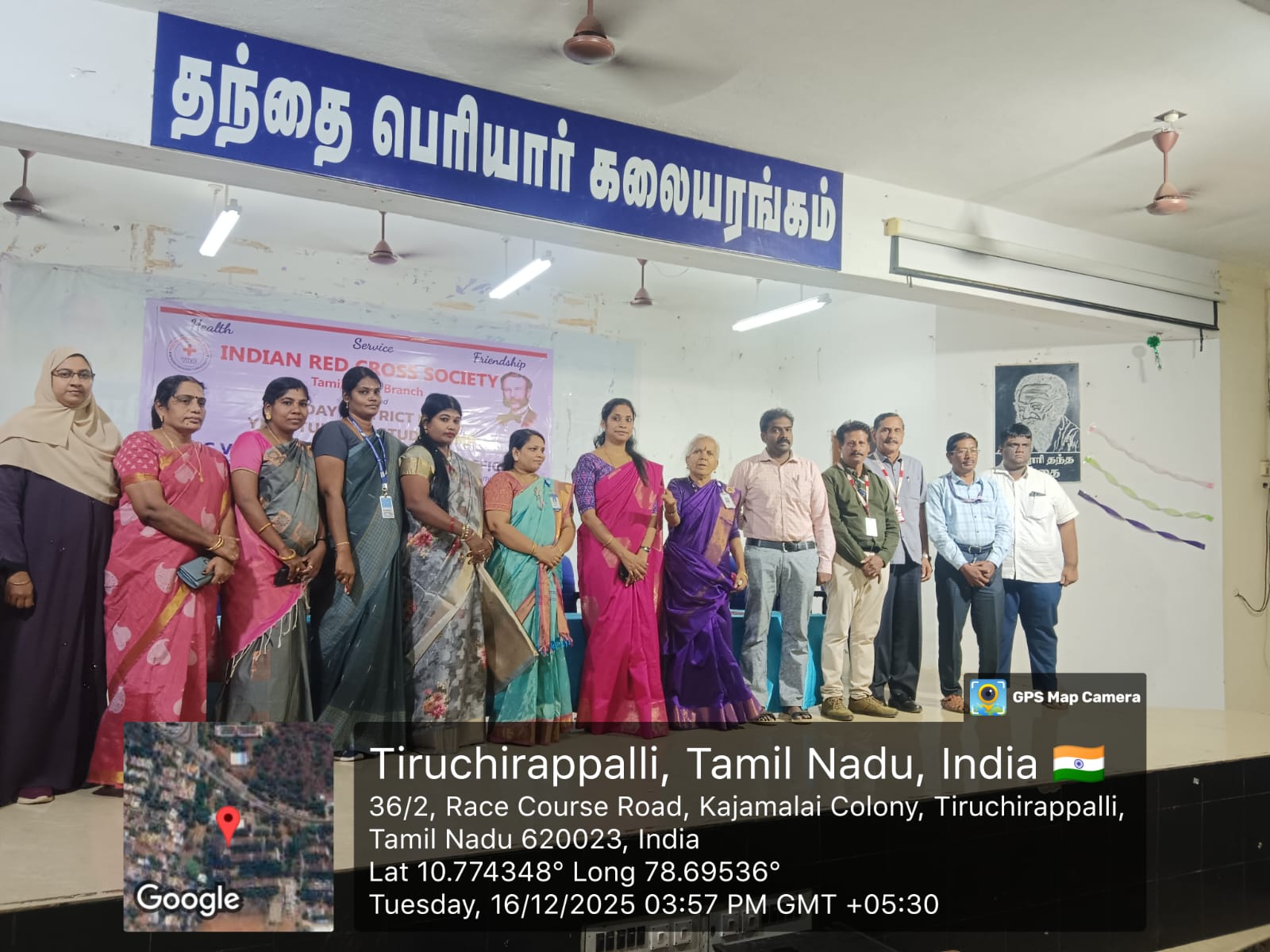
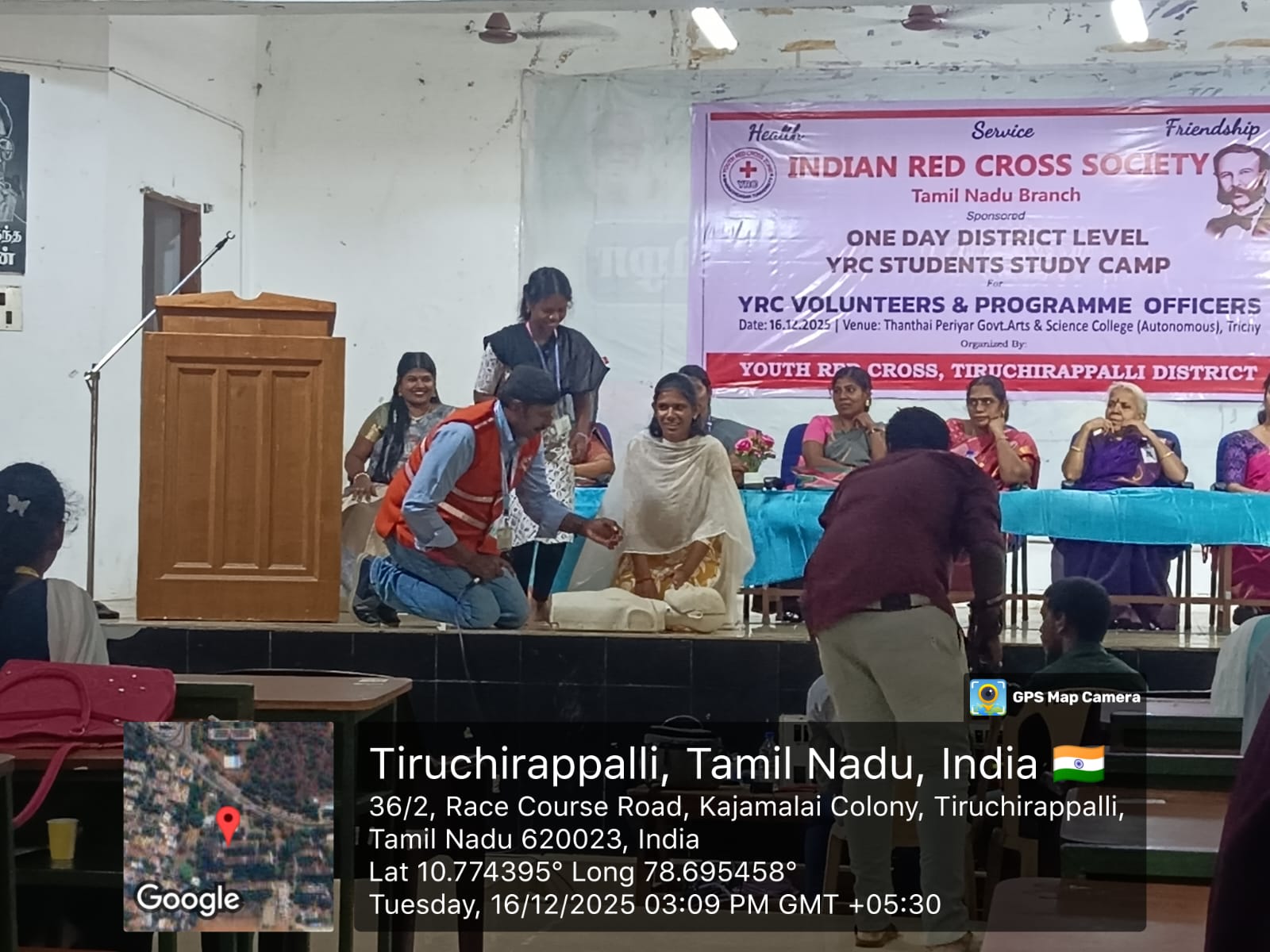
The Youth Red Cross (YRC) is the youth wing of the Indian Red Cross Society (IRCS). It encourages students and young people to develop humanitarian values, social responsibility, leadership, and a spirit of service. YRC activities promote health, friendship, discipline, and voluntary service among youth.
History of Youth Red Cross
The Red Cross Movement was founded in 1863 by Henry Dunant, a Swiss humanitarian, after witnessing the suffering of soldiers in the Battle of Solferino in Italy.
The movement later spread across many countries, including India.
The Indian Red Cross Society (IRCS) was established in 1920 under an Act of Parliament.
To involve students and youth in humanitarian activities, the Youth Red Cross (YRC) was formed as a youth division of the IRCS.
YRC units were introduced in schools, colleges, and universities to train young people in service-minded activities such as health education, first aid, blood donation awareness, disaster relief, and community welfare.
Mission of Youth Red Cross:
“To inspire, encourage, and initiate at all times all forms of humanitarian activities by youth, so that human suffering can be minimized and peace and dignity can be promoted.”
The mission focuses on:
Humanitarian service
Protection of health and life
Promotion of peace
Development of voluntary service
Service to the community without discrimination
Motto of Youth Red Cross
“Serve One Another”
This motto reminds every YRC volunteer to help others selflessly and with compassion.
Major Activities of YRC
First aid training
Blood donation camps and awareness rallies
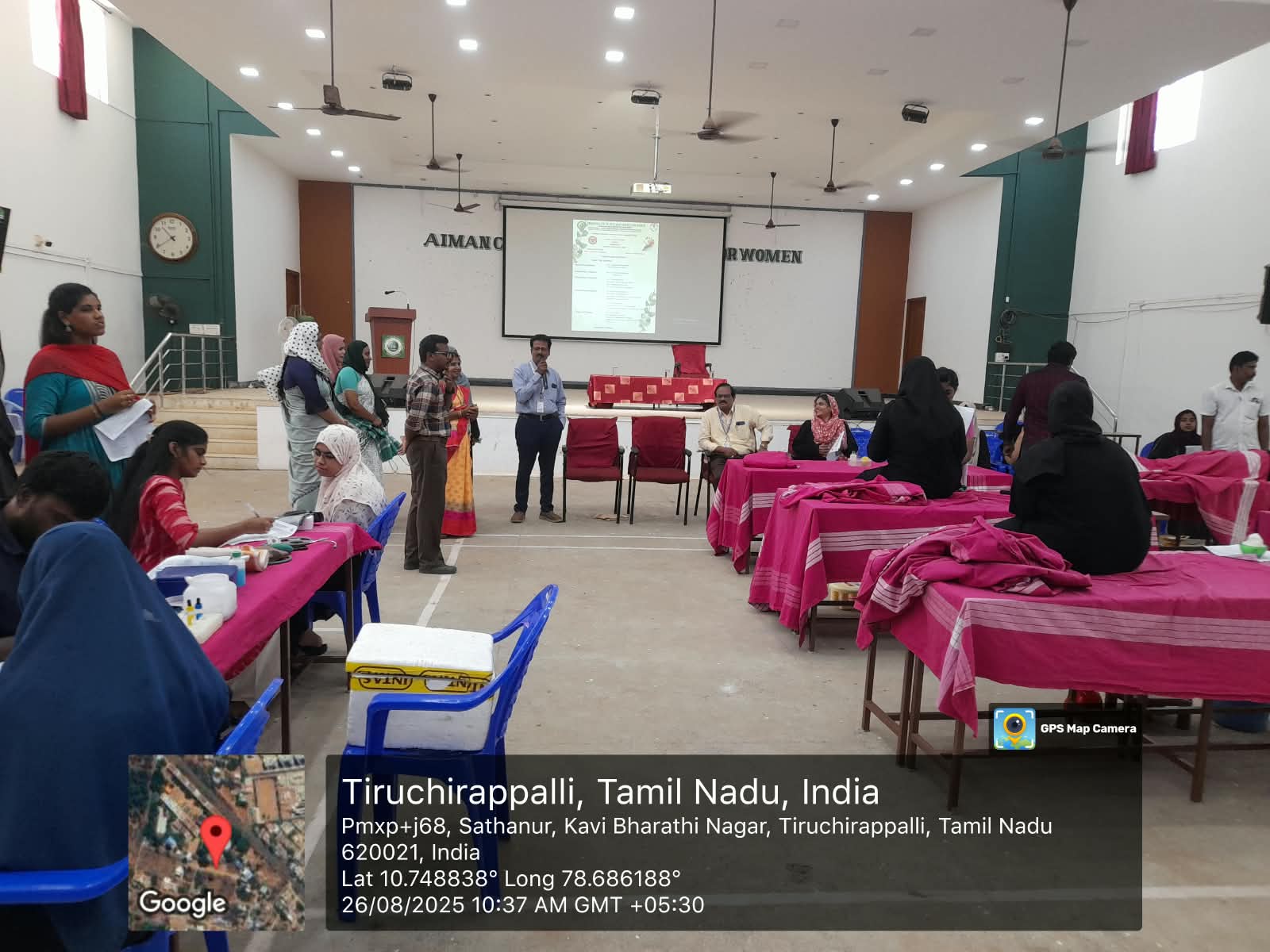
Health check-up camps
Breastfeeding awareness programmes
Nutrition and hygiene education
Tree plantation and environmental programmes
Disaster management training
Road safety awareness
Community service in villages, schools, and hospitals
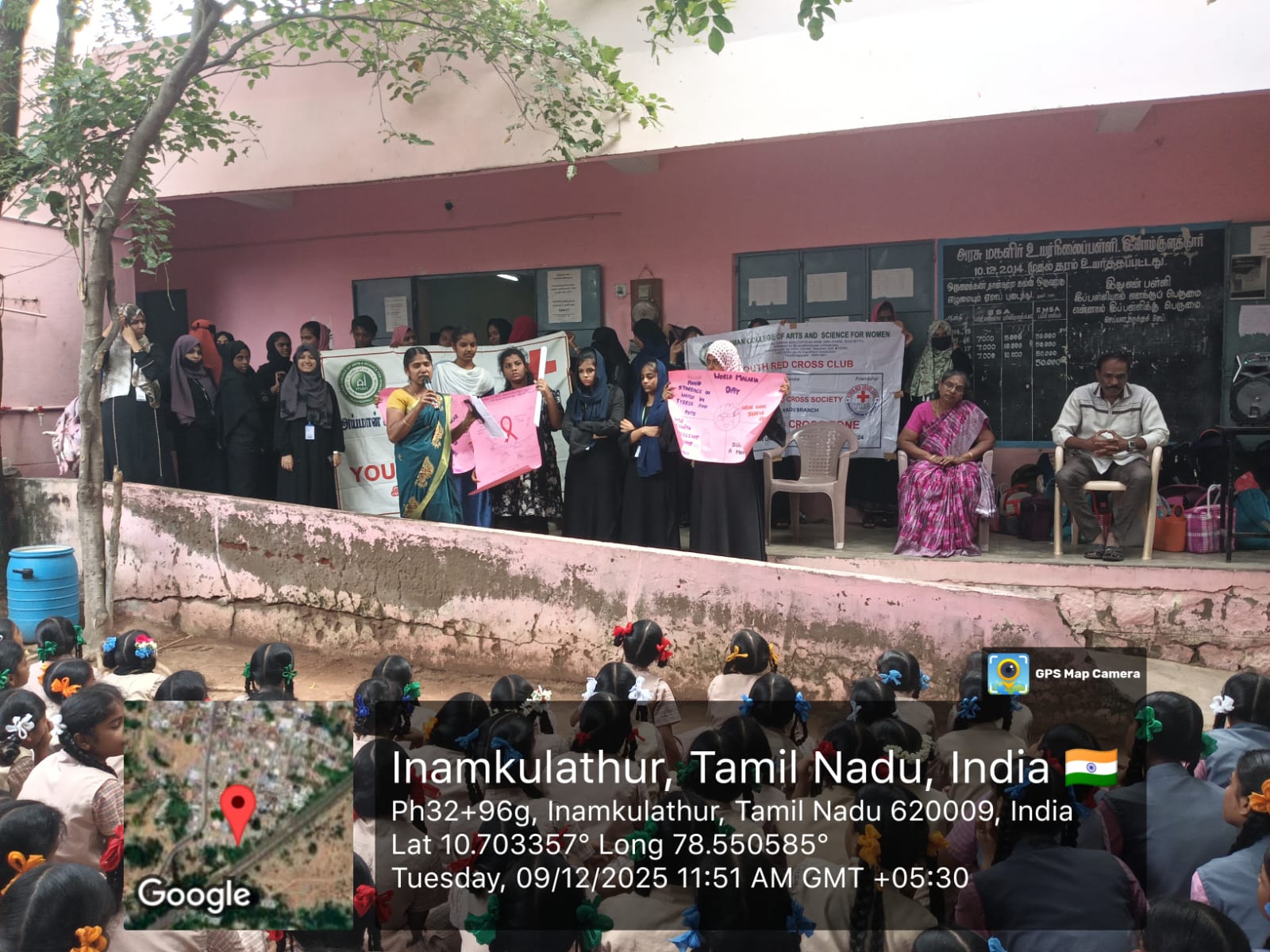
Observation of important health days
REPORTS

Bhumi Club
About Bhumi Club
Bhumi is a non-governmental organisation (NGO) founded in Chennai in 2006 by a group of young volunteers. It aims to encourage young people to participate in social service, environmental protection, and community development. The organisation promotes environmental awareness, sustainable living, and responsible citizenship among students and volunteers.
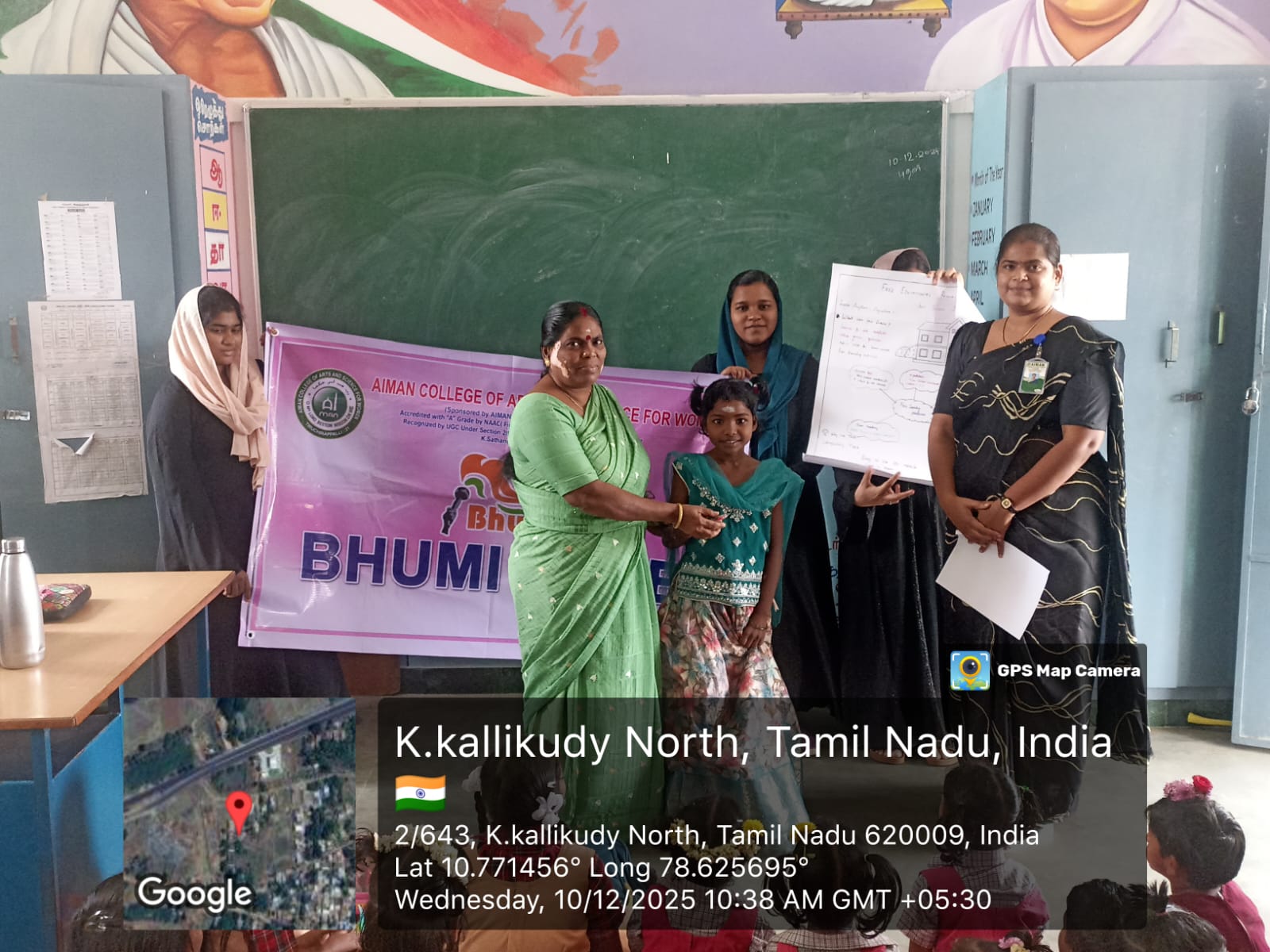
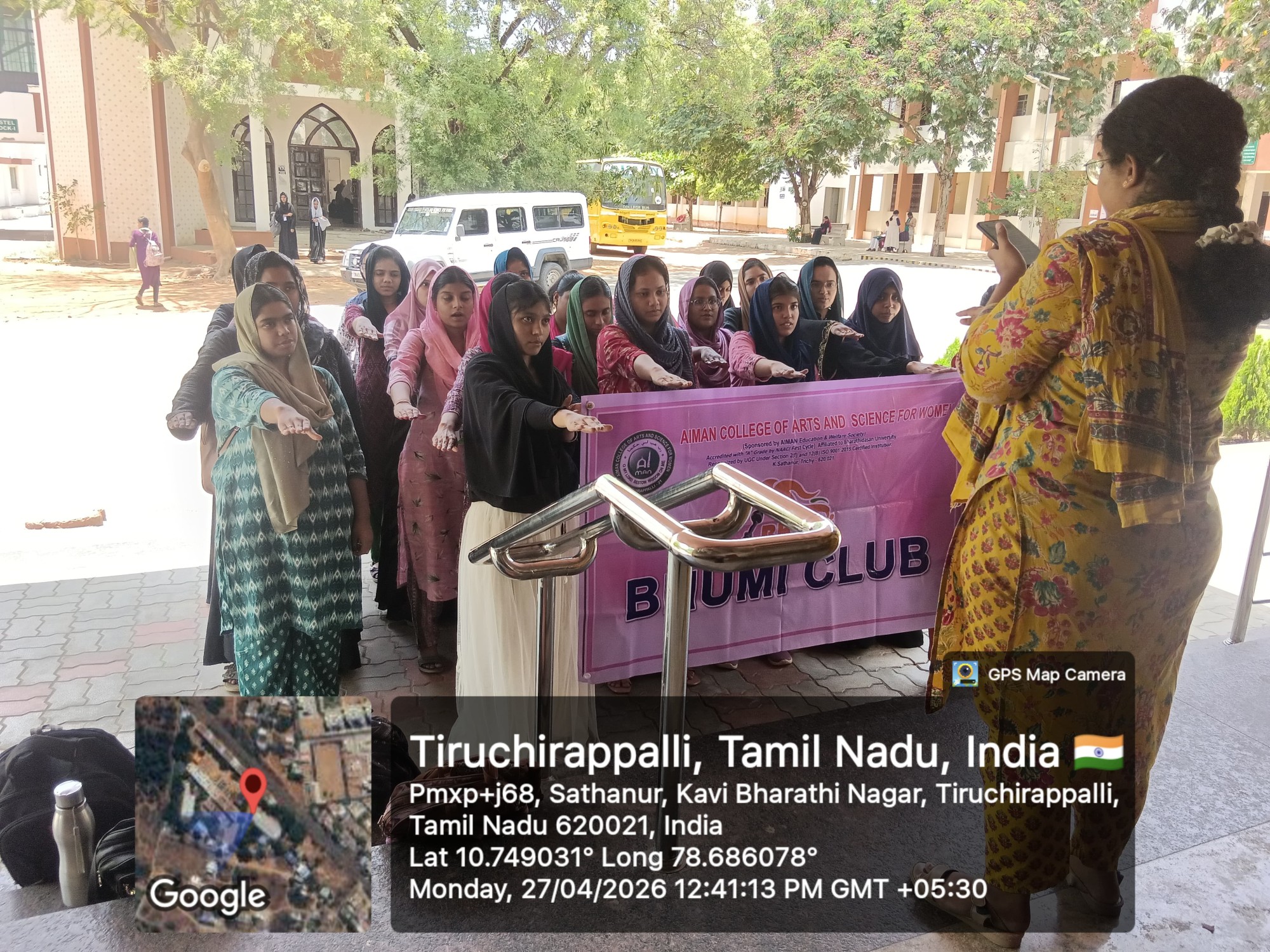
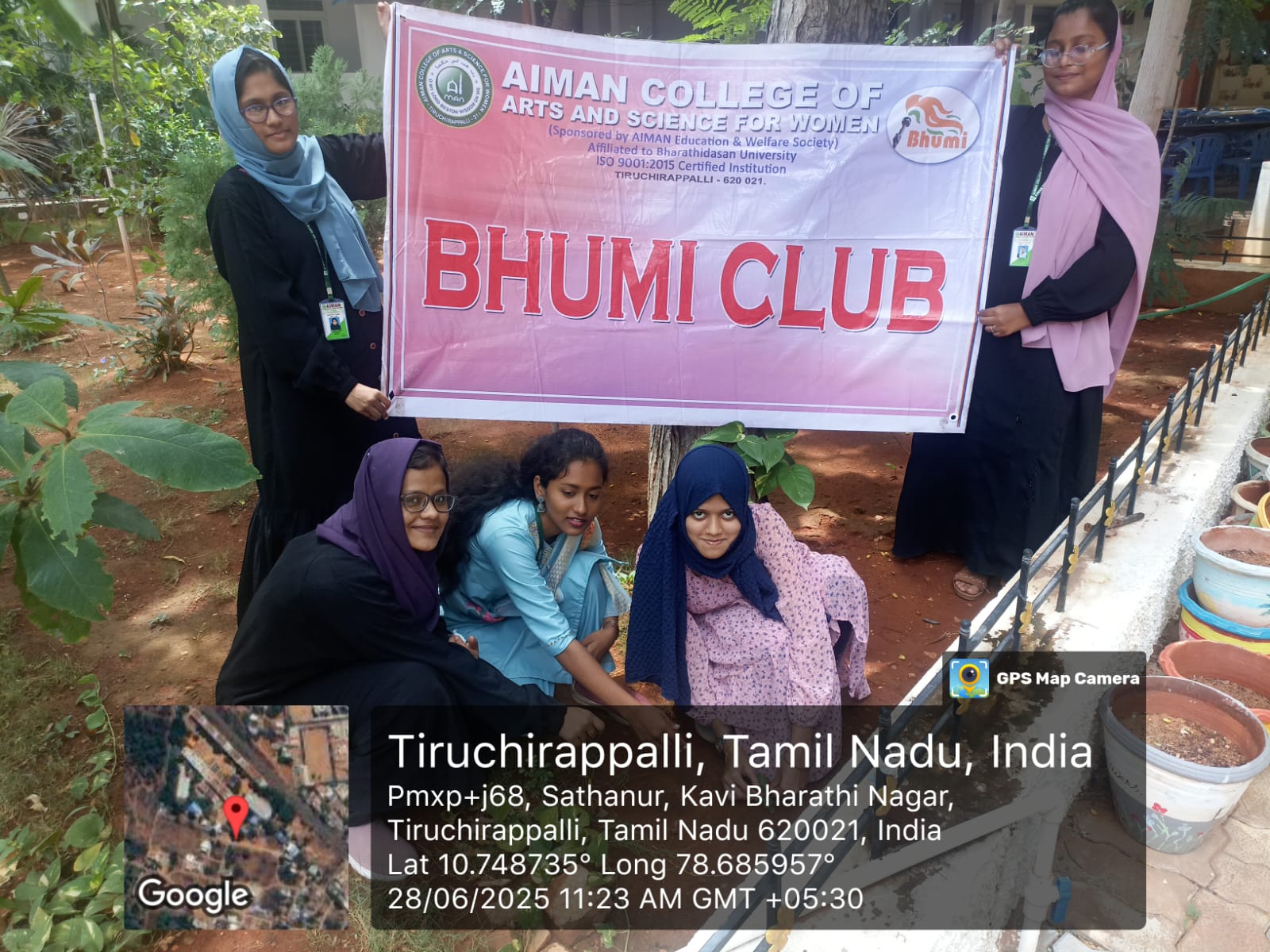
At AIMAN COLLEGE OF ARTS AND SCIENCE FOR WOMEN, Tiruchirappalli, Bhumi Club was established in 2023 to create environmental awareness and encourage students to take an active role in protecting nature. The club provides a platform for students to understand environmental issues and develop a sense of responsibility towards society and the environment.
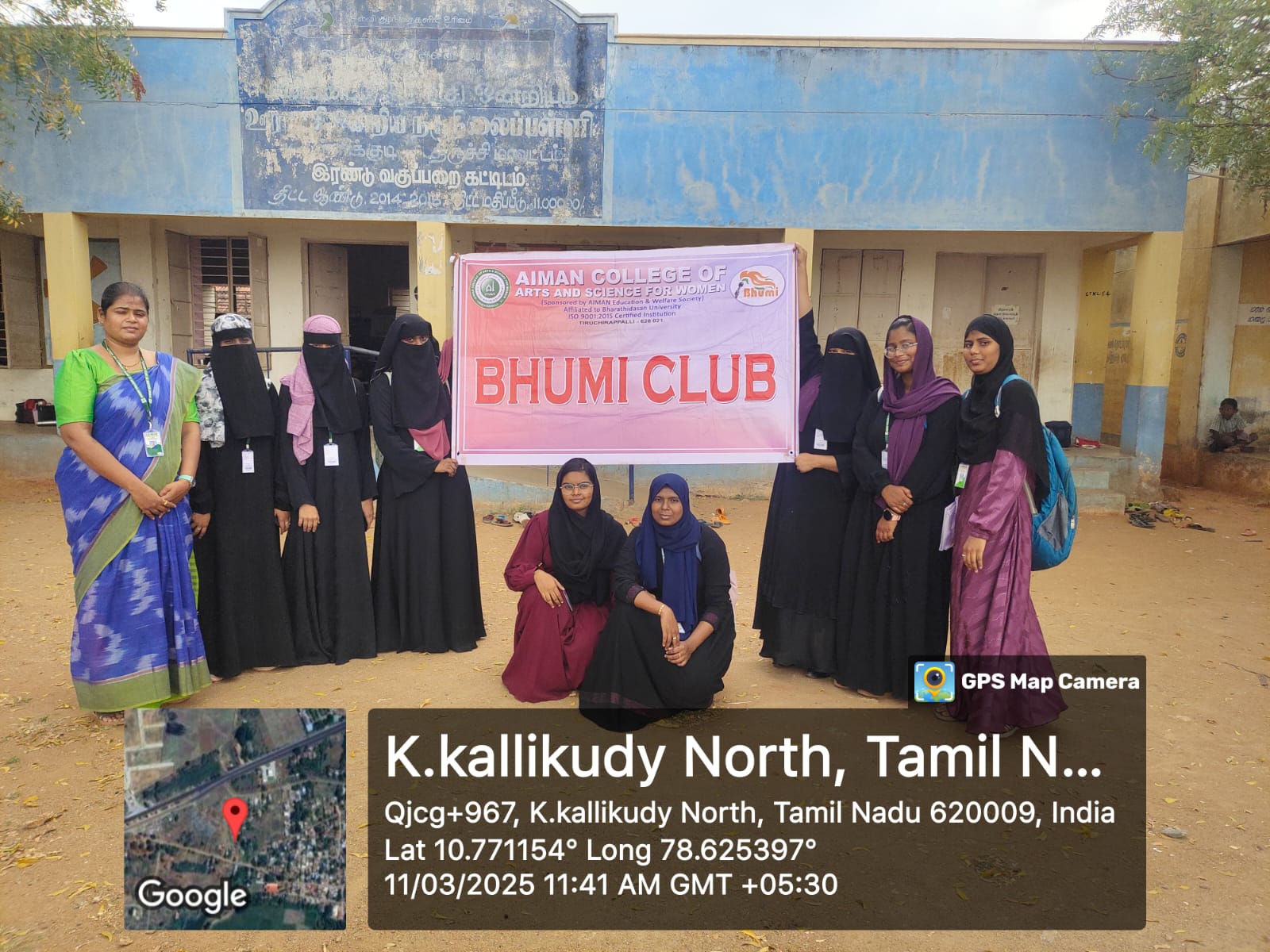
Since its establishment, Bhumi Club at AIMAN College has organised various programmes and outreach activities to promote environmental awareness, social responsibility, and sustainable development. The club actively works towards the empowerment of women, the establishment of an inclusive society, and the promotion of child learning and education. It also conducts activities to create awareness about biodiversity, environmental conservation, and the importance of protecting natural resources. Through these initiatives, the club encourages students to engage with the community, understand social and environmental issues, and contribute to the welfare of women, children, and society at large.
Bhumi Club continues to motivate students to protect the environment, reduce waste, conserve natural resources, and contribute to a greener and healthier future. Through its programmes, the club aims to develop environmental responsibility, leadership, teamwork, and social commitment among students.
REPORTS

FSSAI CLUB
FSSAI CLUB (FOOD SAFETY AND STANDARDS AUTHORITY OF INDIA)
ABOUT FSSAI
The Food Safety and Standards Authority of India (FSSAI) was established under the Food Safety and Standards Act, 2006 to regulate food safety in India. FSSAI has been created for laying down science-based standards for articles of food and regulates its manufacture, storage, distribution, sale, and import to ensure safe and wholesome food for consumers. FSSAI functions under the Ministry of Health & Family Welfare, Government of India.
HISTORY
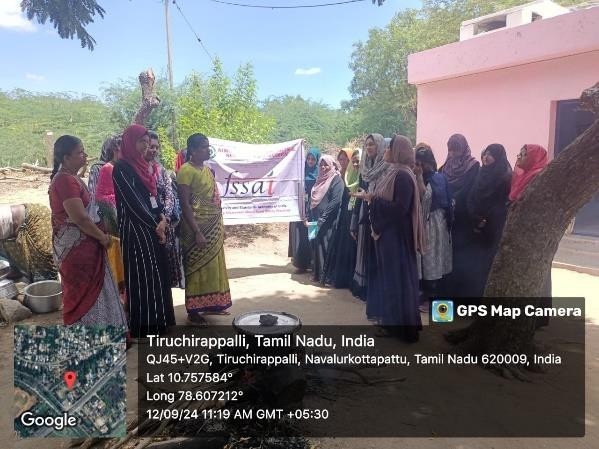
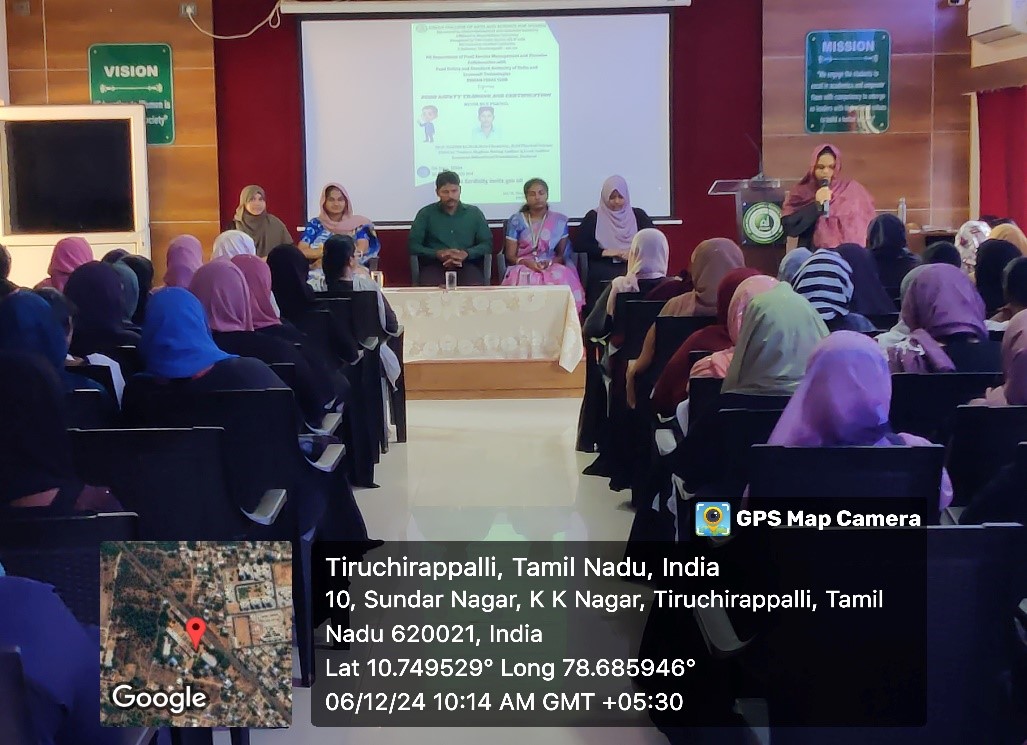
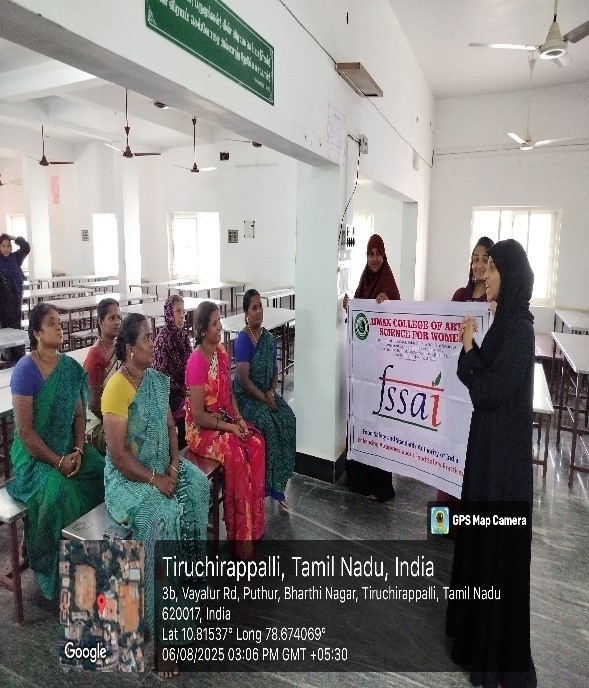
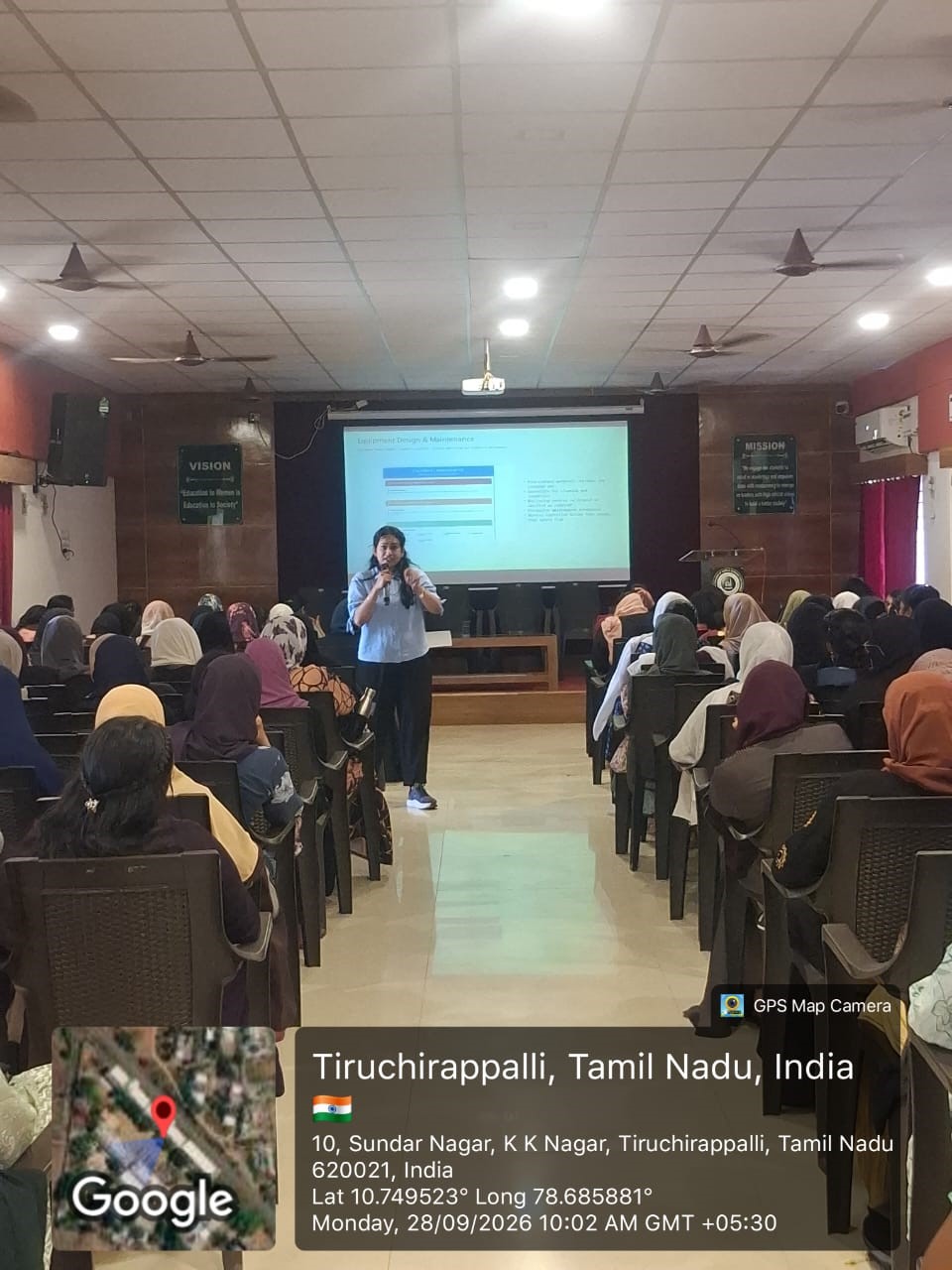
The FSSAI club was established at the college in the year 2023 with the aim of creating awareness among students about food safety, hygiene, nutrition, healthy eating practices and responsible food choices. The club was initiated to provide students with opportunities to gain knowledge and actively participate in food safety and nutrition-related awareness activities.
VISION
To create a Safe food, healthy and sustainable campus by empowering students with knowledge, skills and responsible food practices.
MISSION
To promote awareness and understanding of food safety, hygiene, nutrition and sustainable food practices among students and the community, and to develop responsible individuals who can contribute towards a healthier and safer food environment.
OBJECTIVES
Ø To promote food safety, hygiene, healthy eating, and awareness of food adulteration and labelling.
Ø To encourage sustainable food practices and reduce food waste.
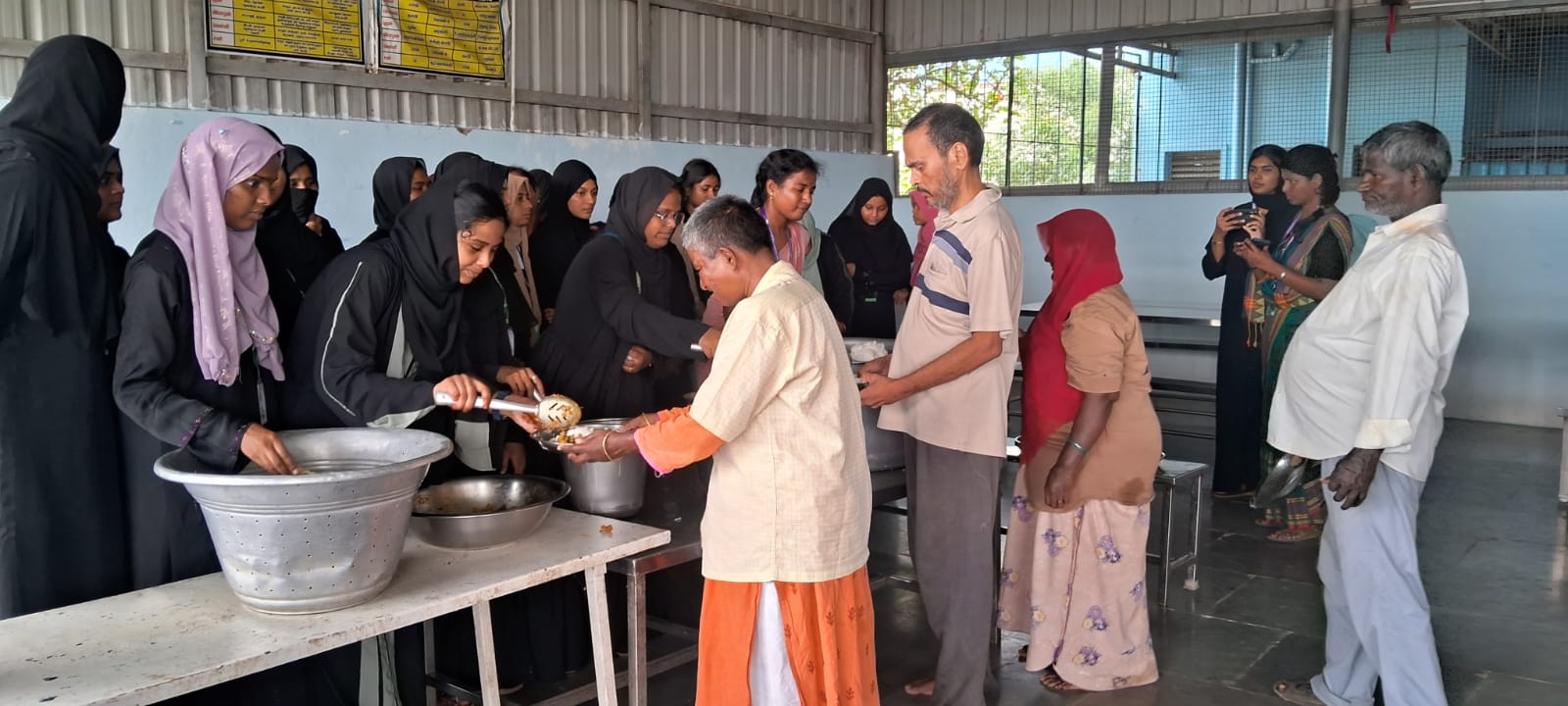
Ø To conduct food safety awareness programs and community outreach activities.
Ø To develop leadership, communication, and teamwork skills among students through FSSAI Club activities.
REPORTS

Energy Conservation Club
1. Introduction
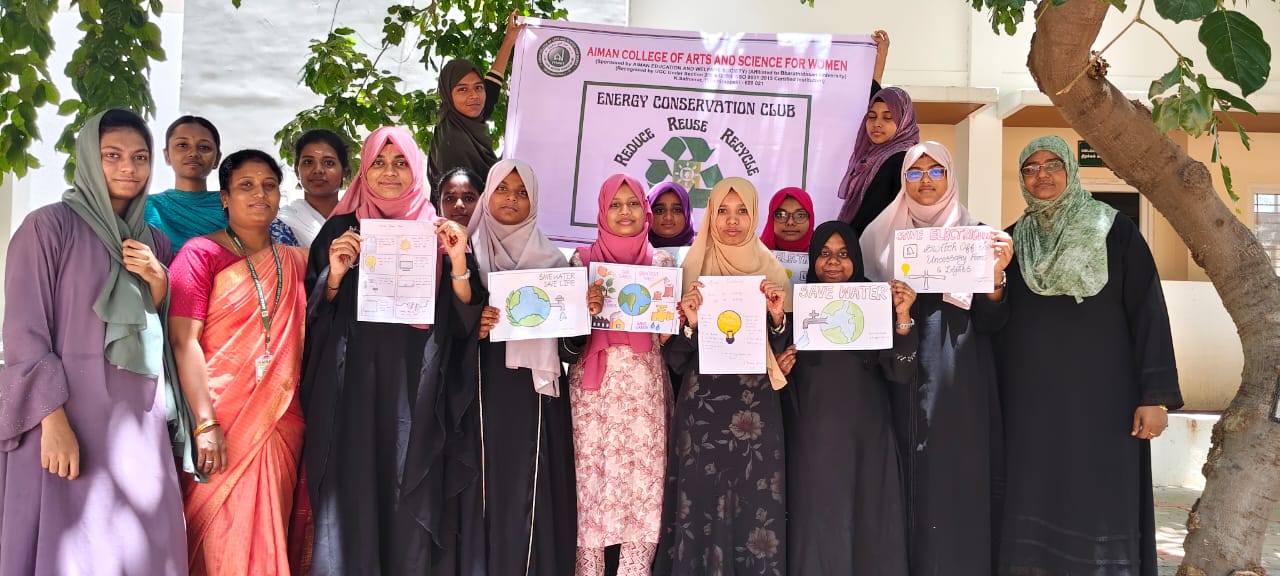
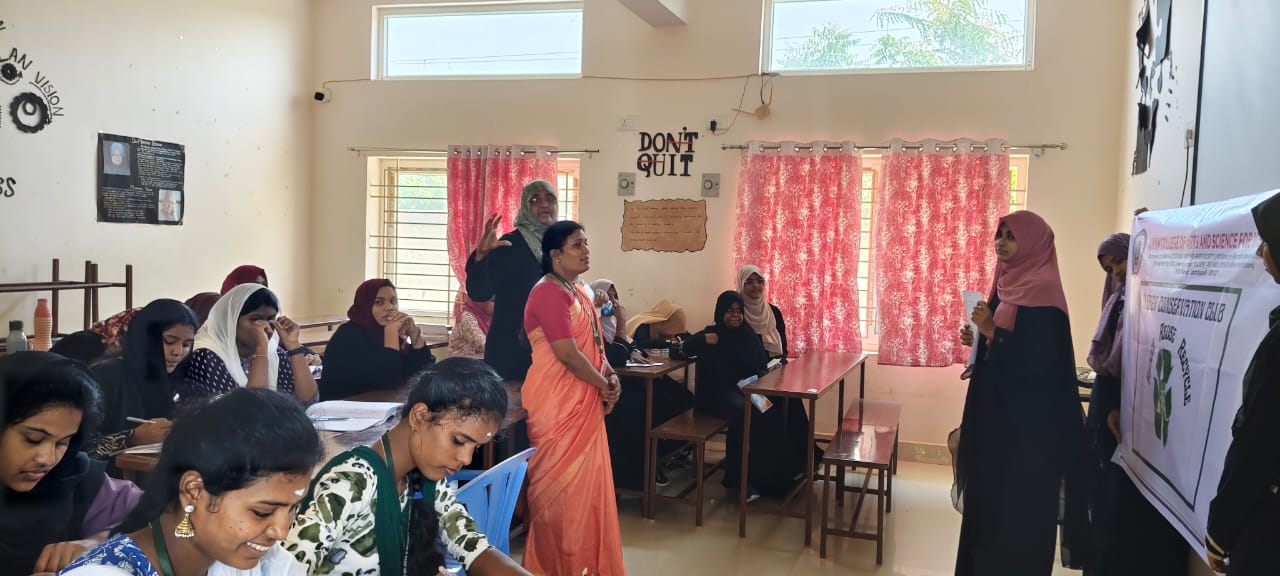
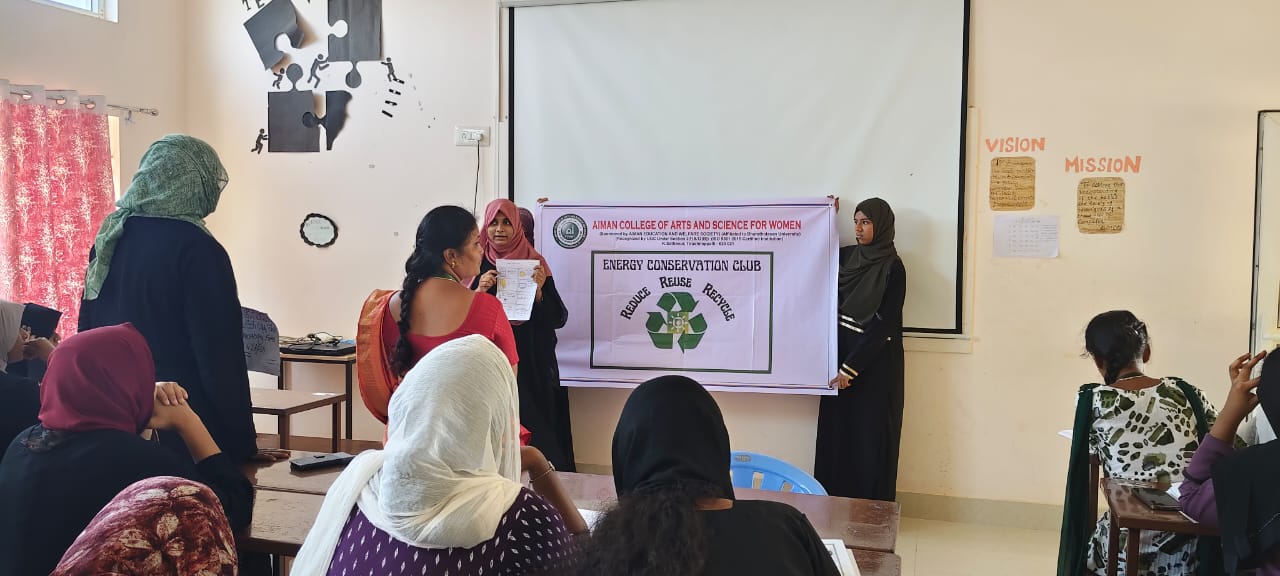
The Energy Conservation Club of AIMAN College of Arts and Science for Women, Trichy, aims to create awareness among students about the importance of energy conservation and environmental sustainability. The club encourages responsible electricity usage, promotes renewable energy resources, and motivates students to adopt eco-friendly practices. Through various awareness programmes, seminars, workshops, and competitions, the club strives to develop energy-conscious behaviour and create a greener, cleaner, and sustainable environment.
2. Objectives
The main objective of the Energy Conservation Club at AIMAN College of Arts and Science for Women is to create awareness among students about the importance of energy conservation and sustainable energy practices.
- To promote responsible energy management and encourage sustainable energy practices among students and staff.
- To develop energy-conscious behaviour among students and motivate them to minimize unnecessary electricity consumption.
- To familiarize students with modern energy-saving methods and innovative renewable
Energy technologies.
- To encourage active student involvement in campus-based environmental initiatives and energy efficiency activities.
- To inspire students to adopt eco-friendly lifestyles and promote the use of clean energy for a greener and healthier environment.
- To develop environmental responsibility among women students and inspire them to promote energy conservation in their families and communities.
- To organize awareness programmes, seminars, workshops, and competitions on energy conservation.
3. Vision
To establish AIMAN College as an environmentally responsible institution by encouraging energy awareness, promoting clean energy solutions, and developing a culture of sustainable energy utilization among students and society.
4. Mission
To empower students with knowledge and practical skills in energy conservation, encourage the adoption of innovative energy-saving techniques, promote renewable energy resources, and actively involve them in building a greener and energy-efficient campus.

Citizen Consumer Club
INTRODUCTION
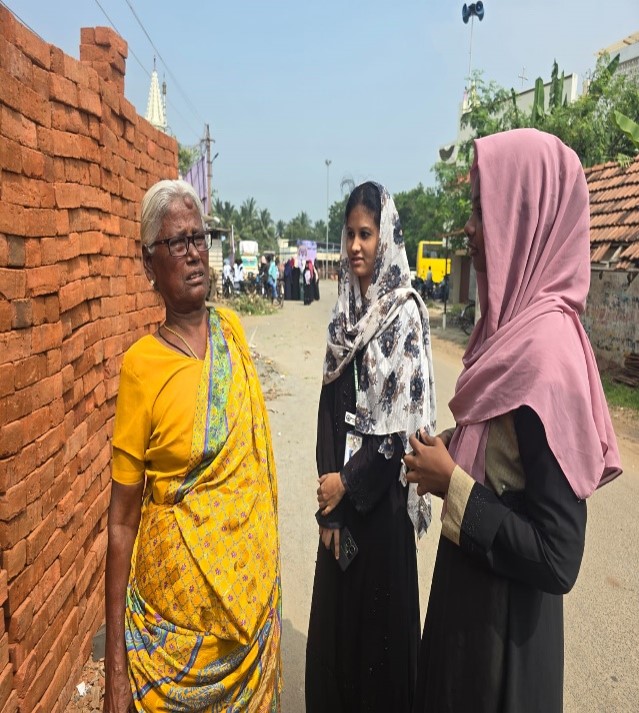
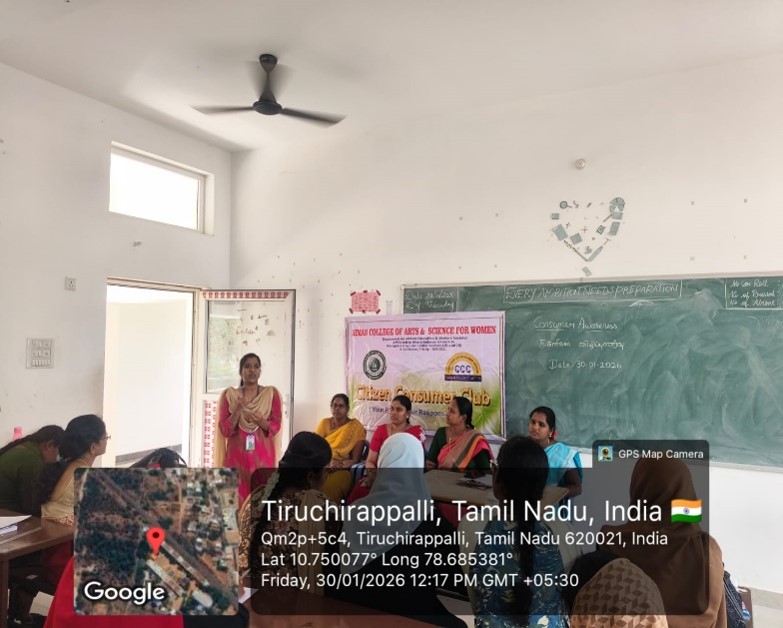
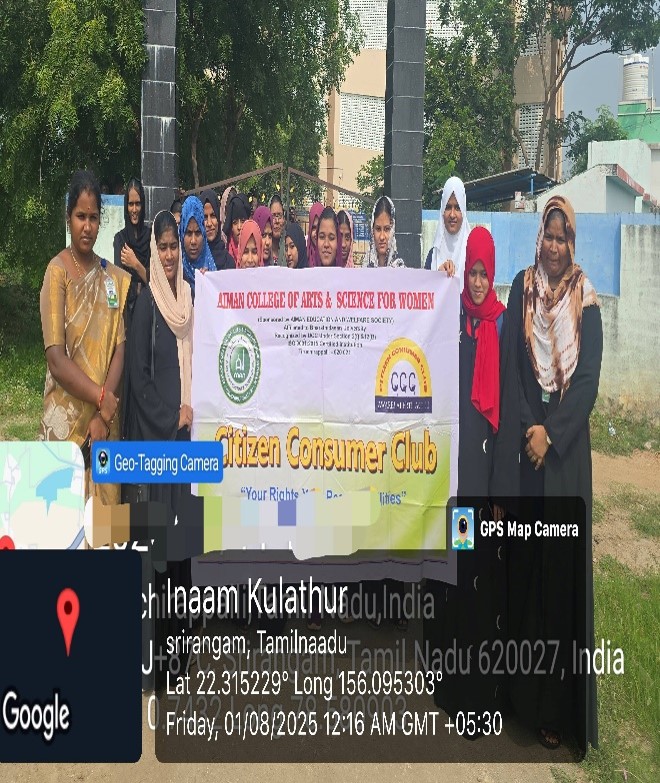
The Citizen Consumer Club (CCC) of AIMAN College of Arts & Science for Women is an initiative taken to enhance awareness among the student community about the rights and responsibilities of consumers. The club aims to empower students with knowledge of consumer protection laws, ethical purchasing practices, and the importance of making informed decisions in the marketplace.
The club serves as a platform to promote consumer awareness, responsible citizenship, and social responsibility through educational programmes, awareness campaigns, competitions, seminars, and community outreach activities.
CONSUMER AND CONSUMER RIGHTS
A consumer is a person who purchases goods or services for personal use by paying a price. Consumers play an important role in the economy by creating demand for goods and services. Consumer rights protect individuals from exploitation, defective products, misleading advertisements, and unfair trade practices. The Consumer Protection Act, 2019, safeguards consumer interests in India. The six fundamental consumer rights are the Right to Safety, Right to Information, Right to Choose, Right to be Heard, Right to Redressal, and Right to Consumer Education. These rights ensure that consumers receive safe products, accurate information, and fair treatment. Consumer awareness helps individuals make informed purchasing decisions and avoid fraudulent practices. It also encourages responsible consumption and ethical business practices. Thus, consumer rights are essential for protecting consumers and promoting a fair and transparent marketplace.
Vision
To create an informed, empowered, and responsible consumer community that understands and exercises its rights while promoting fairness, transparency, and ethical practices in the marketplace.
Mission
· To educate students about consumer rights and responsibilities.
· To create awareness of the Consumer Protection Act, 2019.
· To promote informed purchasing decisions and responsible consumption.
· To empower students to identify unfair trade practices and seek consumer grievance redressal.
· To encourage ethical consumer behaviour and sustainable consumption.
· To develop responsible citizens who advocate for consumer protection and social justice.
Gender Championship Club
Description
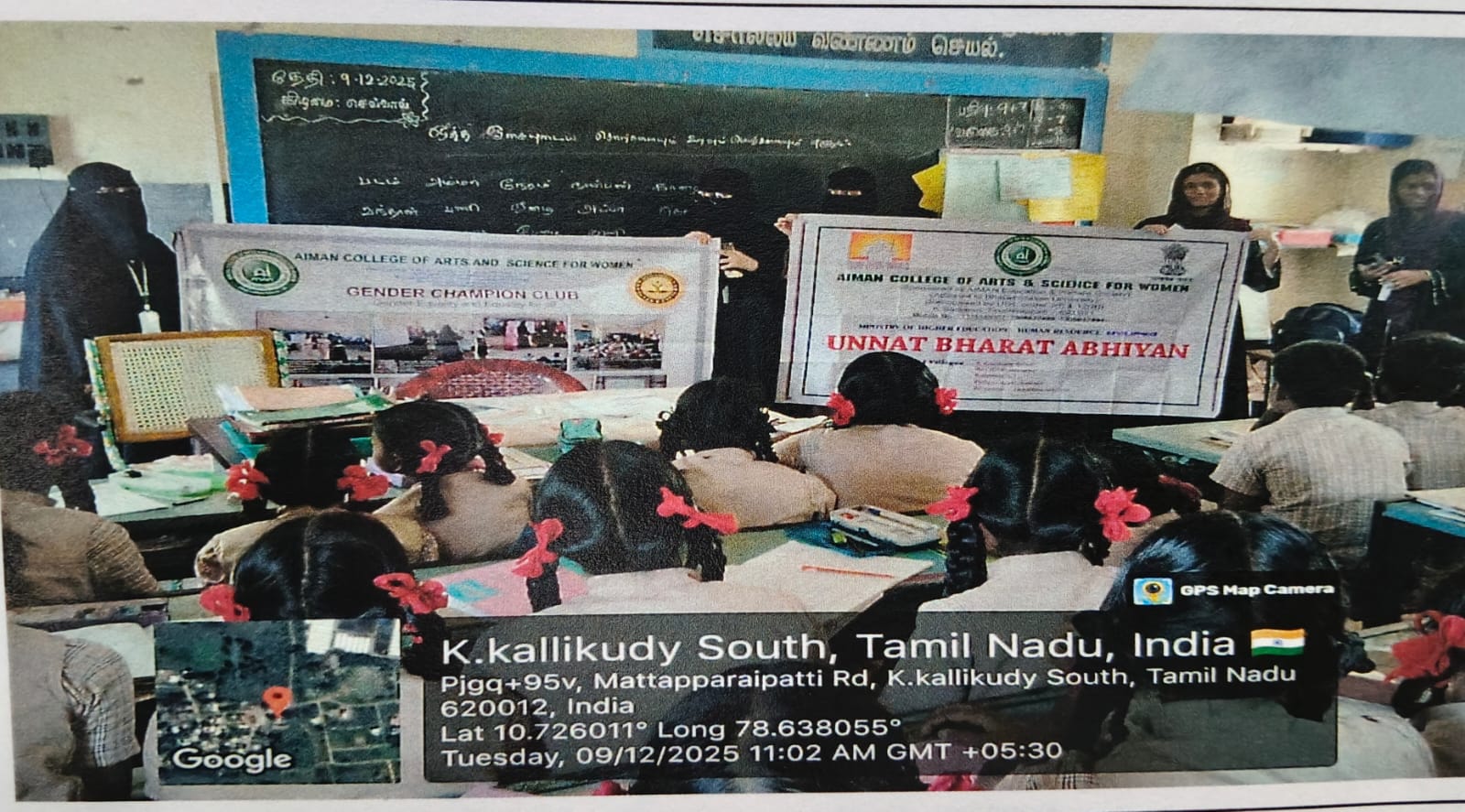
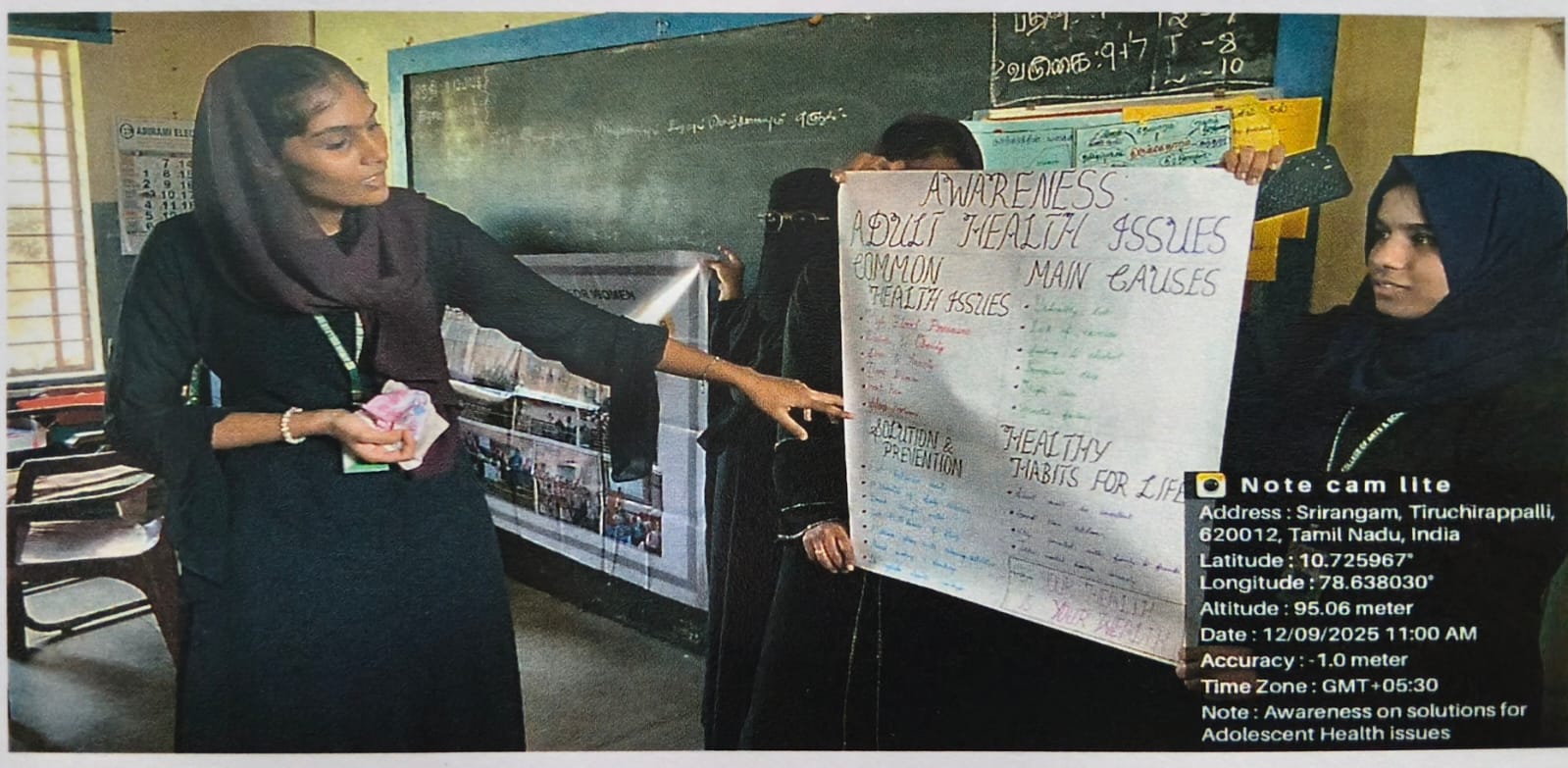
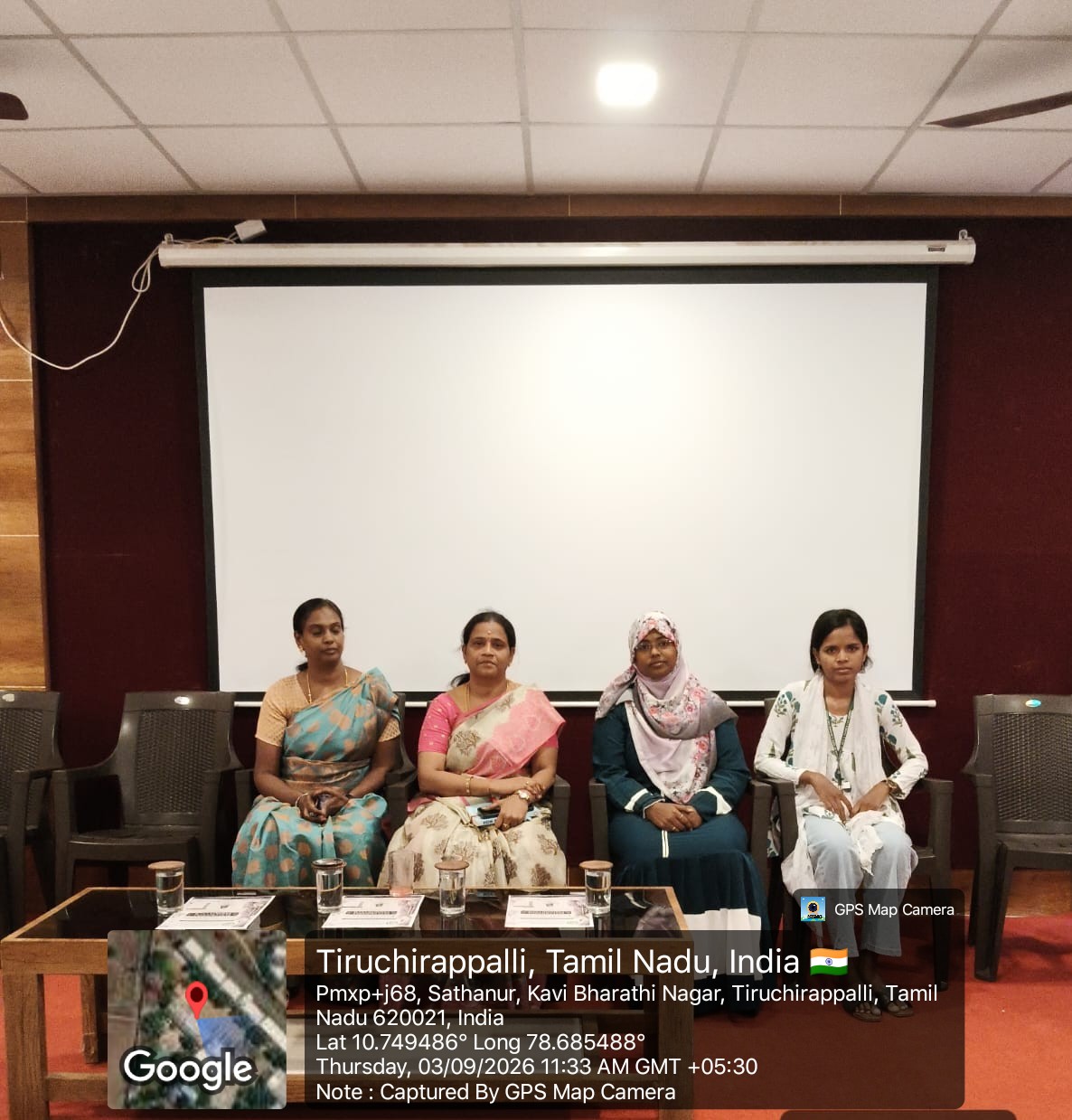
The Gender Championship Club (GCC) of AIMAN College of Arts and Science for Women is established to promote gender equality, gender sensitivity, social justice and equal opportunities among students. The club aims to create an inclusive and supportive environment where every individual is respected, valued and empowered, irrespective of gender.
The club organizes various awareness programmes, seminars, workshops, special lectures, campaigns and interactive activities to educate students about gender-related issues, women's rights, gender discrimination, digital empowerment, safety and social responsibilities.
It also encourages students to develop leadership qualities, self-confidence, mutual respect and a sense of responsibility towards building an equitable society. Through its initiatives, the club strives to empower young women to become responsible citizens and active contributors to social development.
Vision
To create an inclusive, equitable and gender-sensitive society where every individual enjoys equal rights, opportunities, dignity and respect, and where women are empowered to achieve their full potential.
Mission
- To promote awareness about gender equality, gender justice and equal opportunities.
- To create awareness about women's rights, safety, dignity and empowerment.
- To eliminate gender discrimination, stereotypes and social inequalities through education and awareness.
- To encourage women's leadership, self-confidence, independence and active participation in society.
- To organize seminars, workshops, special lectures, awareness campaigns and interactive programmes on gender-related issues.
- To promote digital literacy and technological empowerment among women.
- To encourage respect, mutual understanding and equal participation among all individuals.
- To create awareness about the United Nations Sustainable Development Goals, particularly SDG 5 – Gender Equality.
- To develop socially responsible students who actively contribute to building an inclusive and gender-just society.
Objectives of the Club
- To sensitize students about gender equality and gender-related issues.
- To create awareness about women's empowerment and human rights.
- To promote equal educational, social and professional opportunities.
- To address gender-based discrimination and violence.
- To encourage students to become ambassadors of gender equality.
- To foster leadership, confidence and social responsibility among students.
- To contribute towards achieving a gender-equal and sustainable society.
REPORTS
Electoral Literacy Club
An Electoral Literacy Club is a platform to engage school students through interesting activities and hands-on experience to sensitise them on their electoral rights and familiarise them with the electoral process of registration and voting. ELCs are also present in colleges and rural communities.
At ELCs, learning meets fun. Activities and Games are designed to stimulate and motivate students provoking them to think and ask questions. Through ELC, Election Commission of India, aims at strengthening the culture of electoral participation among young and future voters.
ELCs are present in Schools, Colleges and Rural Communities. Following will be the members in each type of ELC –
- Schools : Students from Class IX – XII; 14-17 year olds
- Colleges : 18 – 21 year olds
- Rural Communities (Chunav Pathshala) : All members of the village
In the ELCs, members will be part of interesting and thought-provoking, mostly classroom based activities and games. There are around 25 such activities and 6 games which have been carefully designed to impart specific learning which will help them become an ‘Empowered (Prospective) Voter’.

COGNITIVE NEXUS FORUM
ABOUT
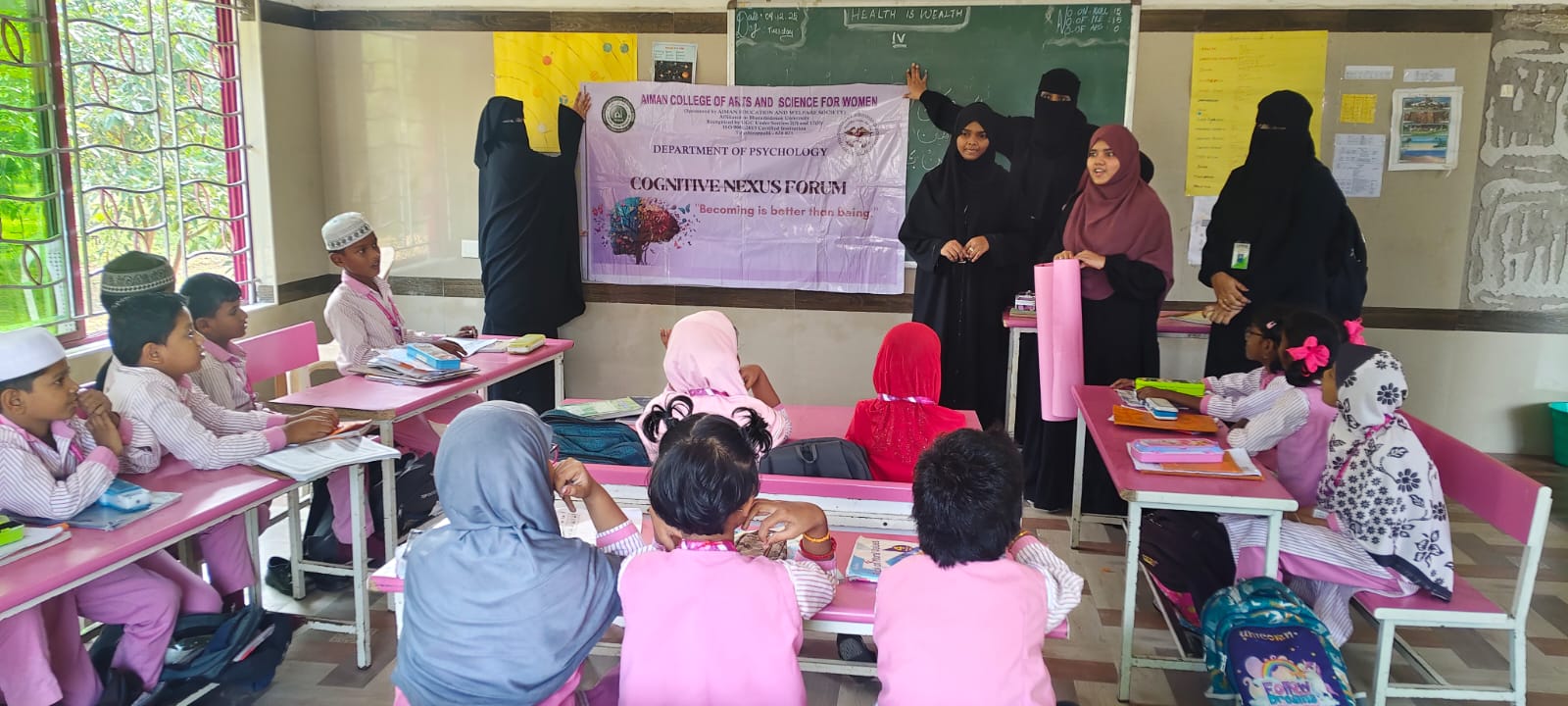
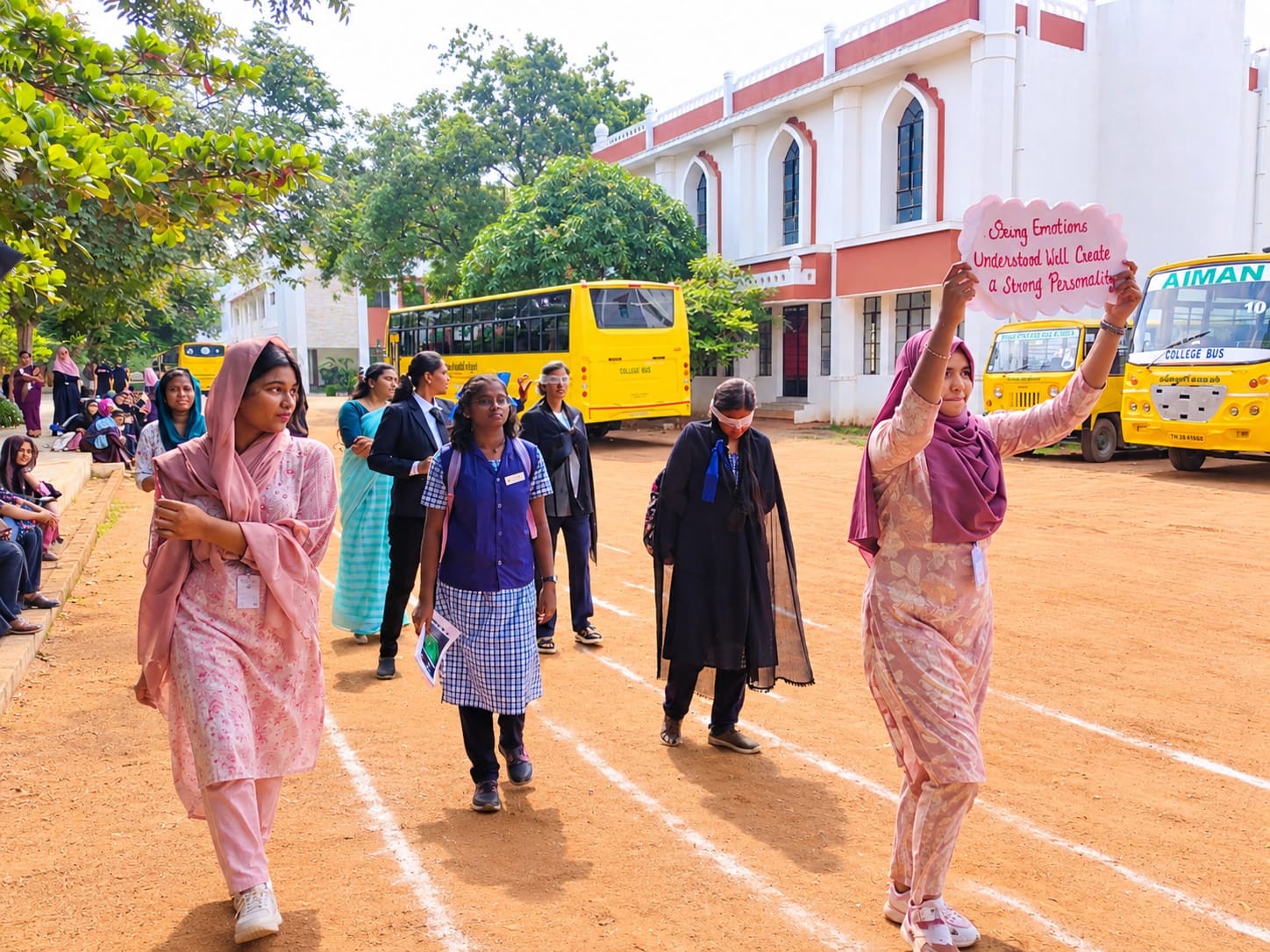
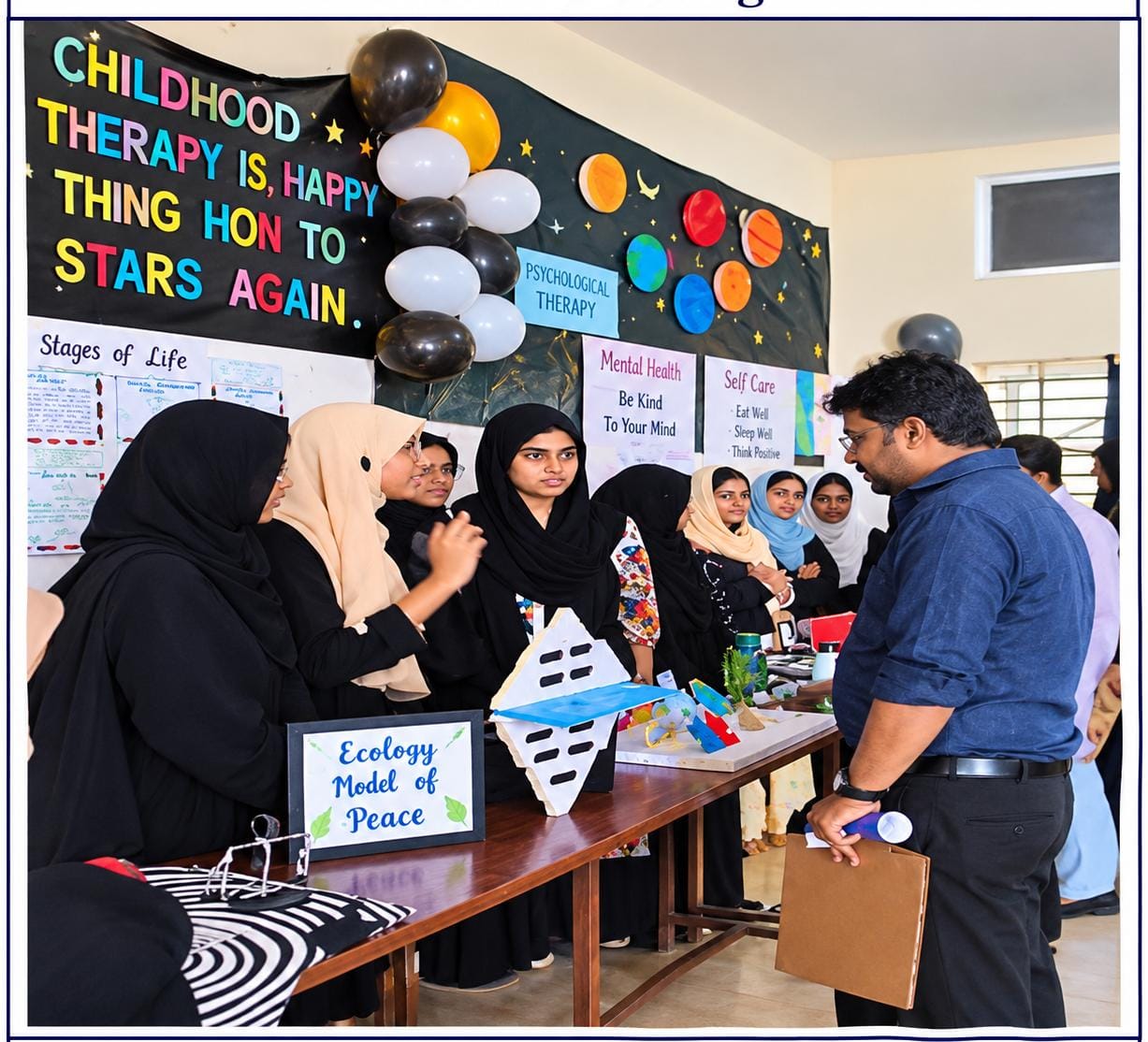
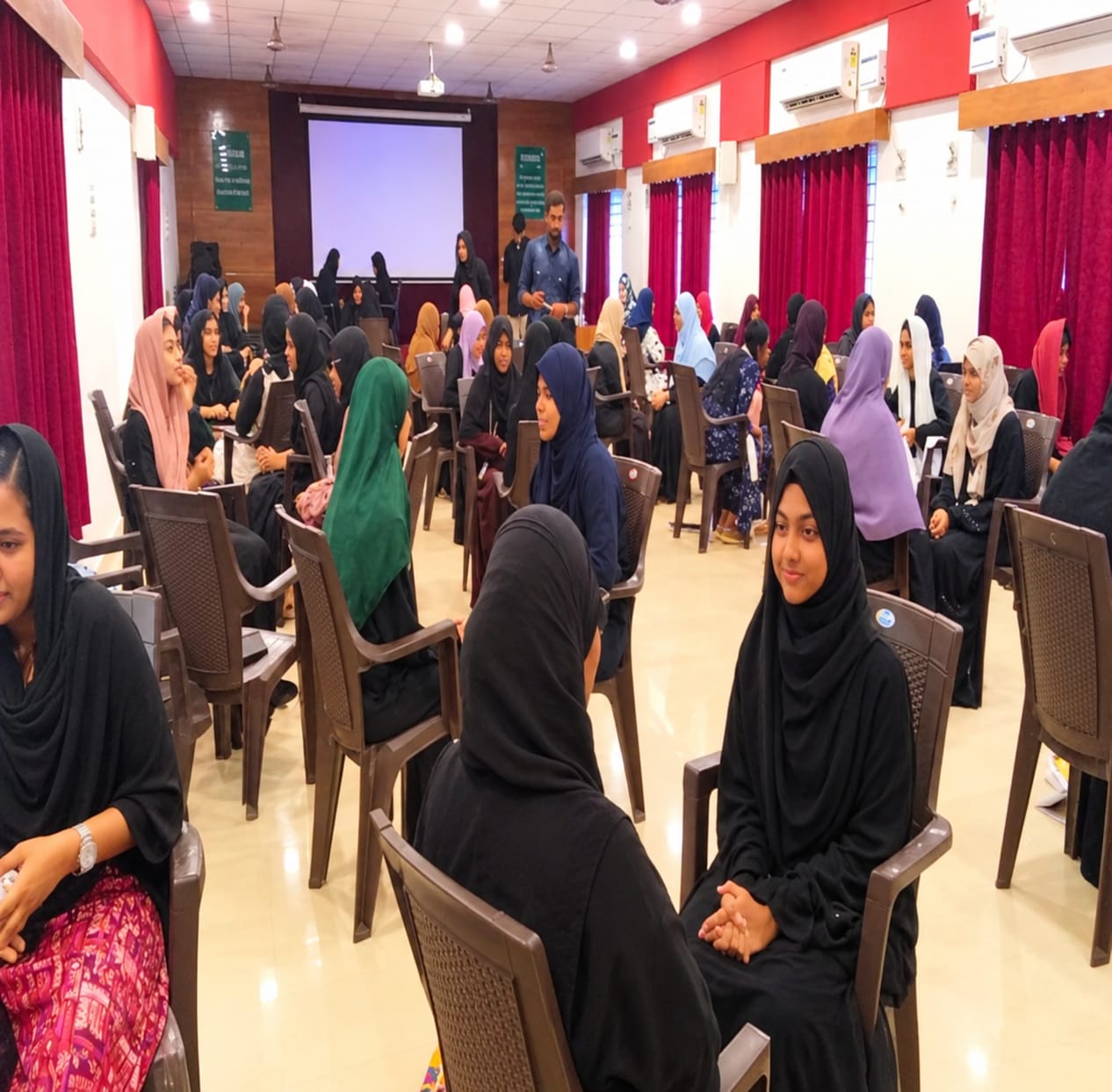
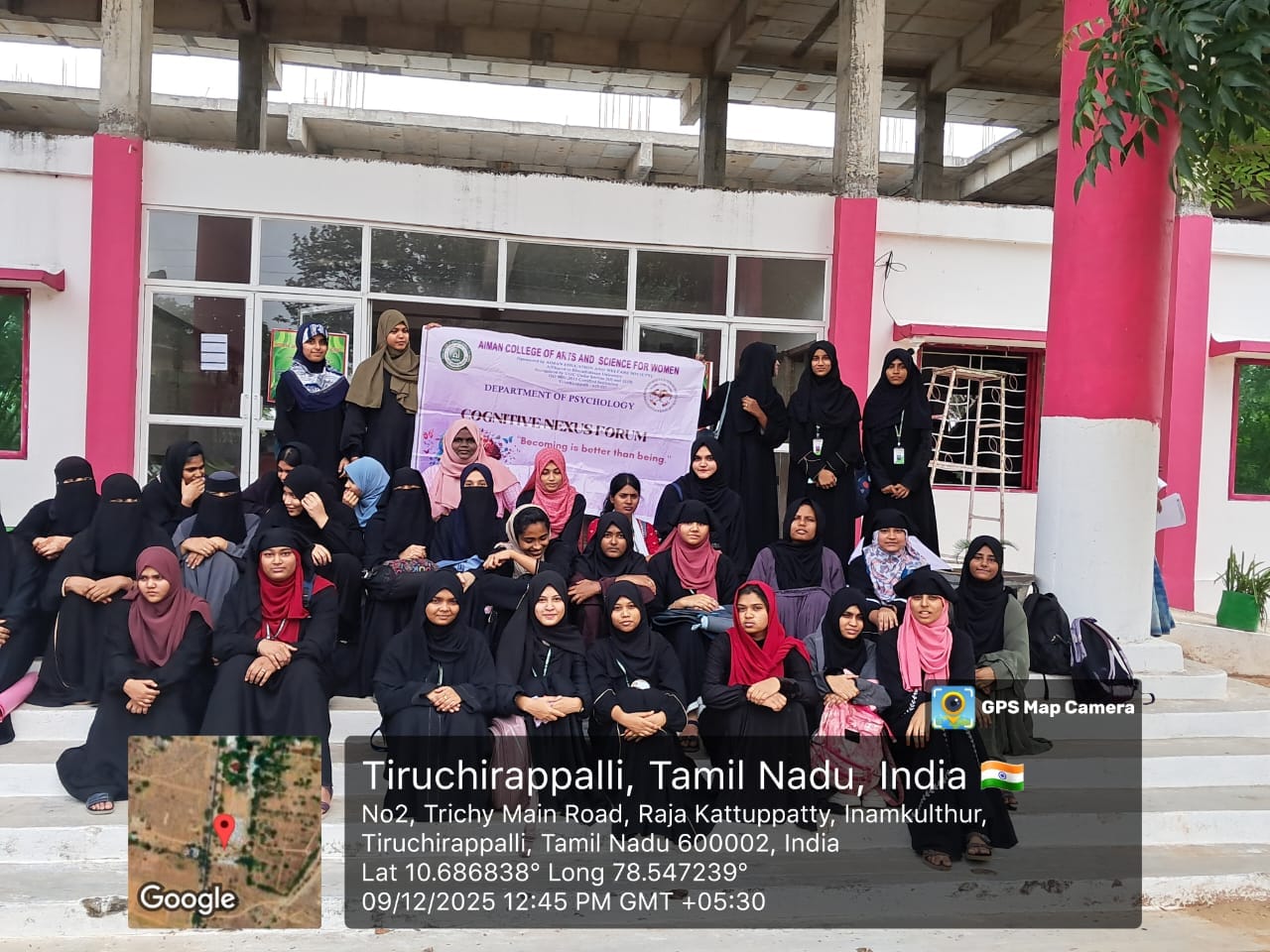
COGNITIVE NEXUS FORUM is established in the year of 2024 with seventy three active members. It emphasizes the psychological, emotional and social well-being of the individuals. Our club aims to conduct a lot of activities to improve their mental well- being.
VISION
To spread mental health awareness among the student and staff community in AIMAN College
To promote a positive and healthy mindset in College as well as the surrounding community
To facilitate social interactions among the students to enrich their social experiences to create a sense of togetherness
To promote positive wellness among people to create a better society
MISSION
The mission of the club is to encourage the community to lead a happy and a better place to live
To engage in activities promoting the real purpose of individuals which is beyond mere existence
OBJECTIVES
To enrich Student’s Knowledge in psychology and its application in the real world
To learn more about mental illness to reduce the stigma associated with it
To help the gifted children for their growth and betterment of their life
To foster a friendly relationships with the members in the society

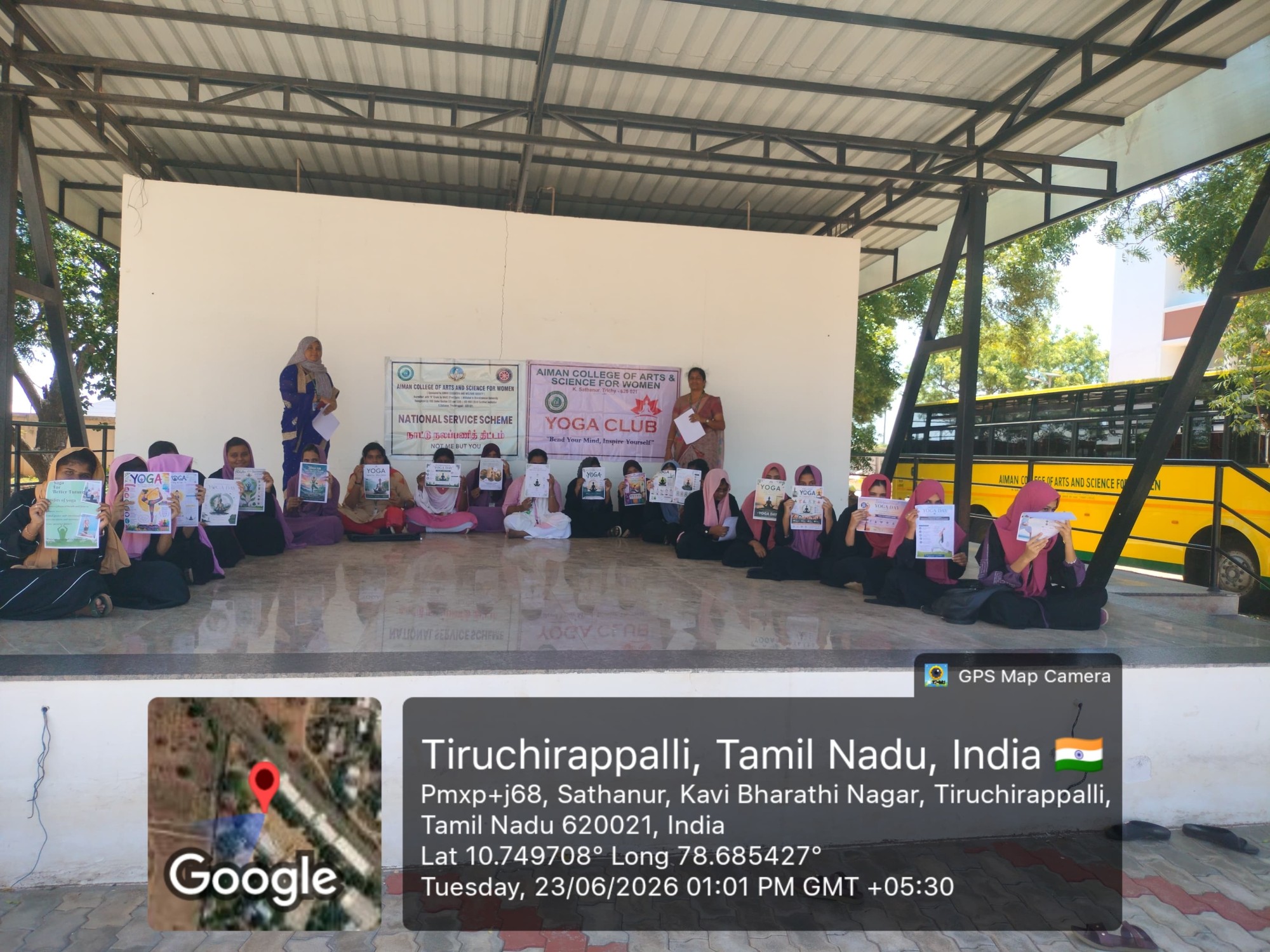
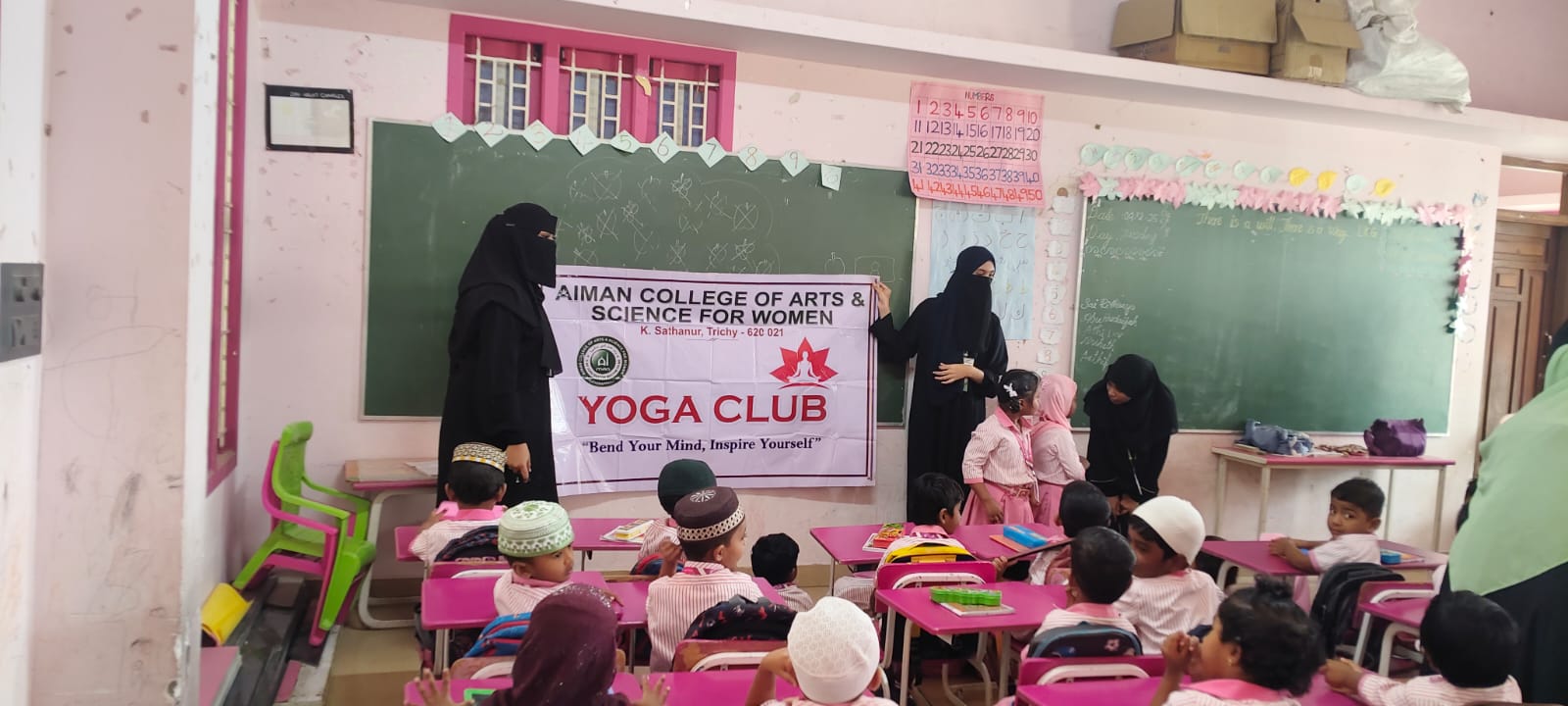
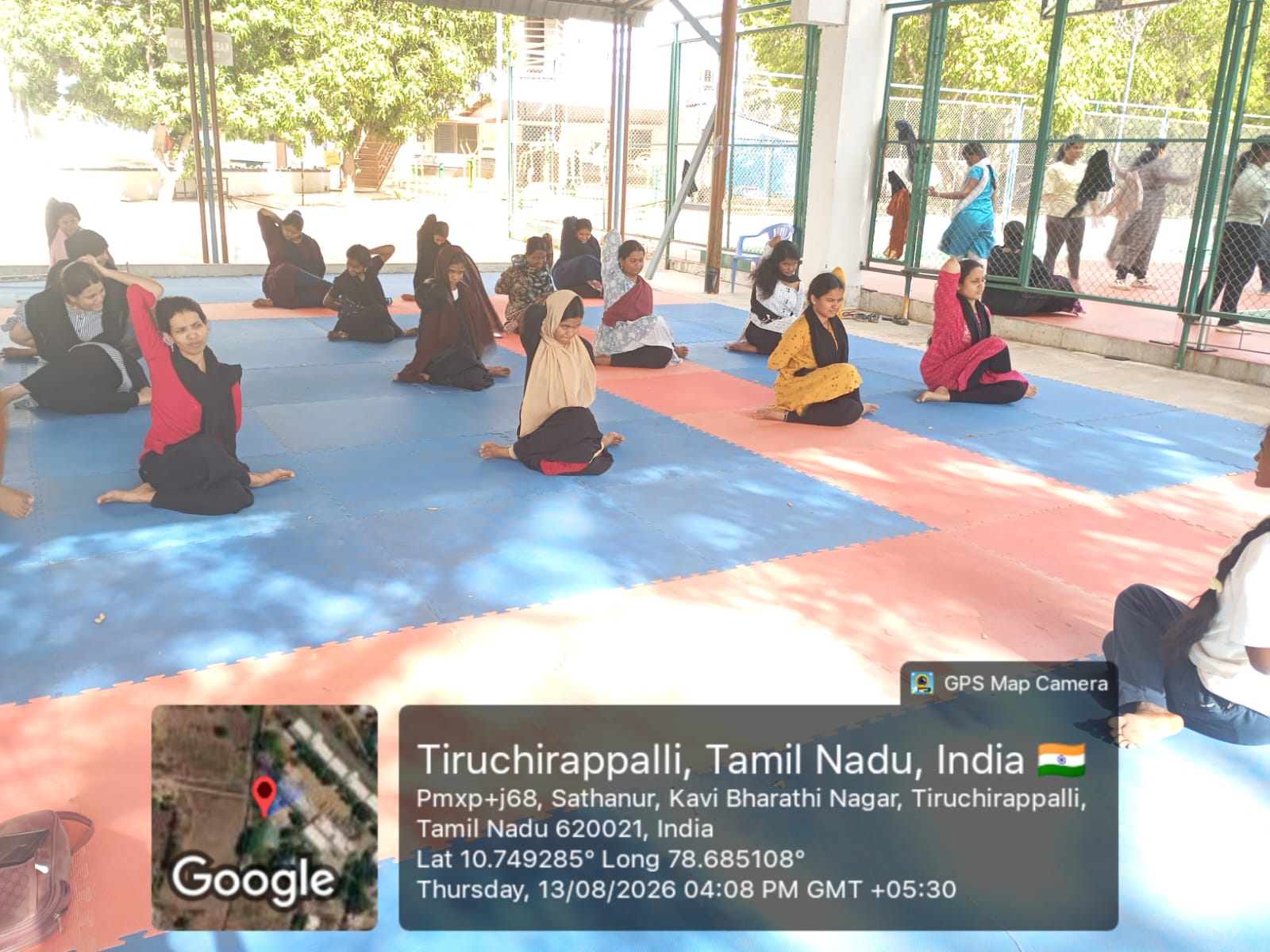
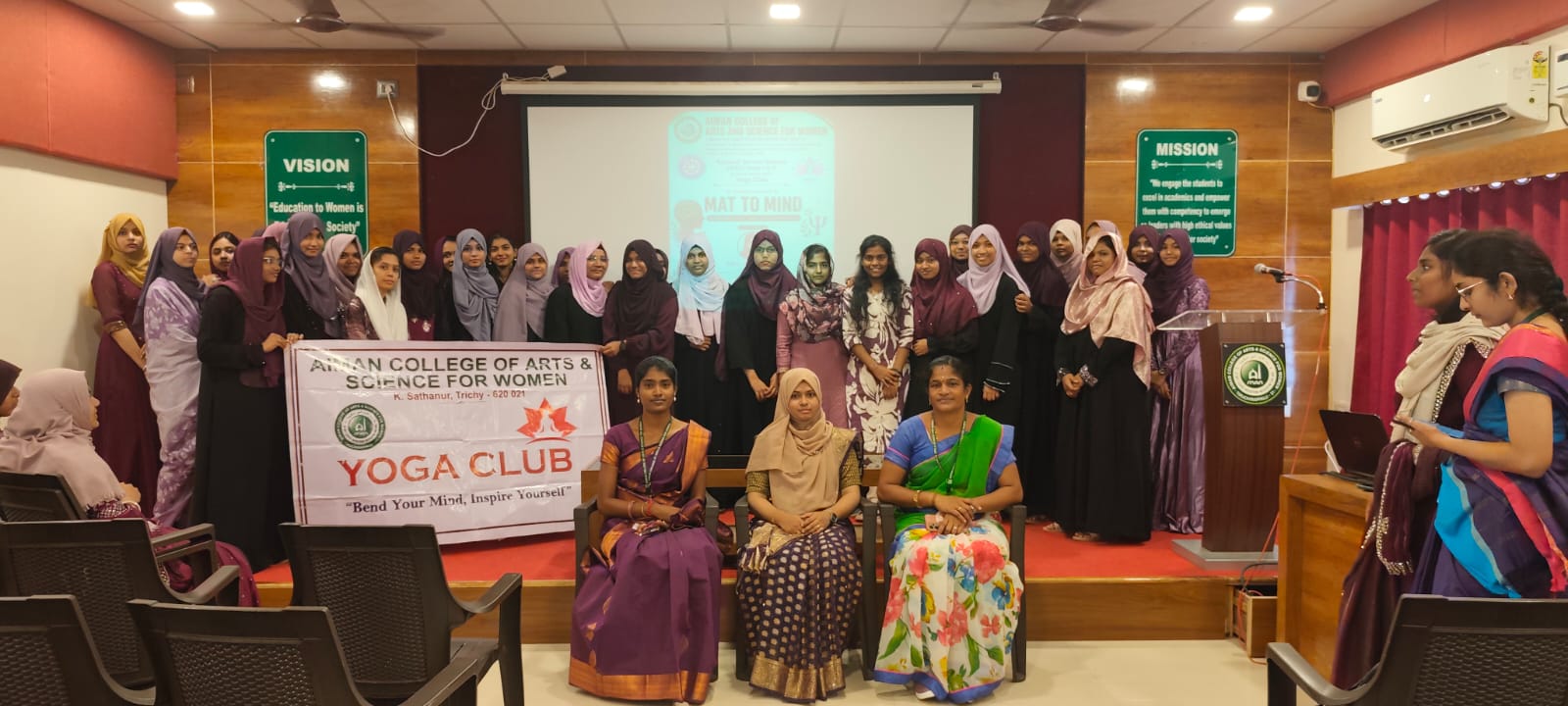
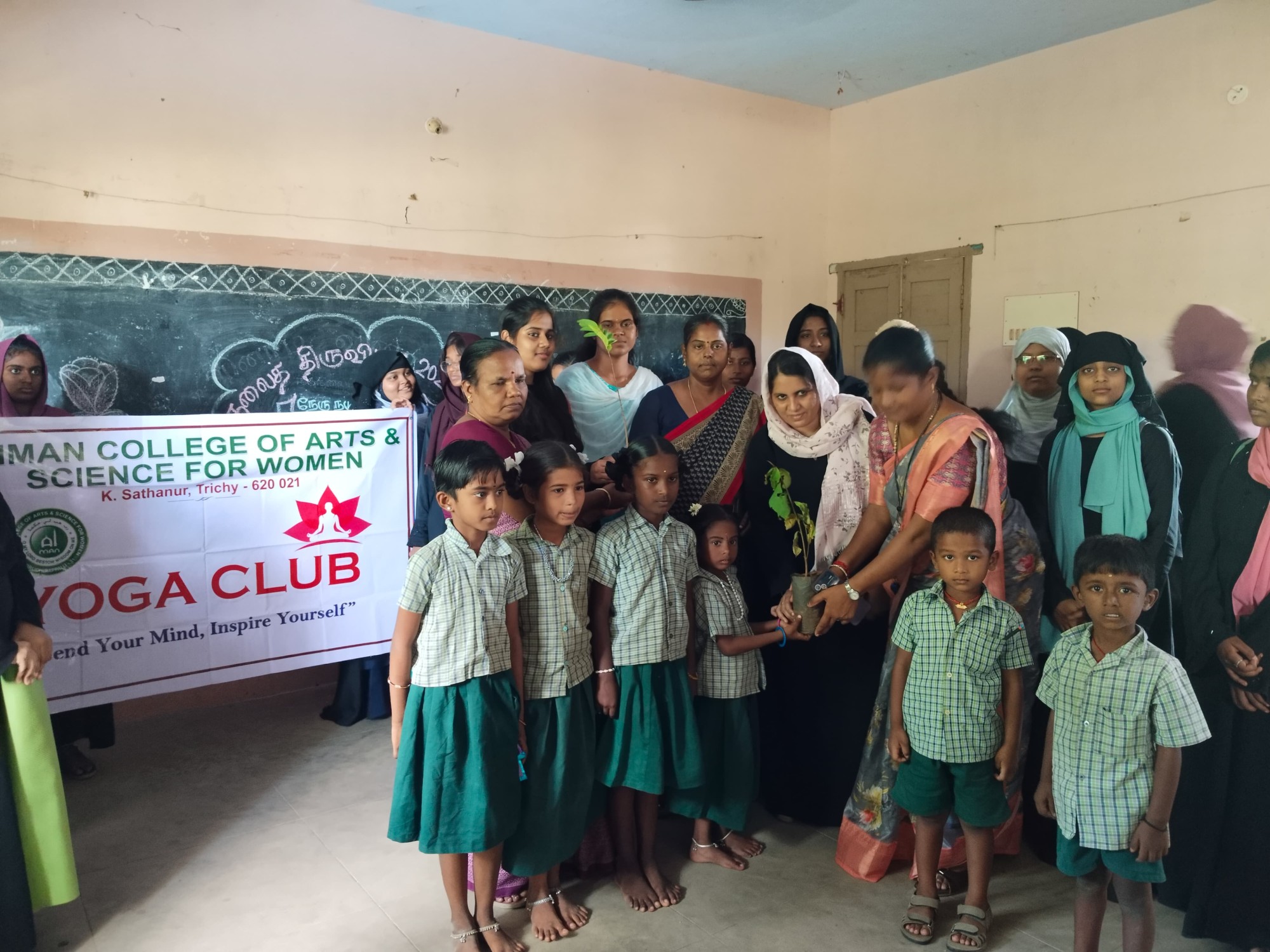
YOGA
Goals
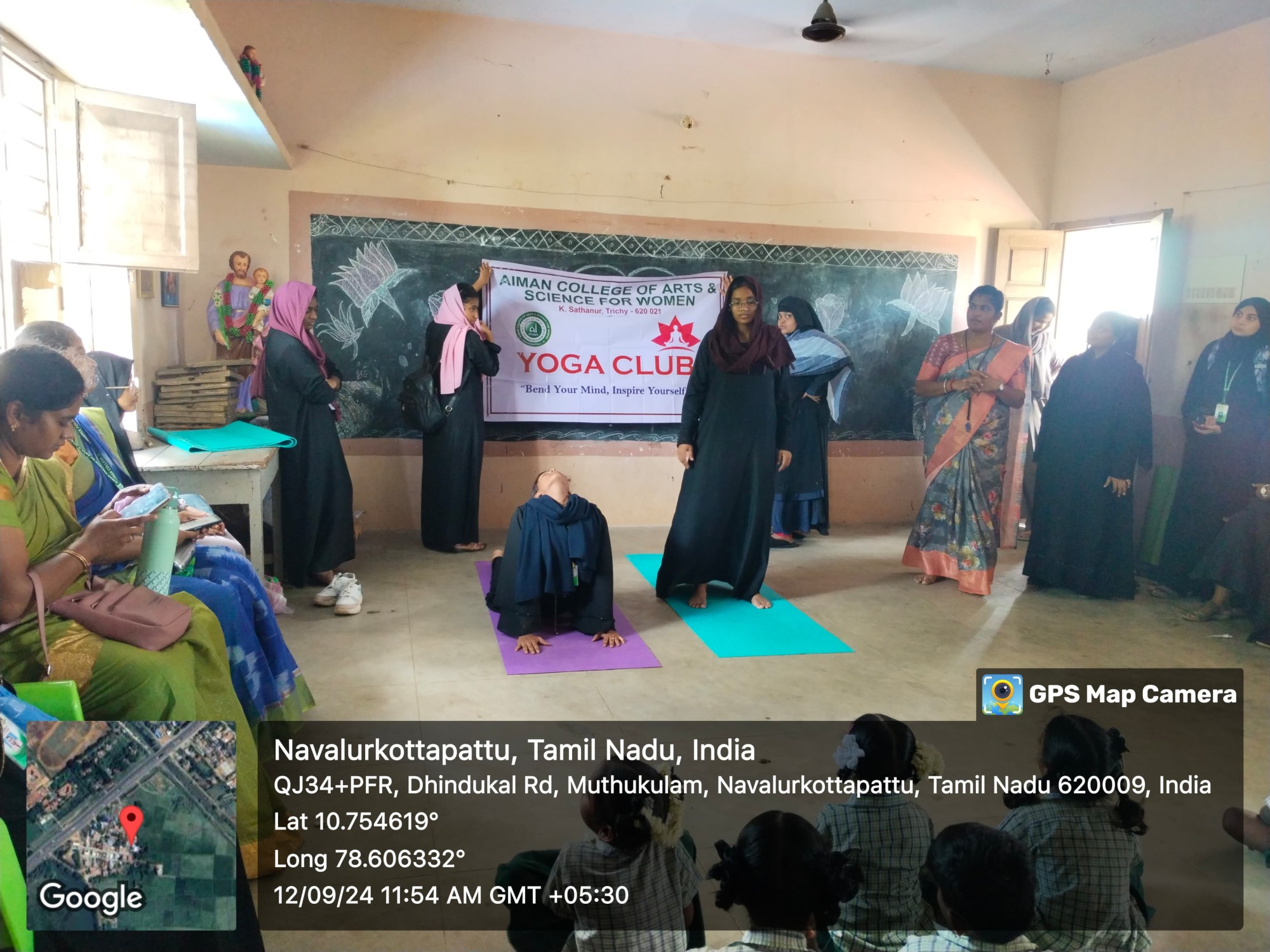
Yoga education helps in self discipline and self-control,leading to immense amount of awareness, concentration and higher level of consciousness
Benefits
- It boost self-esteem and confidence
- It instill confidence and to bring learning to students on experimental level
- Yoga teaches them to persevere to be patient, and work towards their goals
- Yoga also provides tools for practicing compassion , mindfulness, generosity, focus, strength and flexibility
MAHATMA GANDHI NATIONAL COUNCIL OF RURAL EDUCATION
About the Club
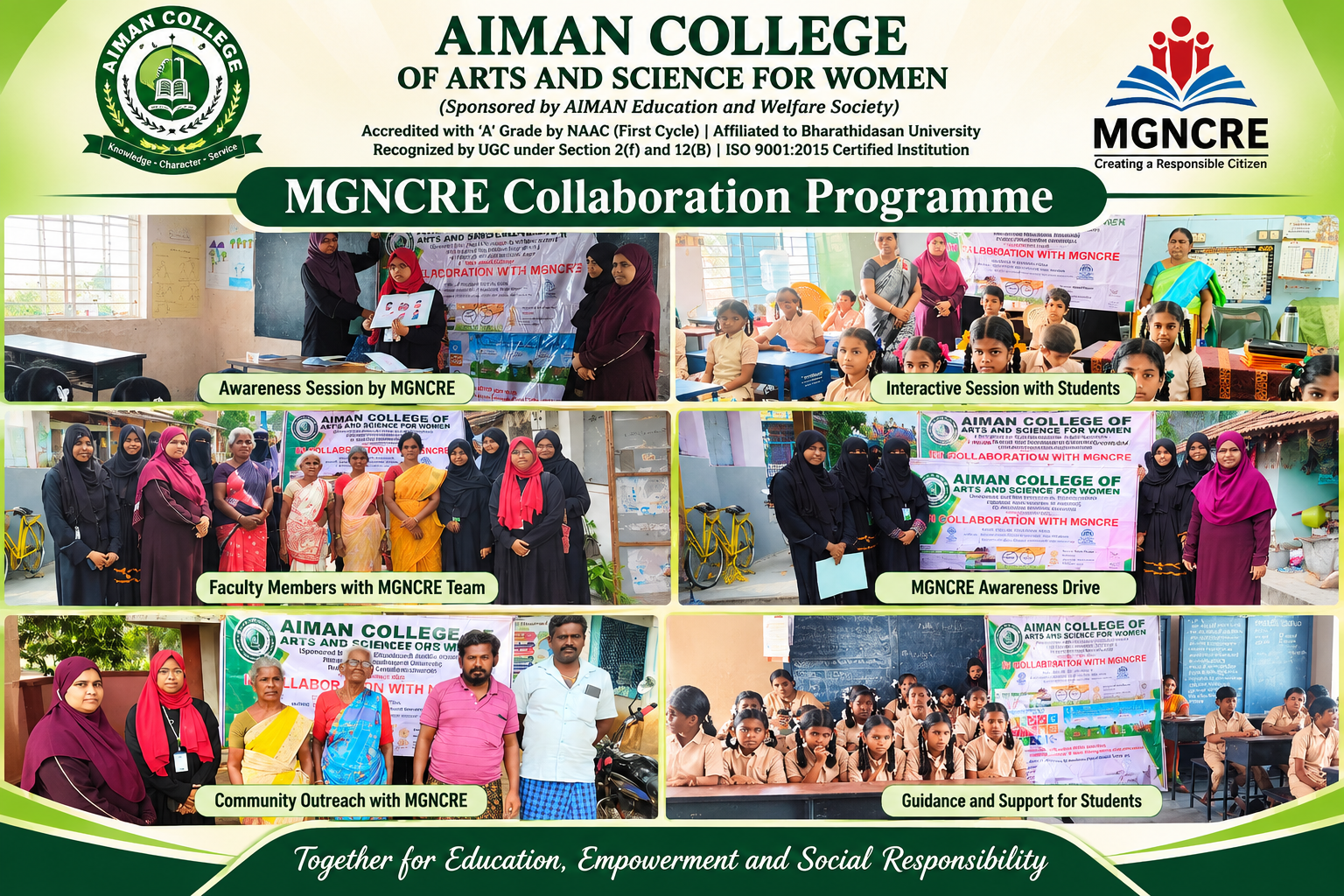
The MGNCRE - Mahatma Gandhi National Council of Rural Education at AIMAN College of Arts and Science for Women was established in 2020 in alignment with the objectives of the Mahatma Gandhi National Council of Rural Education (MGNCRE). The Cell aims to promote rural entrepreneurship, community engagement, environmental sustainability, skill development, and women’s empowerment. It encourages students to identify rural challenges, explore entrepreneurial opportunities, and develop practical solutions for sustainable livelihoods and community development.
Vision
To empower rural communities and build a sustainable, inclusive, and self-reliant India through education, entrepreneurship, and community participation.
Objectives
- Promote rural entrepreneurship and self-employment.
- Encourage community engagement and rural development.
- Create awareness of cleanliness, hygiene, and environmental sustainability.
- Empower women through skill development and entrepreneurship.
- Promote sustainable livelihoods and social responsibility.
Educating Women • Empowering Communities • Promoting Rural Entrepreneurship • Building a Sustainable India
REPORTS
ENTREPRENEURSHIP DEVELOPMENT CELL
About the Cell
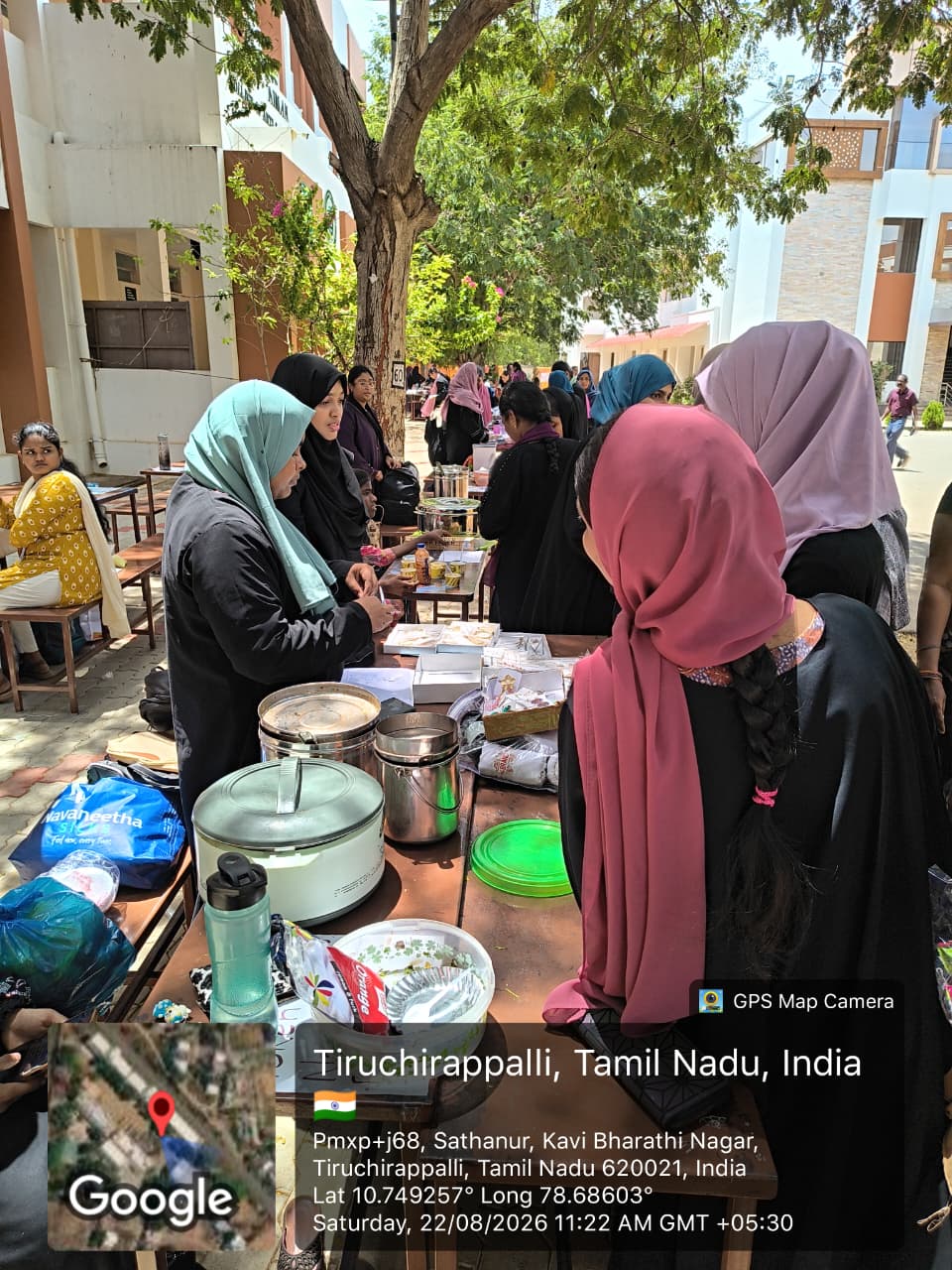
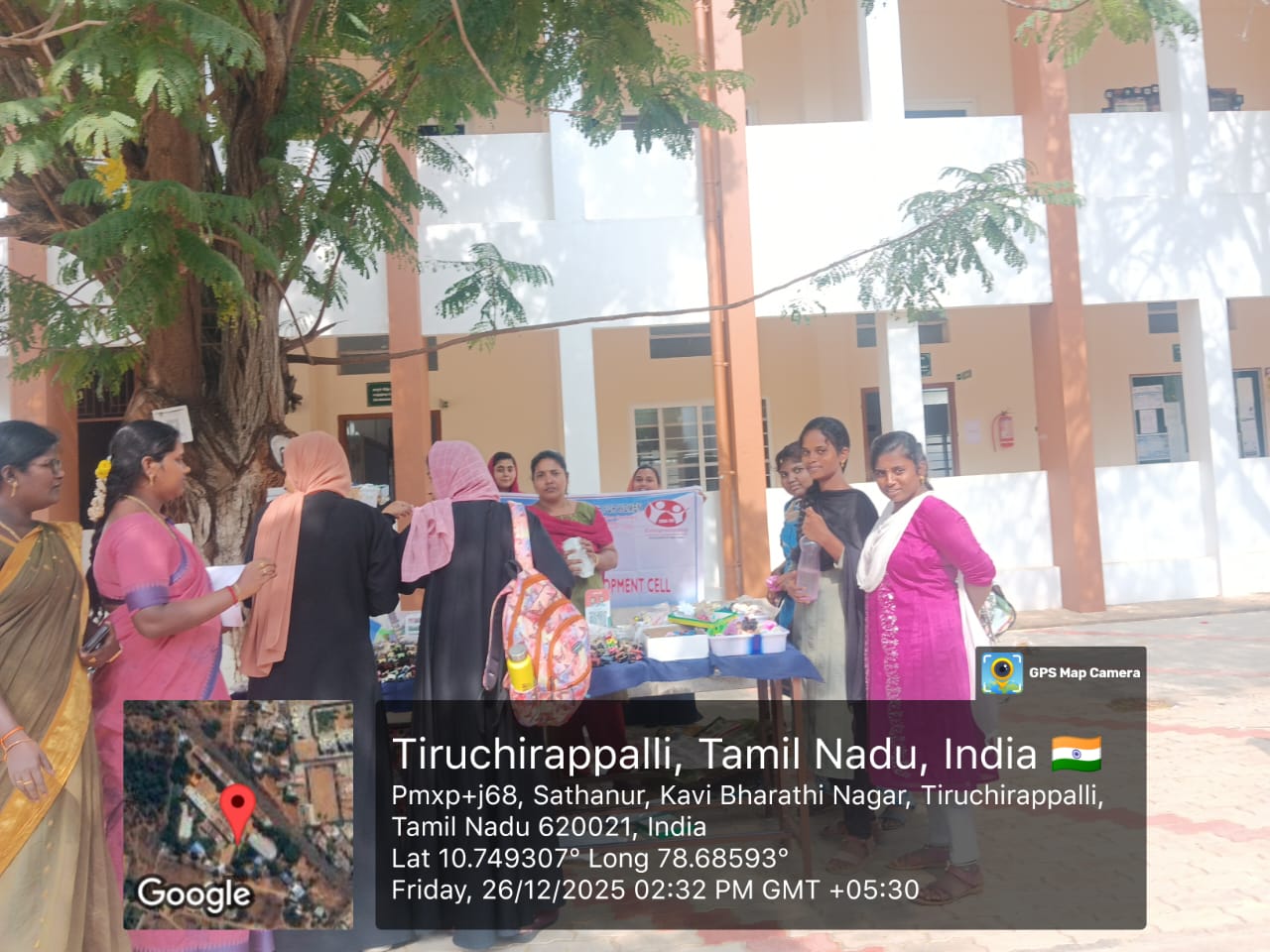
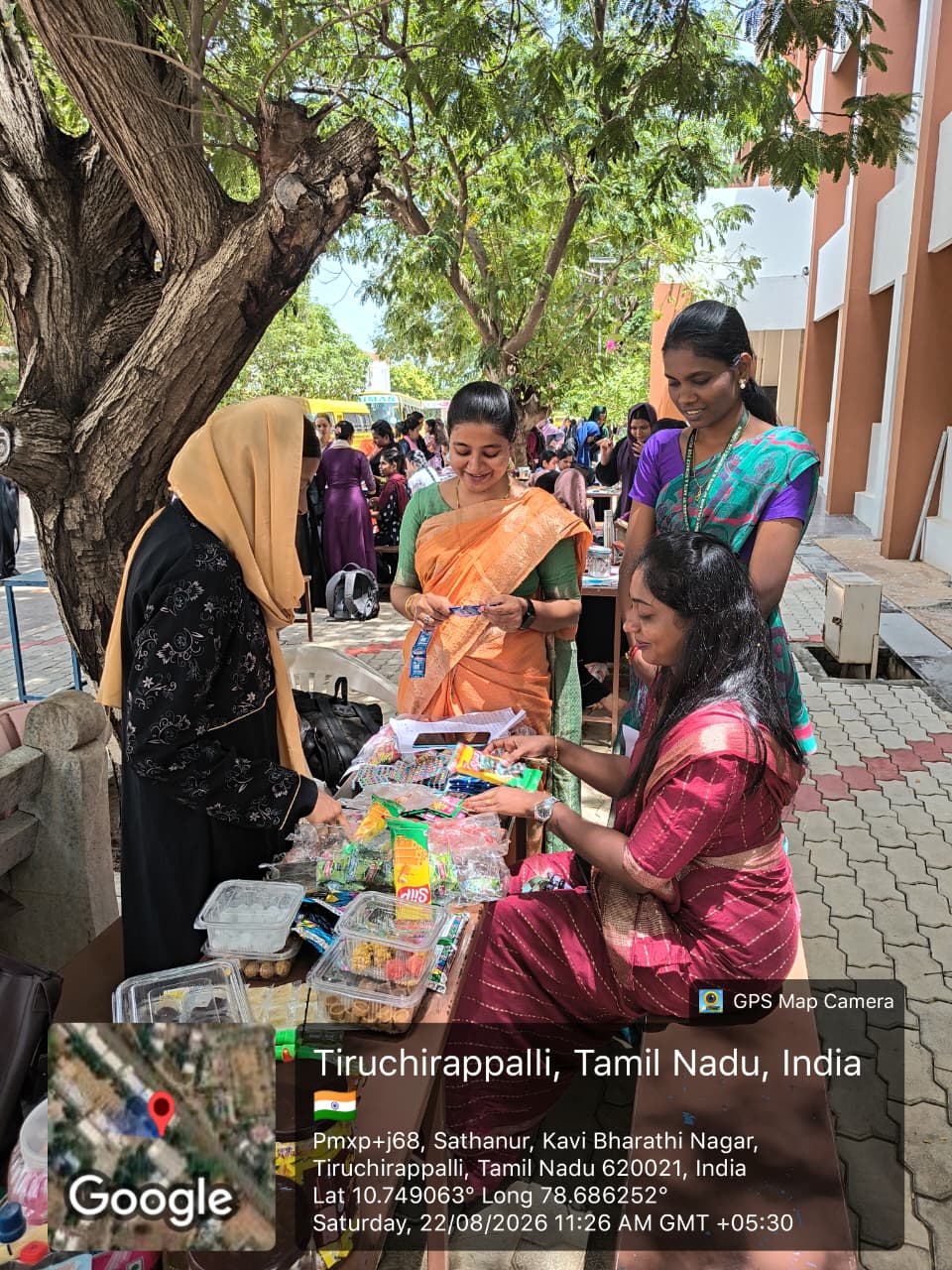
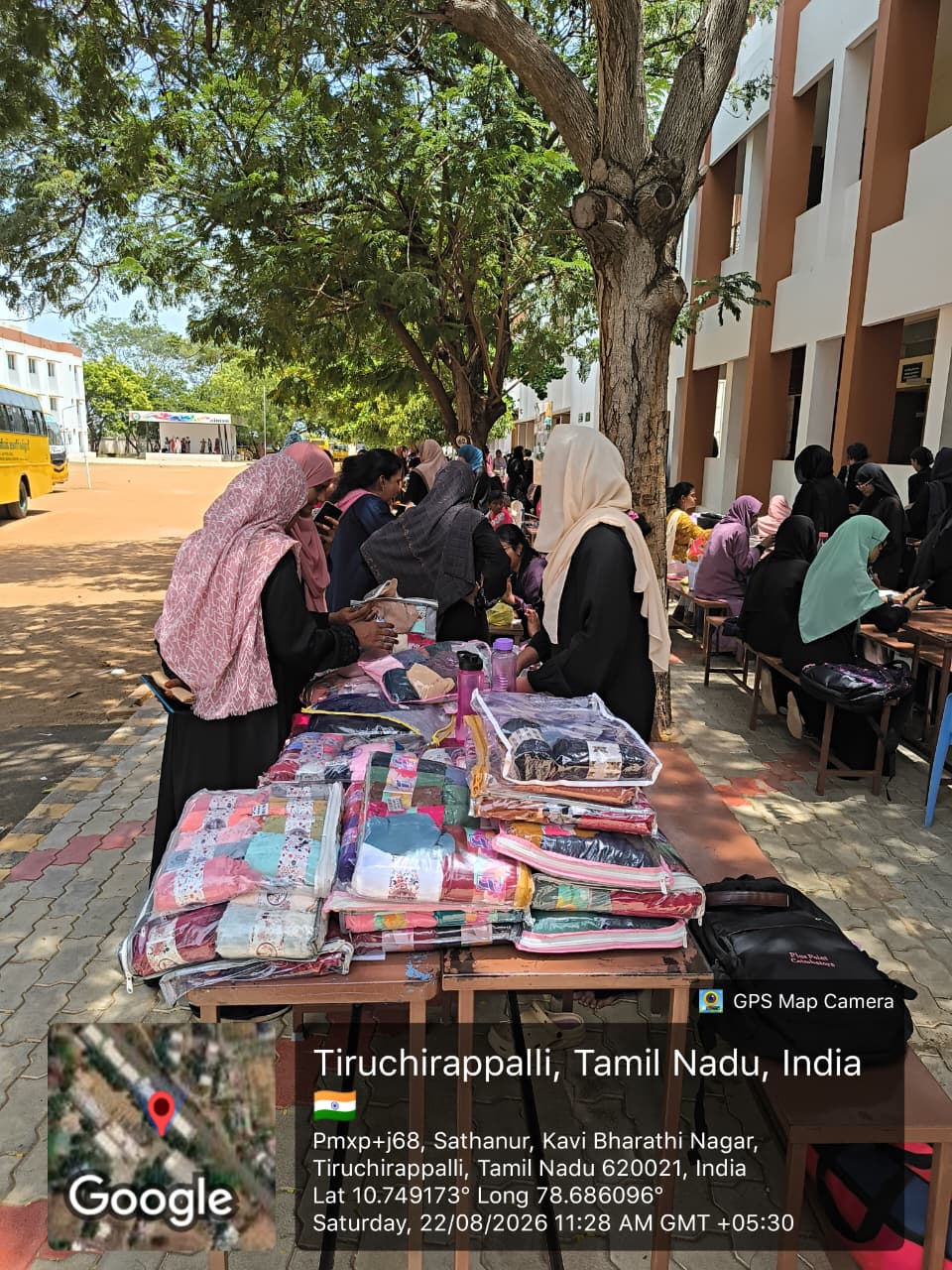
Established in 2022–2023, the Entrepreneurship Development Cell (ED Cell) aims to develop entrepreneurial skills, creativity and innovation among students. It provides practical exposure through Students' Stalls, Alumni Stalls and NGO Stalls, encouraging students to explore business opportunities and become confident entrepreneurs.
Vision
To nurture innovative, creative and self-reliant women entrepreneurs.
Mission
- Promote entrepreneurial awareness and innovation.
- Encourage business ideas and self-employment.
- Develop marketing, leadership and management skills.
- Provide practical business exposure through stalls and exhibitions.
- Inspire students to become job creators.
Major Activities
- Students' Stall
- Alumni Stall
- NGO Stall
Achievements
- Encouraged student-led business initiatives.
- Promoted alumni entrepreneurship.
- Supported social entrepreneurship through NGO participation.
- Provided practical experience in marketing and sales.
Expected Outcomes
- Entrepreneurial awareness and confidence.
- Improved communication and marketing skills.
- Creativity, innovation and leadership.
- Interest in startups and self-employment.
REPORTS

INTELLECTUAL PROPERTY RIGHTS (IPR) CELL
The Intellectual Property Rights (IPR) Cell of Aiman College of Arts and Science for Women was established in 2019 with the vision of fostering innovation, creativity and research among students and faculty members. The Cell aims to create awareness about the importance of Intellectual Property Rights and the need to protect innovative ideas, inventions and creative works.
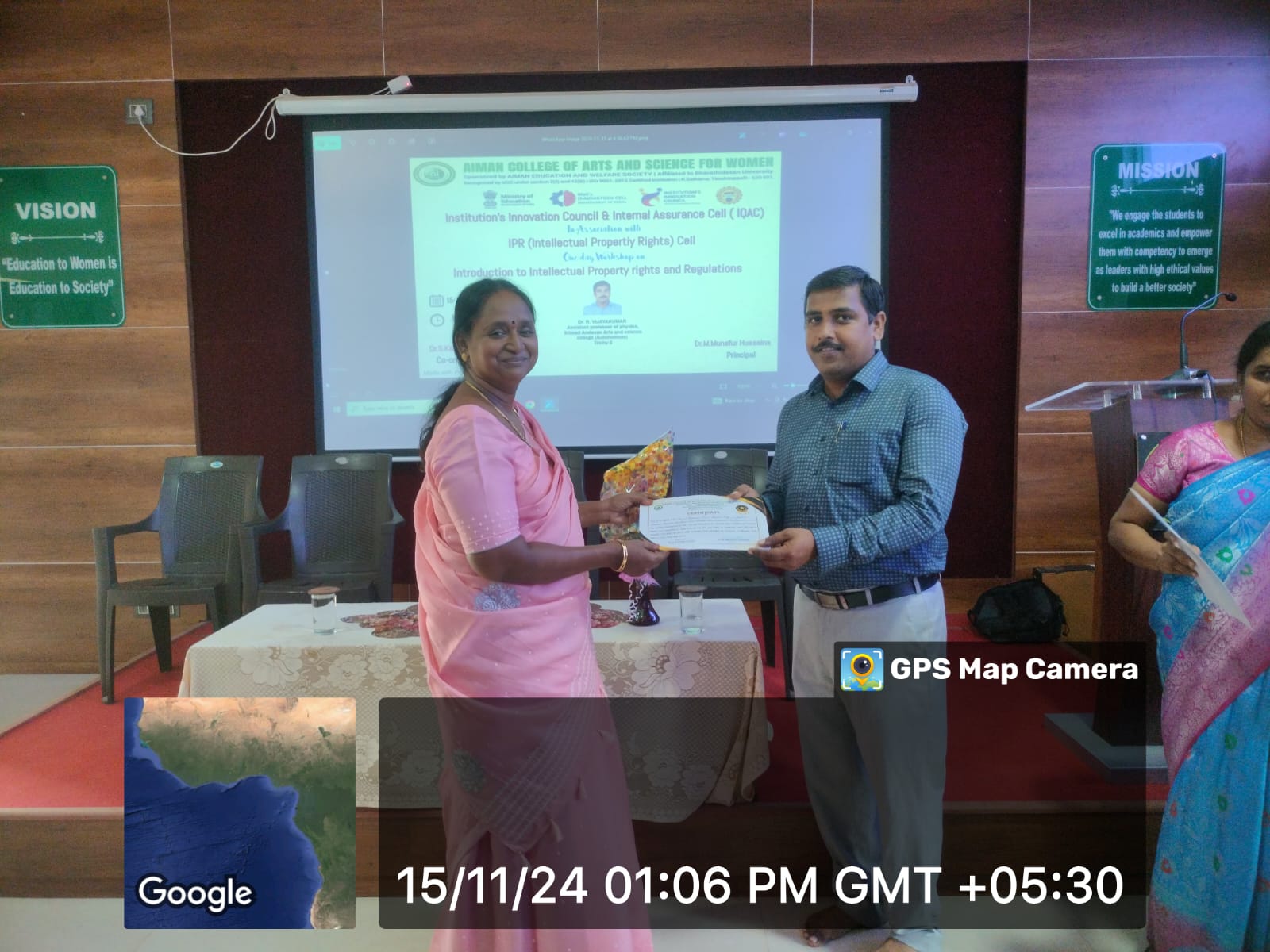
The IPR Cell serves as a platform to educate and empower the academic community on various aspects of intellectual property, including patents, copyrights, trademarks and trade secrets. It organizes awareness programmes, seminars, workshops and expert lectures to enhance knowledge of intellectual property protection and its significance in academic and professional development.
The Cell also provides guidance and assistance in documenting and filing patent and copyright applications for innovative ideas, research outcomes and creative contributions. It encourages students and faculty members to explore their potential, develop innovative solutions and protect their intellectual creations.
Through its continuous initiatives, the IPR Cell strives to nurture a culture of innovation, research excellence and intellectual creativity, empowering young women to become confident innovators and responsible contributors to society.
Vision
To create an innovative and research-oriented academic environment by promoting awareness, creativity and protection of intellectual property among students and faculty members.
Mission
· To create awareness about Intellectual Property Rights among students and faculty members.
· To encourage innovation, creativity and research activities.
· To promote the protection of intellectual creations through patents, copyrights and trademarks.
· To provide guidance and support for intellectual property documentation and registration.
· To develop entrepreneurial skills and innovative thinking among students.
· To encourage women to become independent innovators and contributors to society.
Objectives
1. To create awareness about the importance and benefits of Intellectual Property Rights.
2. To educate students and faculty members about patents, copyrights, trademarks and trade secrets.
3. To encourage innovative ideas, research and creative activities.
4. To motivate students and faculty members to identify and protect their intellectual creations.
5. To provide guidance in the preparation and filing of patent and copyright applications.
6. To organize seminars, workshops, guest lectures and awareness programmes on IPR.
7. To promote ethical research practices and prevent plagiarism.
8. To encourage interdisciplinary research and innovation.
9. To develop an intellectual property culture within the institution.
10. To motivate students, particularly young women, to become creative thinkers and innovators.
Functions of the IPR Cell
· Organizing IPR awareness programmes for students and faculty members.
· Conducting seminars and workshops on intellectual property protection.
· Providing basic guidance on patent searches and patent filing procedures.
· Assisting innovators in documenting their inventions and creative works.
· Creating awareness about copyright protection for books, articles, software and other creative works.
· Promoting awareness about trademarks and brand protection.
· Encouraging research scholars and faculty members to protect their innovations.
· Motivating students to develop innovative projects and ideas.
· Maintaining records of IPR-related activities and achievements.
Major Activities
The IPR Cell conducts various academic and awareness activities, including:
· National and institutional-level seminars on Intellectual Property Rights.
· Workshops on patent filing procedures.
· Guest lectures by IPR experts and resource persons.
· Awareness programmes on copyrights and trademarks.
· Sessions on innovation, entrepreneurship and research.
· Programmes on plagiarism awareness and research ethics.
· Student awareness campaigns on intellectual property protection.
Expected Outcomes
· Improved awareness of Intellectual Property Rights among students and faculty members.
· Increased interest in innovation and research activities.
· Development of patentable ideas and creative works.
· Increased participation in IPR-related programmes.
· Improved knowledge of intellectual property documentation and registration procedures.
· Promotion of a research and innovation culture among young women.
REPORTS

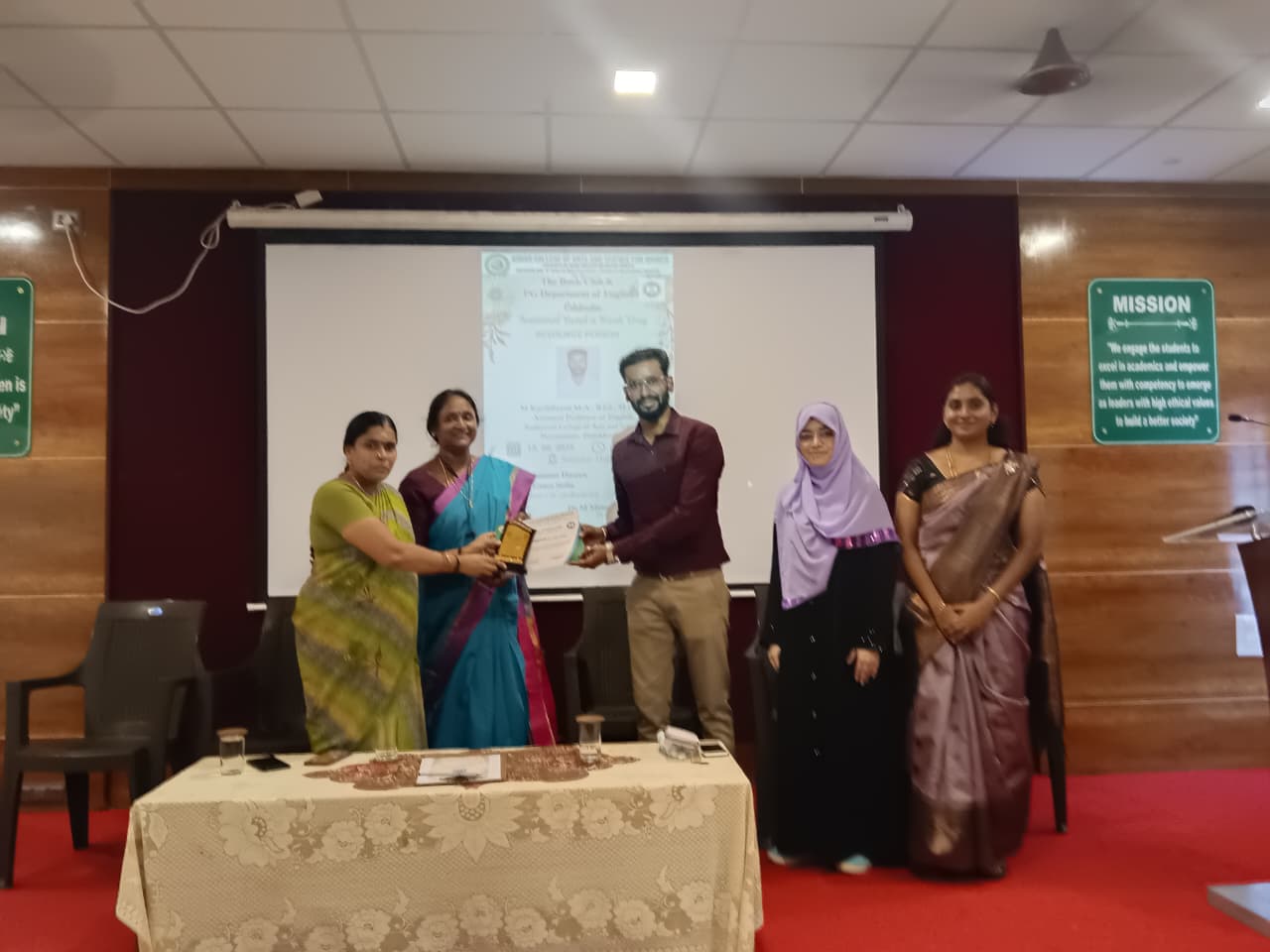
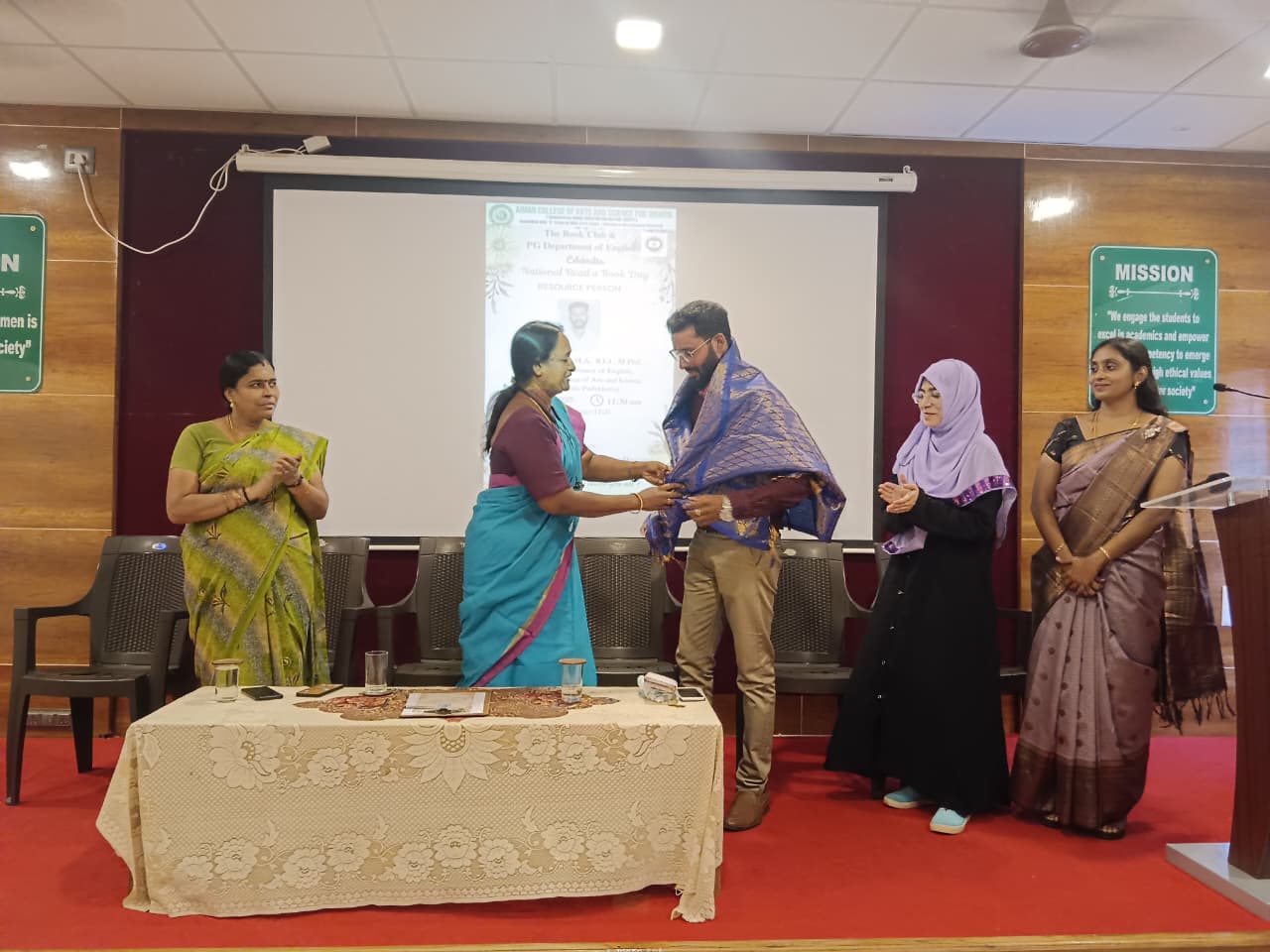
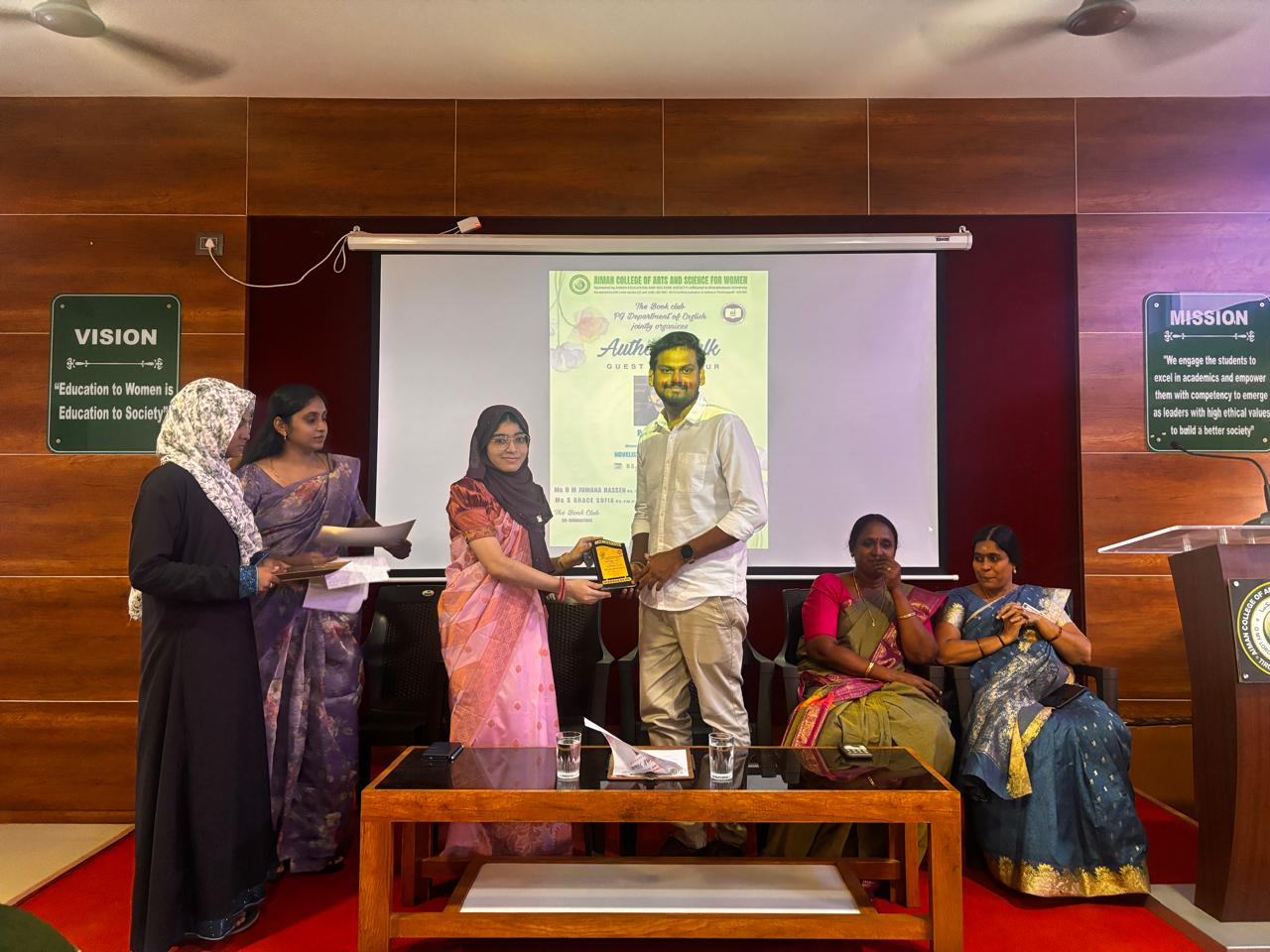
Book Club
The Significance of the Club Logo
The official logo of The Book Club of AIMAN College of Arts and Science for Women. This emblem encapsulates the essence of our club's mission and values, represented through both its design and its colours. At the heart of the logo, we see an open book, symbolizing the endless possibilities and knowledge that reading brings into our lives. The book is a gateway to new worlds, ideas, and perspectives, embodying our commitment to lifelong learning. Above the book is the prominent depiction of our college's iconic minaret and dome. These symbols represent not only our cultural heritage and identity but also our pursuit of enlightenment and wisdom, which are at the core of our educational journey. The logo is encircled by a laurel wreath, a timeless symbol of victory and achievement. It reminds us that the quest for knowledge is a noble pursuit, leading to personal and collective growth. The deep maroon colour that dominates the logo is chosen for its richness and depth, symbolizing the wisdom and strength we gain through reading and learning. Maroon is also a colour that signifies dedication and hard work, reflecting the values we uphold in our club.
Finally, the motto, "We Enlighten You," in bold white letters, stands out against the maroon background, emphasizing our mission with clarity and purpose. The use of white represents purity, simplicity, and the light of knowledge that we aim to spread through our activities. As we unveil this logo today, let it serve as a beacon of our shared commitment to knowledge, growth, and enlightenment, all underpinned by the rich symbolism of the colours and elements within it.
REPORTS
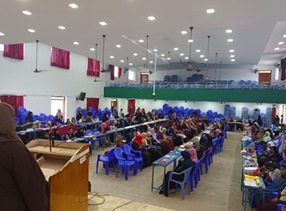
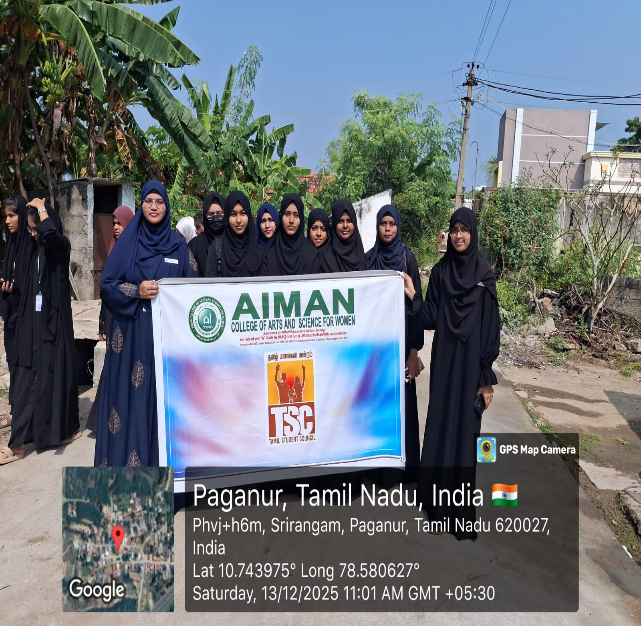
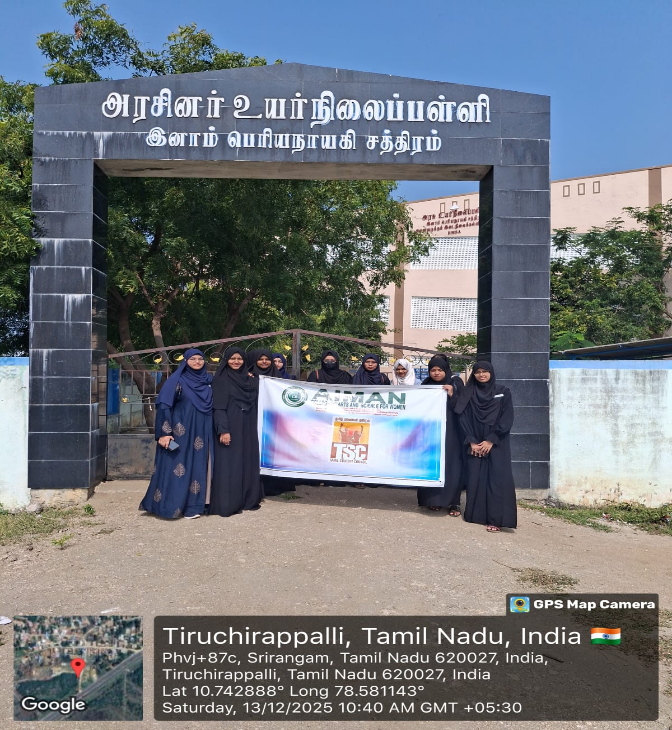
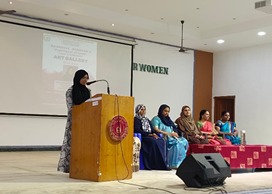
Manavar Mandram
மாணவர் மன்றம் (Maanavar Mandram)
Vision, Mission and Objectives
1. Vision
To develop responsible, disciplined, confident, and socially conscious students who contribute positively to society and become future leaders.
2. Mission
To provide a platform for students to develop leadership, communication, teamwork, creativity, and social responsibility through educational, cultural, literary, and community-based activities.
3. Objectives
- Leadership Development: To nurture leadership qualities, decision-making skills, and self-confidence among students.
- Communication Skills: To improve public speaking, writing, debate, and interpersonal communication.
- Academic Excellence: To encourage academic interest, knowledge sharing, and intellectual growth.
- Cultural Awareness: To promote cultural values, traditions, arts, and literary activities.
- Teamwork and Cooperation: To develop unity, mutual respect, and collaborative skills among students.
- Social Responsibility: To motivate students to participate in community service and social welfare activities.
- Creativity and Innovation: To encourage innovative thinking, talent, and problem-solving abilities.
- Personality Development: To foster discipline, ethical values, confidence, and positive attitudes.
- Environmental Awareness: To promote environmental protection and sustainable practices.
- Holistic Development: To support the overall intellectual, social, emotional, and personal development of students.
These statements can be used for a college or school Maanavar Mandram (Students' Forum) report, constitution, or annual programme document.
Aim of the Students’ Forum:
“Let us enhance knowledge, showcase talents, work together in unity, and build a better society.”
மாணவர் மன்றம்
தொலைநோக்குப் பார்வை, செயல்நோக்கம் மற்றும் குறிக்கோள்கள்
1. தொலைநோக்குப் பார்வை (Vision)
மாணவர்களிடையே தலைமைப் பண்பு, ஒழுக்கம், தன்னம்பிக்கை, சமூகப் பொறுப்பு மற்றும் படைப்பாற்றலை வளர்த்து, சமூக முன்னேற்றத்திற்குப் பங்களிக்கும் சிறந்த குடிமக்களையும் எதிர்காலத் தலைவர்களையும் உருவாக்குதல்.
2. செயல்நோக்கம் (Mission)
மாணவர்களின் கல்வி, கலை, இலக்கியம், பண்பாடு மற்றும் சமூகத் திறன்களை மேம்படுத்தும் வகையில் பல்வேறு நிகழ்ச்சிகள், போட்டிகள் மற்றும் சமூகப் பணிகளை நடத்தி, அவர்களின் முழுமையான ஆளுமை வளர்ச்சிக்கு வழிவகுத்தல்.
3. குறிக்கோள்கள் (Objectives)
1. தலைமைப் பண்பு வளர்த்தல்: மாணவர்களிடம் தலைமைப் பண்பு, முடிவெடுக்கும் திறன் மற்றும் தன்னம்பிக்கையை வளர்த்தல்.
2. தொடர்புத் திறன் மேம்பாடு: பேச்சுத்திறன், எழுத்துத்திறன், விவாதத் திறன் மற்றும் கருத்துப் பரிமாற்றத் திறன்களை மேம்படுத்துதல்.
3. கல்வி மேம்பாடு: கல்வி ஆர்வம், அறிவுப் பகிர்வு மற்றும் சிந்தனைத் திறனை ஊக்குவித்தல்.
4. கலை மற்றும் பண்பாட்டு வளர்ச்சி: தமிழ்மொழி, இலக்கியம், கலை, மரபு மற்றும் பண்பாட்டைப் பாதுகாத்து வளர்த்தல்.
5. ஒற்றுமை மற்றும் குழுப்பணி: மாணவர்களிடையே ஒற்றுமை, பரஸ்பர மரியாதை மற்றும் கூட்டாகச் செயல்படும் மனப்பான்மையை உருவாக்குதல்.
6. சமூகப் பொறுப்புணர்வு: சமூக சேவை, விழிப்புணர்வு நிகழ்ச்சிகள் மற்றும் நலத்திட்டங்களில் மாணவர்கள் பங்கேற்க ஊக்குவித்தல்.
7. படைப்பாற்றல் வளர்ச்சி: புதுமையான சிந்தனை, புதிய முயற்சிகள் மற்றும் பிரச்சினைகளுக்குத் தீர்வு காணும் திறனை வளர்த்தல்.
8. ஆளுமை மேம்பாடு: ஒழுக்கம், நேர்மை, பொறுப்புணர்வு மற்றும் நேர்மறையான அணுகுமுறையை வளர்த்தல்.
9. சுற்றுச்சூழல் பாதுகாப்பு: சுற்றுச்சூழல் விழிப்புணர்வு மற்றும் இயற்கை வளங்களைப் பாதுகாக்கும் மனப்பான்மையை ஏற்படுத்துதல்.
10. முழுமையான வளர்ச்சி: மாணவர்களின் அறிவு, சமூகத் திறன், உணர்வுத் திறன் மற்றும் தனித்திறன்களை மேம்படுத்துதல்.
மாணவர் மன்றத்தின் நோக்கம்: “அறிவை வளர்ப்போம்; திறமையை வெளிப்படுத்துவோம்; ஒற்றுமையுடன் செயல்படுவோம்; சிறந்த சமுதாயத்தை உருவாக்குவோம்.”
REPORTS

YOUTH EXNORA INTERNATIONAL
VISION
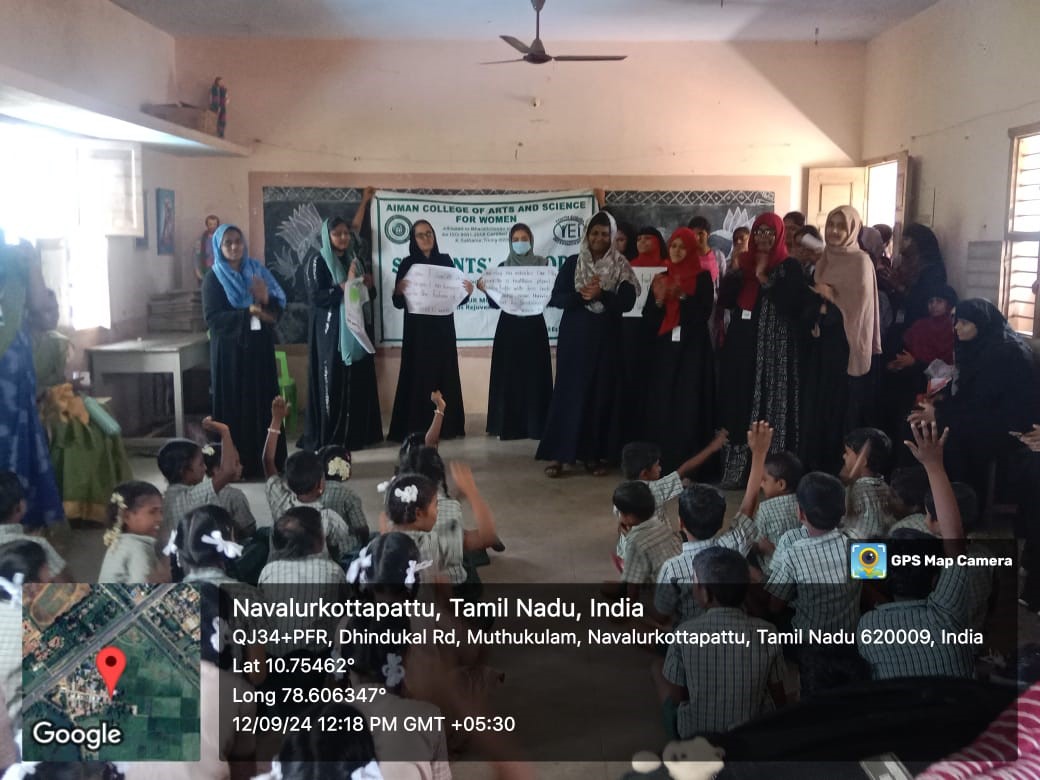
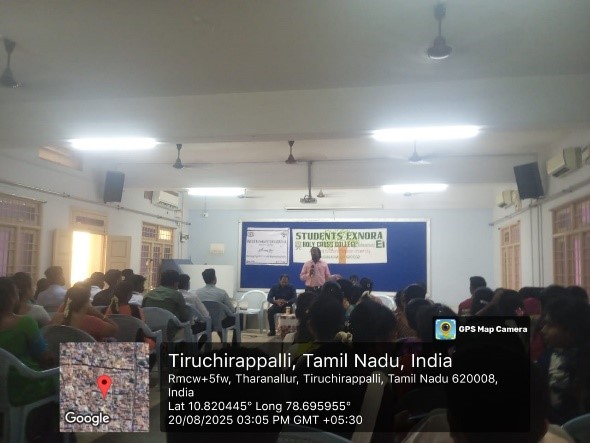
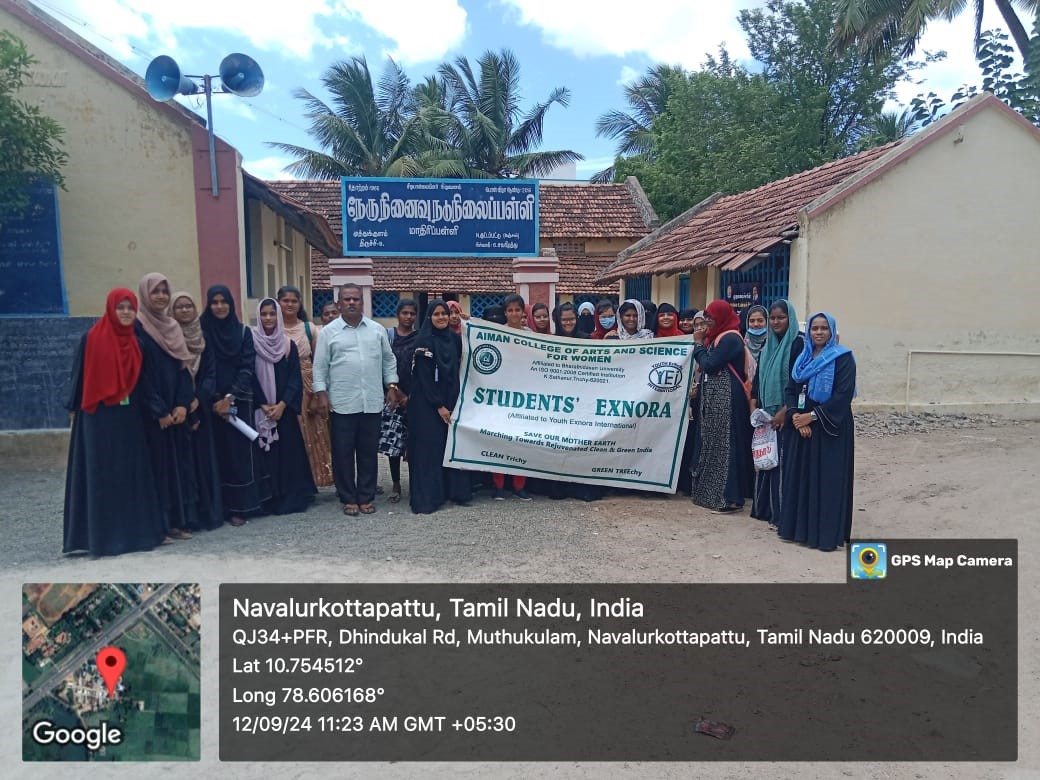
To create a clean, green, healthy, and sustainable environment by developing environmental awareness, social responsibility, and leadership qualities among students and the community.
MISSION
create awareness about environmental protection and cleanliness.
To encourage students to keep their college campus and surroundings clean and green.
To promote the principles of Reduce, Reuse, and Recycle.
To encourage tree plantation and biodiversity conservation.
To reduce plastic usage and promote eco-friendly alternatives.
REPORTS
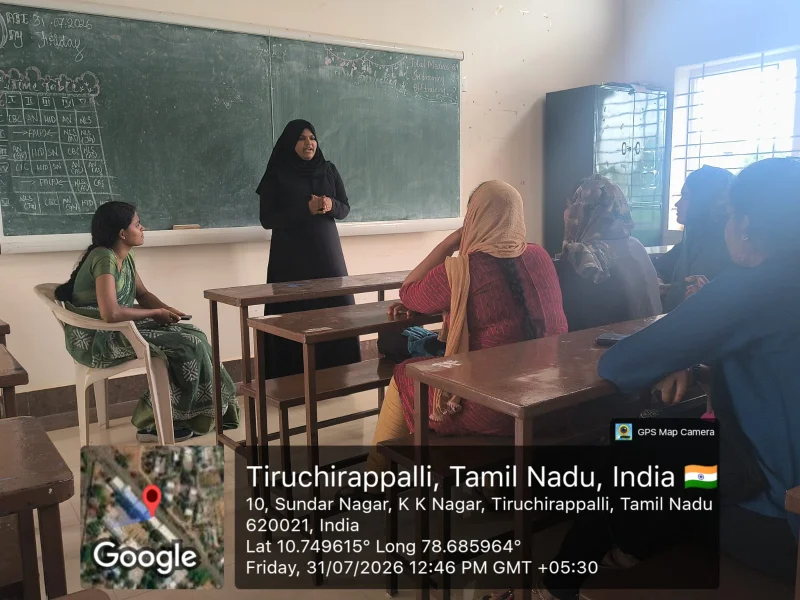
ECO CLUB
Eco Club seeks to promote environmental awareness at the grass root level by creating and nurturing green consciousness among the students. Understanding the central role of youth in saving the environment, it encourages them to be ambassadors for spreading the message of adopting an eco–friendly lifestyle in society at large.
The club provides a platform to create awareness about biodiversity conservation and local environmental issues by urging people to adapt their daily habits to the most sustainable options and adopt eco–friendly practices like recycling & saving non–renewable resources. It advances the notion that being environment-friendly is more about making informed choices on a personal level that changes one’s perception about and consumption of resources. It emphasizes the fact that the commitment to go green requires small & surprisingly easy changes that reduce one’s carbon footprint thereby benefiting both the wallet and the planet
VISION
The club will be committed to raising social awareness regarding environmental issues and changing students’ attitudes toward the environment by enlisting their active participation in the club’s activities
MISSION
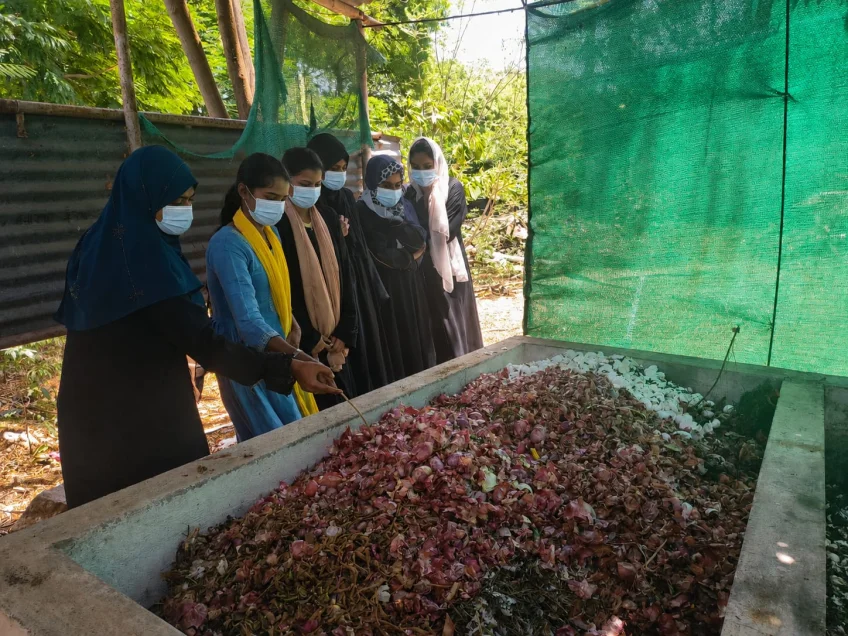
· To create awareness among the students to Rethink, Refuse, Reduce, Reuse, and Recycle
· To inculcate a proper attitude about the environment and its conservation through action-based programs
· To enhance students’ participation in the conservation of the microenvironment
· To implement efficient solid waste management in the college
· To create awareness among the students to reduce the use of plastic in the community.
REPORTS

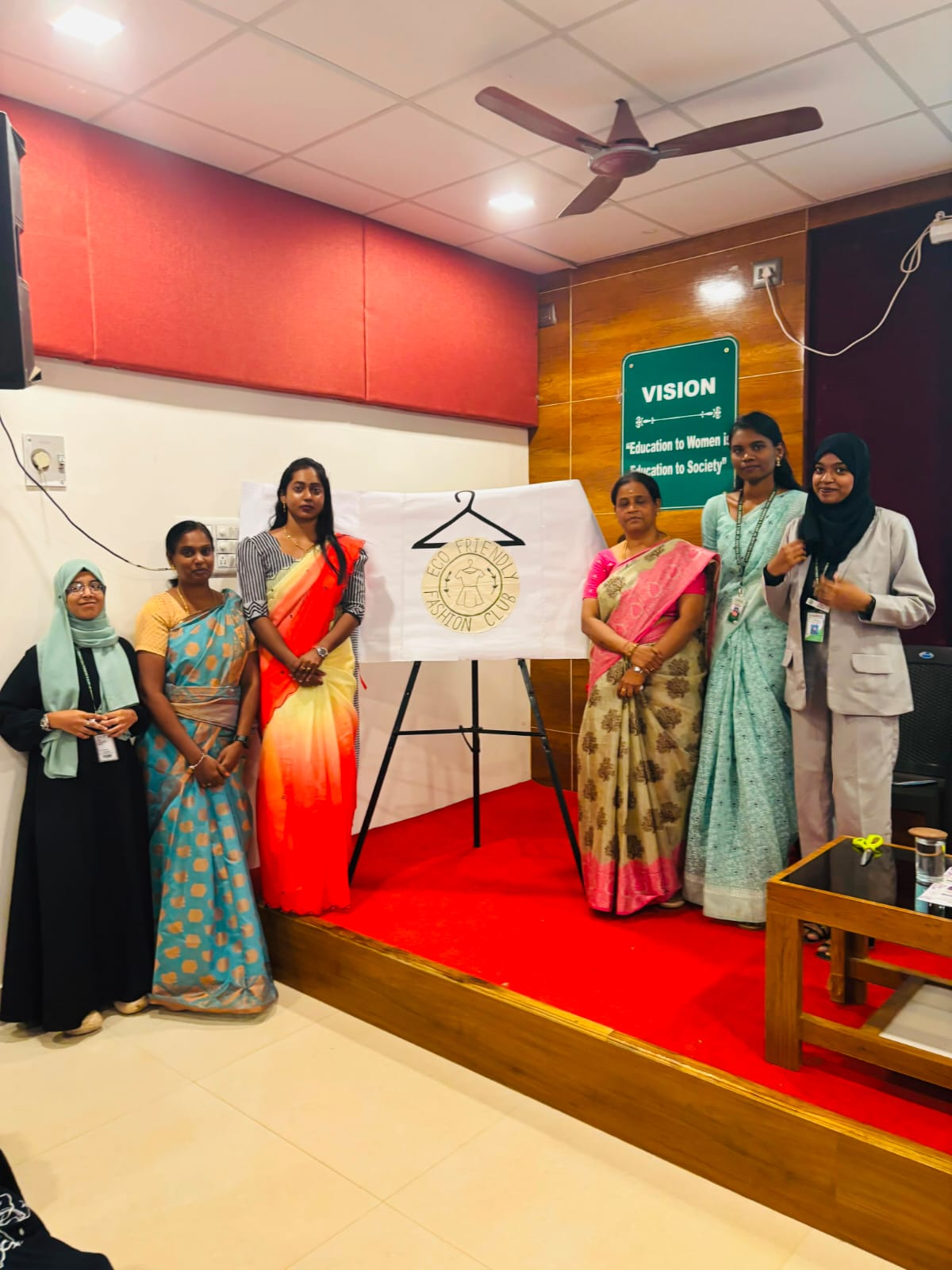
ECO FRIENDLY FASHION CLUB
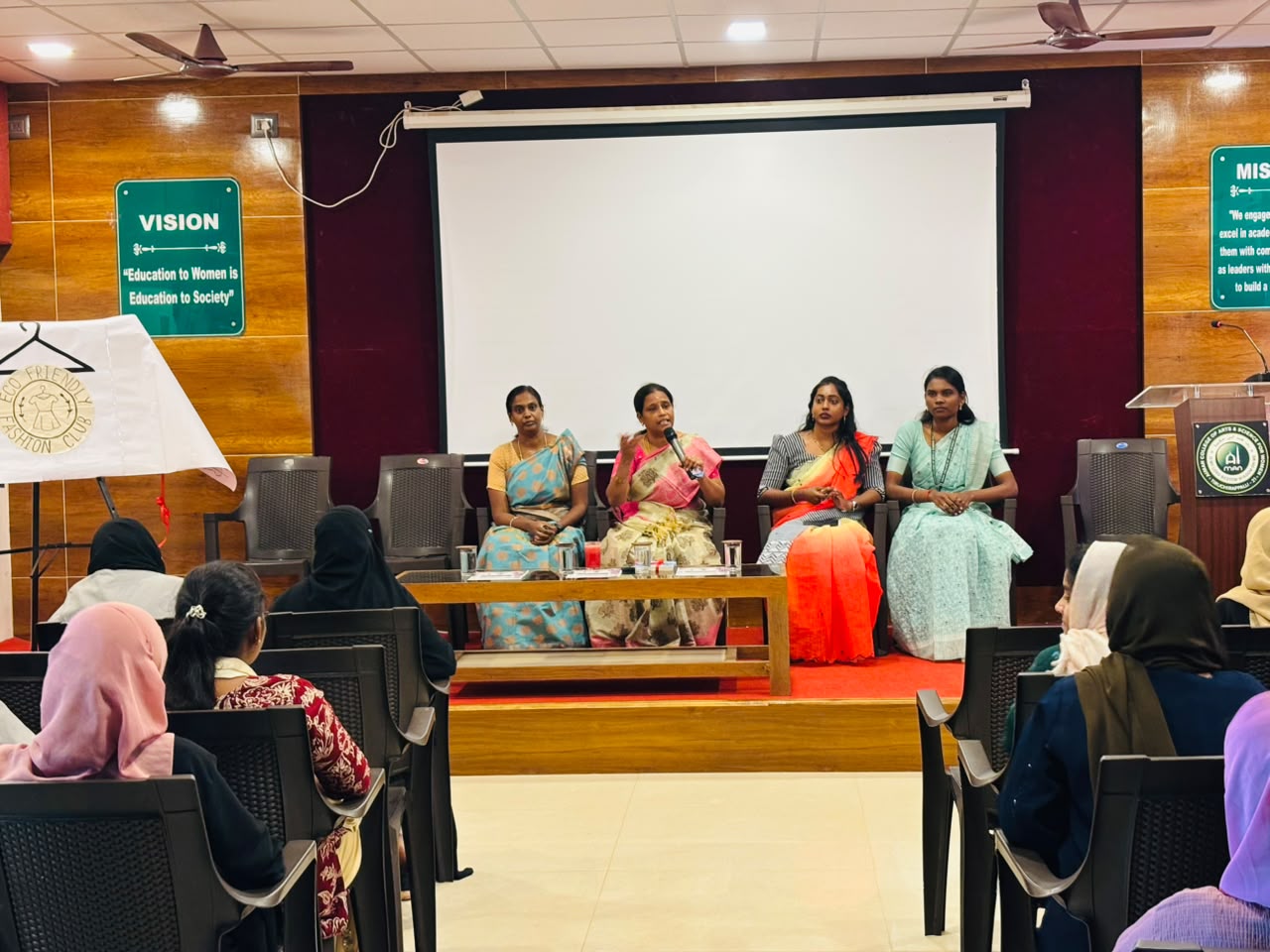
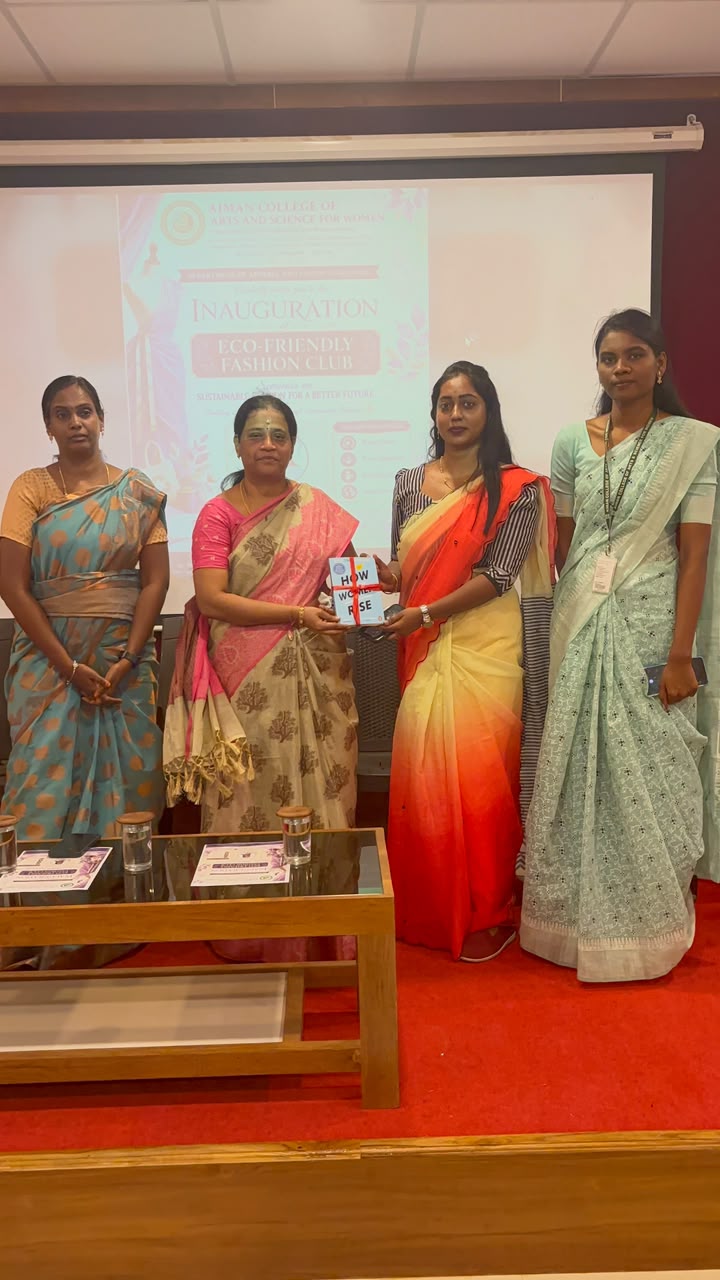
The Eco-Friendly Fashion Club aims to create awareness about sustainable fashion, environmental protection, and responsible clothing practices among students. The club encourages students to explore innovative and eco-friendly approaches to fashion by promoting recycling, upcycling, reuse of fabrics, and the use of natural and sustainable materials.
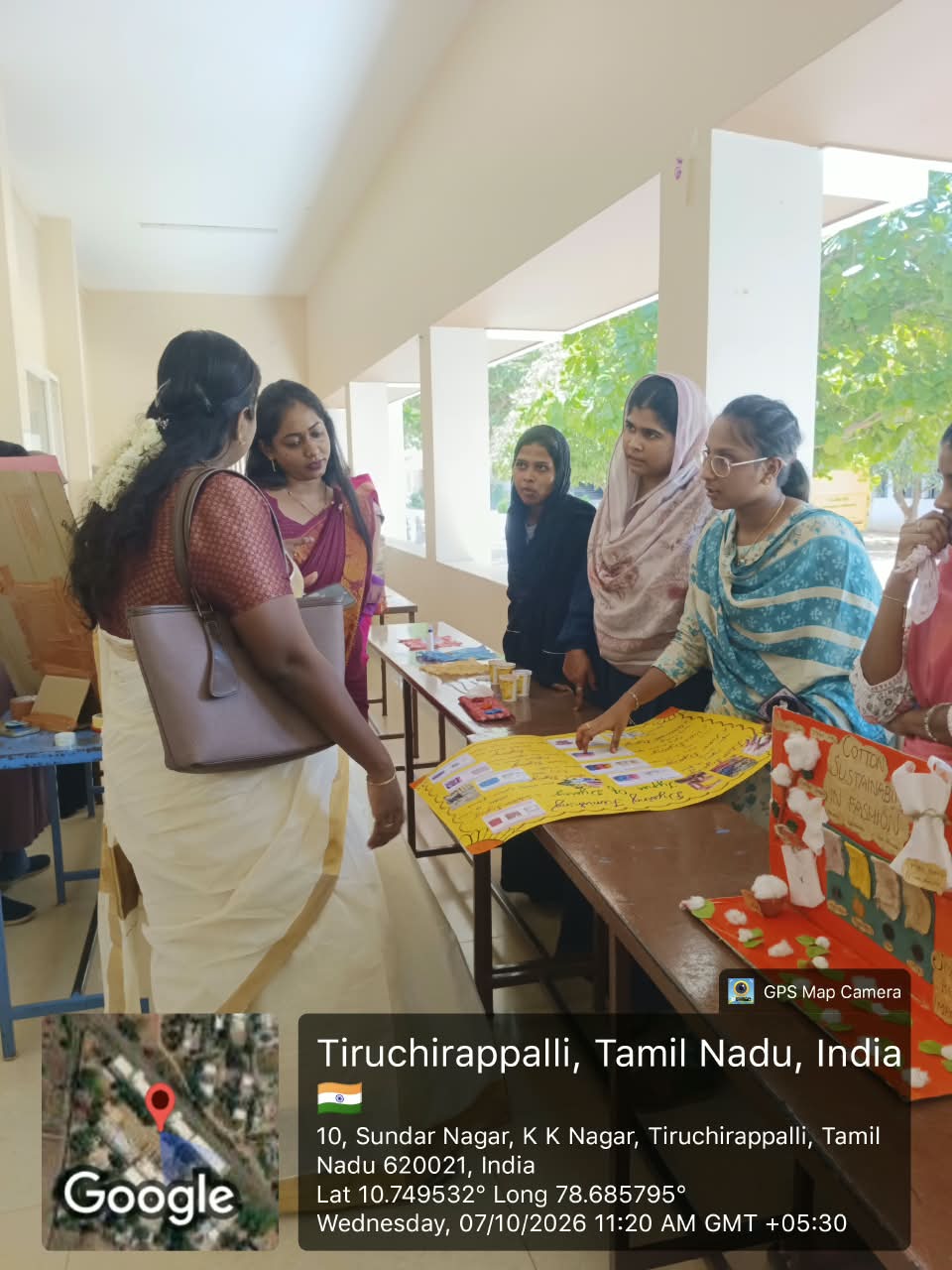
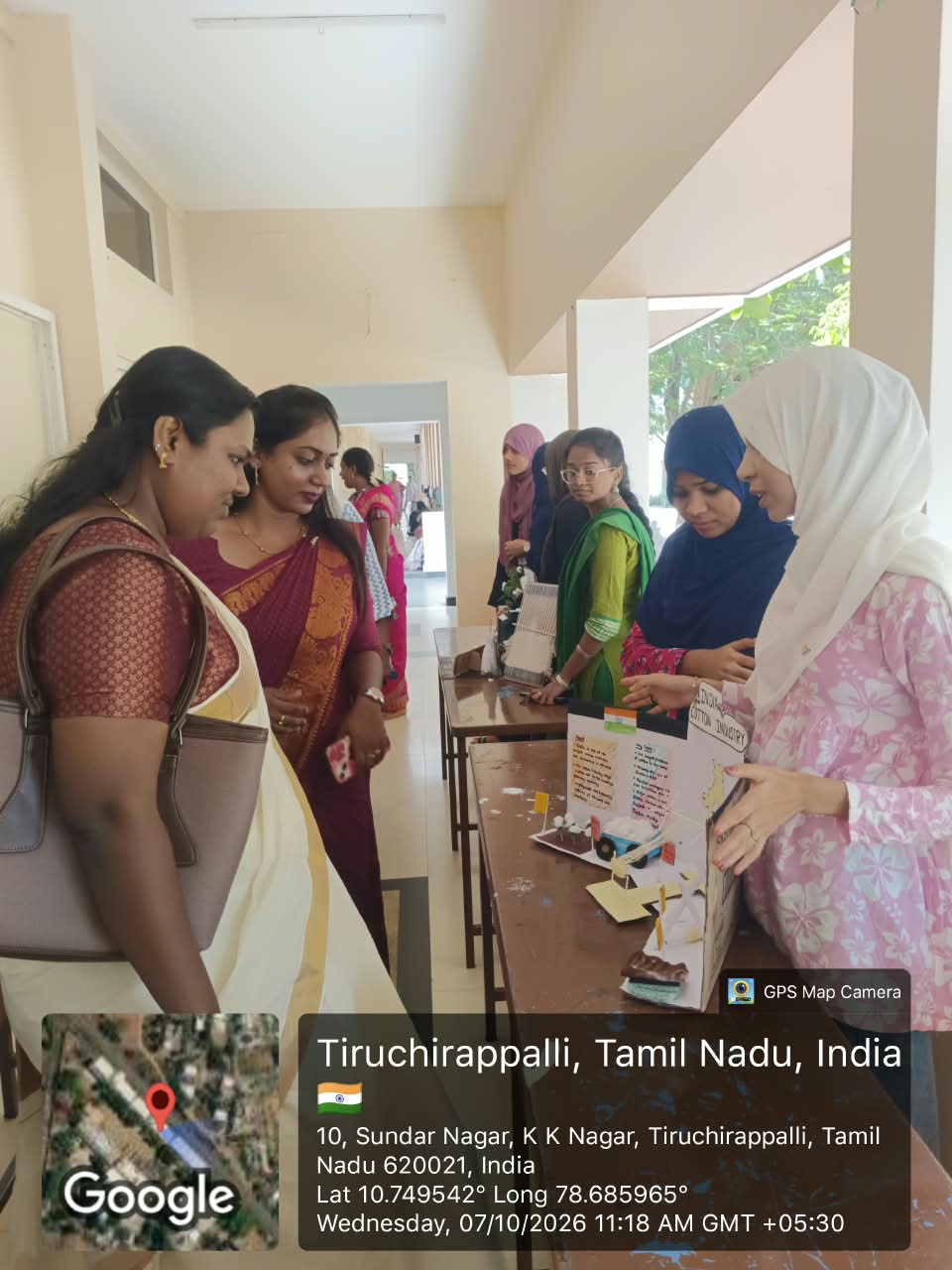
The club provides opportunities for students to develop creativity, practical skills, and environmental responsibility through various activities such as sustainable fashion shows, fabric recycling workshops, cotton and textile exhibitions, best-out-of-waste competitions, and awareness programmes.
The main objective of the club is to inspire young designers to adopt sustainable fashion practices, reduce textile waste, conserve natural resources, and contribute towards a greener and more sustainable future.
VISION
To create a generation of environmentally responsible fashion designers who promote sustainable and ethical fashion.
MISSION
Ø Promote eco-friendly and sustainable fashion practices.
Ø Encourage fabric recycling and upcycling.
Ø Create awareness about textile waste management.
Ø Explore natural fibres and organic fabrics.
Ø Develop creativity through sustainable fashion activities.
CLUB MOTTO
"Fashion with a Purpose – Style for a Sustainable Future!"
Fine Arts
The most beautiful thing we can experience is the mysterious.
Everything that you can imagine is true, yet most of what you see around you is probably the result of someone's imagination. The fine arts group aims to raise awareness of aesthetics and fine art in the community while also fostering an artistic environment on campus. Its objective is to release the creative, expressive, and artistic potential of every pupil. To foster tolerance for individual difference and openness to new ideas, the fine arts curriculum encourages respect for oneself as well as for the work, cultures, and artistic expression of others. The fine arts club's primary goal is to support the students' emerging talent.